


Twenty years ago, Joseph A. Unanue had a vision.
Then the CEO of Goya, Unanue saw a surge of Hispanic students entering higher education in the coming years. He wanted to ensure that they would be supported — and be on a campus where Hispanic culture was embraced — so he made a generous donation.
The Joseph A. Unanue Latino Institute was created at Seton Hall University.
Lori Tarke, the current executive director, said Unanue’s vision remains the driving force behind an organization that is having national impact. She credits Unanue for his foresight.
“He knew the number of Latino students was going to increase on campus, and wanted to provide a cultural hub, not just for Latino students, but all students, where they can learn about the community, address its unique needs and really elevate the experience for the students of Seton Hall,” she said. “‘I see a Latino moment coming’ — those are the words that were used. And he was spot on.”
Unanue’s dream is now a reality.
And, as the Joseph A. Unanue Latino Institute prepares to celebrate its 20th anniversary at an all-star gala next month in New York City, we offer 10 facts that make the Institute the force that it has become.
10. The creation
The Joseph A. Unanue Latino Institute was created in 2005, but its roots go back to 1974. Seton Hall previously had institutes aimed at Puerto Ricans and Dominicans before Unanue’s gift merged them all under one organization. Unanue’s wife, Carmen Ana Unanue, was a key driver behind the program, working to ensure faith was a guiding principle. Carmen Unanue was active in the institute up until her passing in 2021. (Joseph Unanue passed in 2013.)
“She created the blueprint for servant leadership at the institute,” Tarke said.
9. Open to all
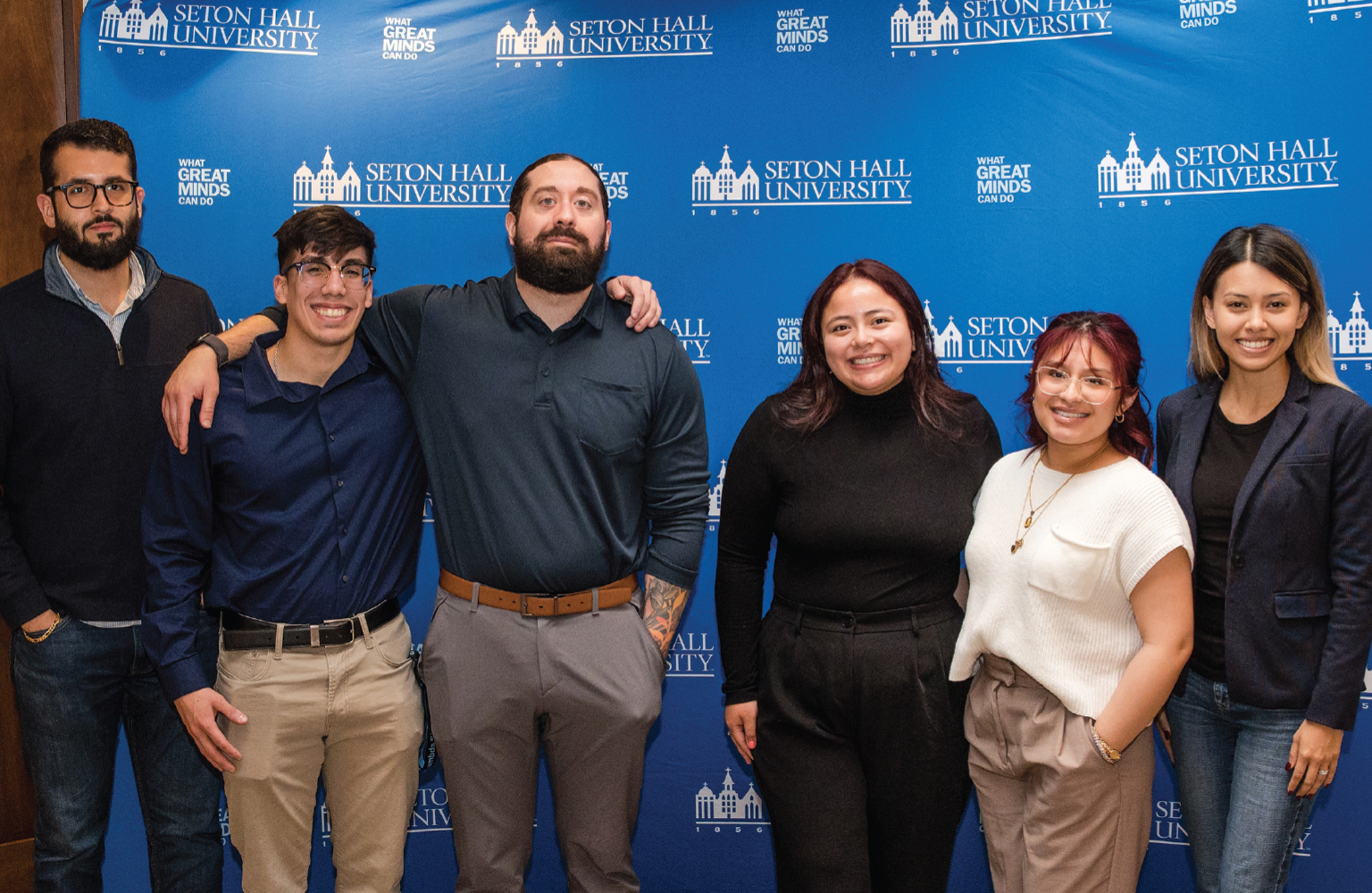
The institute has an emphasis on business, following the lead of the Unanue family, but it is open to all majors. Its main focus is to increase awareness of Hispanic culture while increasing Hispanic participation in higher education. And, while Seton Hall is a Hispanic-Serving Institution (meaning at least 25% of its full-time enrollment are Hispanic or Latino), the institute is open to all students.
“Our focus is the students,” Tarke said. “We represent approximately 3,000 students of Seton Hall who are Hispanic, Latino and also Iberian, but the institute extends even further than that. It’s open to anyone within Seton Hall or beyond who wants to learn about doing business with Latin America, or with the American Latino, or who wants to just understand our community and culture.”
8. Community focus
While the institute is geared toward students, it does have programming aimed at the greater community. It is running the Exito program in conjunction with the Buccino Leadership Institute at the Stillman School of Business, where students, alumni and community members are invited to participate and whose aim is to assist them in learning about the creation of small businesses. The program will feature discussions from prominent business thought leaders, including from PNC Bank, Kearny Bank, LatinoMetrics and General Mills.
“We put Latino Exito members face-to-face with some of the biggest business leaders in the Latino world,” Tarke said.
7. Distinguished speakers
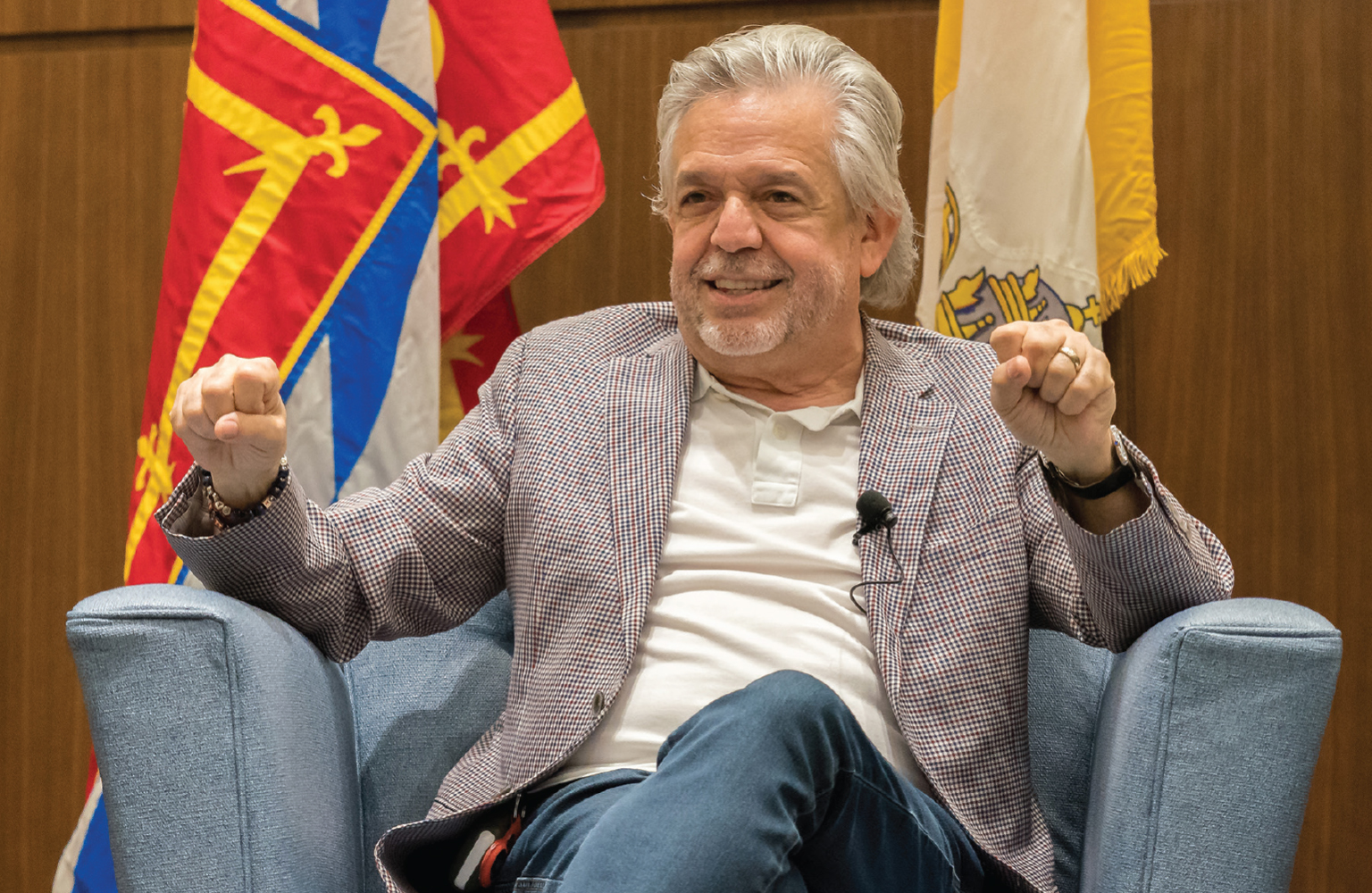
The institute’s Distinguished Speaker Series is a Who’s Who of the Hispanic/Latino world, including Lt. Col. Marisol Chalas, the first Latina National Guard Black Hawk helicopter pilot; author Luis Miranda, father of Lin-Manuel Miranda of “Hamilton”; and Dr. Joseph Molina, the former CEO of Molina Healthcare, a Fortune 500 company.
“We are bringing in the stars of the community — the history makers, the barrier breakers and the movers and the shakers,” Tarke said.
6. Road show
The institute not only brings great speakers in, it takes its members out to great events, including tours of top companies (think Goya or Univision) or meet-and-greets with influential groups. In the past, the institute has taken students to Washington, D.C., to meet with members of the Congressional Hispanic Caucus Institute.
“Our programming goes well beyond financial and academic support,” Tarke said.
5. Scholarships
The institute is known for providing financial support. In 20 years, it has awarded more than
$2 million in scholarships to more than 550 scholars.
Scholarships are awarded on a merit and need basis. In addition to writing a one-page essay on why becoming a JAULI scholar is important to them, students have to have a 3.0 GPA and demonstrate financial need. They must maintain their grades and be active participants in the program to renew their scholarships.
The scholarship program not only is helping students attend school, it also is helping them graduate. Four of the past five cohorts have had a 100% graduation rate after six years (the other was at 85%). That’s well ahead of the overall six-year mark of 63% — and the average for Hispanics (52%).
4. Collective spirit
Tarke said the Hispanic and Latino community makes the program. Top leaders not only participate in the program, they often fly in to meet with the students in person.
“The collective spirit of the Hispanic/Latino community is so tight,” Tarke said. “I call some of the biggest names in our community and ask if they want to be part of a collaborative mission to create the next generation of leaders and they all do.”
3. Corporate support
Support comes from more than individuals — and from more than just companies with Hispanic leaders. Tarke points to the efforts of DailyPay, led by CEO Stacy Greiner, which is tackling financial equity by partnering with employers to offer earned wage access, transforming how people are paid. “The number of companies that want to support the institute is gratifying,” she said.
2. Goya is a leader
Tarke points out the original donation to start the institute came from Joseph and Carmen Unanue themselves. Goya, however, has been the most consistent backer ever since — and not just with financial contributions that help fund the many scholarships and programming.
“They offer internships, which can be roadmaps to jobs. They sponsor our upcoming trip in November. And they support us with food donations to help our students who are food insecure,” she said.
1. Vision for the future
Tarke said Joseph Unanue’s vision 20 years ago was spot-on — there was a surge in Hispanic students in higher education. The need to support them is just as strong, she said, as so many are first-generation students trying to find their way.
How can you help? Tarke quickly counts the ways.
“Support comes in many forms, and we are grateful for any type of help that we can get,” she said. “It could be in the form of volunteerism, mentorship or internships. It could be a financial contribution. All people have to do is get in touch with me and I’d be happy to create a relationship.”
For information about Joseph A. Unanue Latino Institute, go to shu.edu/latino-institute

