


Gerard Gist didn’t just want to flip a house; he wanted to fix a block.
Of course, when you’re an African American developer in Newark’s West Ward working with rundown properties, that’s easier said than done.
No matter how good you are — and, more importantly, how committed you are — you need financing.
Enter Leslie Anderson and the New Jersey Redevelopment Authority.
Anderson saw Gist’s vision back in 2016 and provided flexible, early‑stage financing of $600,000 when no one else would.
Soon after, Gist built a row of five two‑family homes — units that created more than just first‑generation housing. They helped transform a street while keeping equity in the hands of families who already called the neighborhood home.

It’s also why Anderson and the NJRA provided more financing in 2023 for Gist (through the Jarid Jamar Construction Company he owns) to build five more two‑family homes on the next block.
“This is the work,” she told BINJE. “You take a street everybody has given up on, you find the local partners who haven’t and you give them the tools to turn it around.”
Versions of that premise exist in cities and towns across New Jersey — Newark, Jersey City, Elizabeth, Plainfield — and they will stand as Anderson’s enduring legacy at the NJRA.
This week, Anderson is announcing her retirement after an extraordinary 30 years at the agency.
***
Anderson sums up her efforts at the NJRA with a simple slogan: “We’re there first.”
10 things … about Leslie Anderson
Don’t know her? Or her impact? You should. She has been as influential in housing and economic development as anyone else in a generation.
Click here to read 10 things you need to know about Anderson
It’s not branding. It’s the operating system.
By law and by design, the NJRA exists to invest in communities that have endured decades of disinvestment, places where capital is scarce, underwriting is rigid, and “too risky” is often just code for “too poor” or “too Black and brown.”
The secret to success? Flip the script.
“Too many entities want the project to fit their money,” she said. “What we strive to do is craft our financing around the project, so developers have the ability to do what they want to do. If you make financing too restrictive, you reduce its chance of success.”
In practice, that means:
- Coming in early, with money for site acquisition, remediation and predevelopment;
- Structuring terms so NJRA financing doesn’t “collapse the capital stack” with requirements no one else can meet;
- Embracing repeat borrowers (including small and Black‑owned firms) whose deals are too modest or complex for larger state programs.
The numbers tell the story of that approach:
- Nearly $500 million in direct NJRA investments;
- Nearly $4 billion in total investment leveraged;
- More than 15,000 housing units created;
- Over 10 million square feet of commercial and retail space facilitated;
- Impact spread across 64 legislatively designated communities.
Then there’s this: Roughly half of NJRA’s borrowers are repeat clients, a reflection of both the need in these markets and the trust Anderson built with developers who had long been told, “No,” far too often.
***
Anderson didn’t start with a state title or a statewide aim. She started in her hometown of Plainfield.
She spent nearly a decade in the city’s economic development office, beginning as a planner and eventually becoming executive director. There, she learned how policy, politics and project finance collide — and what it takes to get actual buildings out of the ground in tough markets.
Her reputation carried to Trenton. She became a policy advisor to Gov. Christine Todd Whitman, working on economic, commerce and urban policy. She played an integral role in shaping the governor’s urban economic strategy, which was enacted in 1996 as the New Jersey Urban Redevelopment Act.
That law created the New Jersey Redevelopment Authority.
Not long after, Anderson joined the NJRA itself. Over time, she became its president and CEO — and is widely considered to be the only Black woman in the nation to lead an independent redevelopment financing authority. She has been reappointed by four consecutive governors, a rare show of bipartisan continuity in a state not known for it.
But even as her scope widened, Plainfield never stopped being a proving ground.
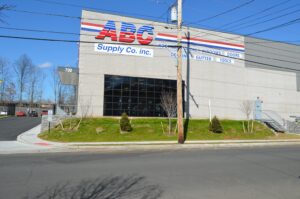
At the ABC Supply site there, the NJRA provided critical grant funding to remediate heavily compromised land. That intervention did two things at once: It kept a local employer in the city and cleared the way for the development of 90 affordable housing units.
Helping a business stay.
Making a contaminated site buildable.
Bringing new housing online.
For Anderson, that’s the kind of triple‑bottom‑line result redevelopment should aim for.
“At its core, this organization invests real dollars in projects that enhance and improve places that are categorically underserved — they’re disinvested in,” she said. “We go to the municipalities that struggle to get investment and help make those projects possible.”
***
Anderson always has insisted that money alone doesn’t fix disinvestment. You also need knowledge and the ability to respond when a crisis hits.
In 2006, she launched the NJRA Redevelopment Training Institute to teach the tools she and her team use every day. The idea: equip attorneys, planners, municipal officials, nonprofit leaders and developers with practical, deal‑level know‑how.
Nearly two decades later, RTI has trained thousands and earned certifications from the American Institute of Certified Planners, the Northeastern Economic Developers Association and the New Jersey Supreme Court for Continuing Legal Education. It has quietly become an important export: a New Jersey‑grown model of ethical, technically sound redevelopment practice.
Then came COVID‑19.
As shutdowns rippled through the state, Anderson and the NJRA quickly stood up the Small Business Lease Emergency Assistance Grant Program, deploying $30 million to help micro and small businesses cover commercial rent, with grants of up to $10,000.
The response was immediate. The program was fully subscribed in under 30 minutes.
The profile of the recipients underscored why NJRA was needed: 90% of applicants were minority business owners, and nearly 70% had received no other relief — including standard CARES Act programs.
It was the same “we’re there first” philosophy, applied not to bricks and mortar, but to liquidity and survival.
***
Anderson says she’s not walking away from the work — just changing where she does it.
With a new administration in Trenton, she believes it’s an appropriate time to “step aside and let the governor facilitate her vision” for the NJRA. She plans a short break, then likely a move into executive coaching and consulting on redevelopment projects, roles that will let her mentor leaders and shape deals without occupying the corner office.
“The goal was never to work at the NJRA,” she said. “The goal was to create a legacy of positive impact that would outlive me.”
That legacy is visible up and down the state, but perhaps nowhere more clearly than in Jersey City, at the Dr. Lena Edwards Residences.
In 2013, on Ocean Avenue, in a corridor that had known far more neglect than investment, the NJRA helped finance a 68‑unit, 100% affordable housing development named for New Jersey’s first African American OB‑GYN.
Edwards was known not just for practicing medicine but for owning property and using it to house patients who had nowhere else to go. Her buildings were informal safety nets long before “housing as health” became a policy phrase. The NJRA was able to secure $500,000 in financing.
Today, the residences that bear her name offer modern, amenity‑rich apartments, complete with on‑site parking and laundry, to families who might otherwise be priced out or shut out.
Neither Gist’s block in Newark nor the Dr. Lena Edwards Residences in Jersey City were obvious places for capital to flow. That’s precisely why the NJRA, under Anderson’s leadership, went there first.
The results fit the formula: Find the places others overlook. Back the people rooted there. Leave behind something more permanent than a press release.
For three decades, no one has done that better than Anderson and the NJRA.

