


Dr. Katharine Clouser was thrilled to see the federal government starting to turn away from its repeated recommendations to reduce the number of vaccinations given to children — in response to an outbreak in South Carolina.
As a pediatric hospitalist at the Hackensack Meridian Joseph M. Sanzari Children’s Hospital, she’s worried measles will spread.
She said she hopes those in New Jersey who have become skeptical about vaccines will return to doing what helped nearly eradicate the illness: get vaccinated.
Measles can be fatal, she warned.
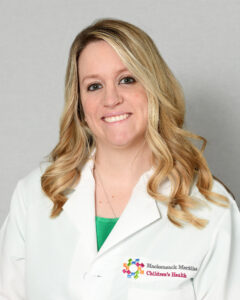
“Many Americans are not well versed on the dangers of measles because, through vaccination, the disease was nearly eliminated,” she said. “Worldwide, measles kills more than 100,000 people per year and the risks should be taken seriously.
“Measles infection can lead to high fever and the signature measles rash. Some patients develop pneumonia or encephalitis, an inflation of the brain, both of which can be deadly.”
The federal government is urging Americans to get up to date on their measles vaccines as cases rise nationwide. This weekend, Dr. Mehmet Oz, Center of Medicare and Medicaid Services Administrator, went on CNN encouraging vaccination.
“Take the vaccine, please,” he said. “We have a solution for our problem. Not all illnesses are equally dangerous, and not all people are equally susceptible to those illnesses. But measles is one you should get your vaccine.”
Measles is an airborne respiratory virus and one of the most contagious pathogens in the world. It spreads when an infected person breathes, coughs or sneezes — and it is contagious before symptoms appear. The infection typically causes high fever, runny nose, cough, red eyes and a rash. Beyond acute illness, measles is believed to cause long-term immune suppression in some patients, as well as neurological syndromes that can lead to chronic disability.
There is, however, a highly effective defense.
“The good news is measles is highly preventable through vaccination — 93% effective with one shot and 97% effective with two,” Clouser said. “Vaccination is the best way to protect children and loved ones from this serious infection.”
The CDC notes that measles is so contagious that “about 9 out of 10 people who come near a person with measles and are not protected by vaccination will also become infected.”
Despite this, vaccination rates have been steadily slipping. Among kindergartners, just 92.7% received required vaccines last year — below the pre-pandemic 95% target needed to prevent outbreaks. Non-medical exemptions rose to 3.3% nationally. Those seemingly small changes represent roughly 80,000 unvaccinated children. Some communities fall far below the national average; a West Texas community currently battling an outbreak has vaccination rates near 80%.
In 2000, when measles vaccination coverage hovered around 95%, the virus was considered nearly eliminated in the U.S. That progress is now at risk, health officials said.
Vaccines remain crucial because measles and other preventable viruses continue circulating worldwide. With international travel routine, outbreaks in the U.S. can surface anytime vaccination levels fall. Immunization also protects vulnerable populations who cannot receive vaccines, including infants and people who are immunocompromised.
A significant driver of declining rates is vaccine hesitancy — rooted in misinformation and, in some cases, religious exemptions. The most common vaccine side effects are mild: redness or swelling at the injection site, fatigue and low-grade fever. Federal monitoring systems track vaccine safety continuously. And longstanding myths have been thoroughly debunked.
The CDC states it has found “no link” between the MMR vaccine and autism.
Scientists in the United States and other countries have carefully studied the MMR vaccine. None has found a link between autism and the MMR vaccine.
The CDC recommends two doses of the MMR vaccine for children: the first between 12 and 15 months, and a second between ages 4 and 6. National kindergarten MMR coverage has now fallen below 93% for the fourth straight year, well under the Healthy People 2030 target of 95%. Two doses of MMR are about 97% effective; one dose is about 93% effective.
Most adults vaccinated as children remain protected for life, but certain groups — including healthcare workers, international travelers, those exposed during an outbreak and adults born between 1957 and 1967 — may need additional doses. Physicians can review vaccination records, evaluate individual risk factors and, if needed, order an MMR titer to check immunity.
Measles is just one of many potentially severe infections preventable through vaccination. Immunizations prompt the body to produce antibodies and maintain long-term vigilance against specific bacteria and viruses. Vaccines are among the greatest achievements in modern public health, dramatically reducing or nearly eliminating once-common diseases. But as vaccination rates fall, these illnesses can return.

