


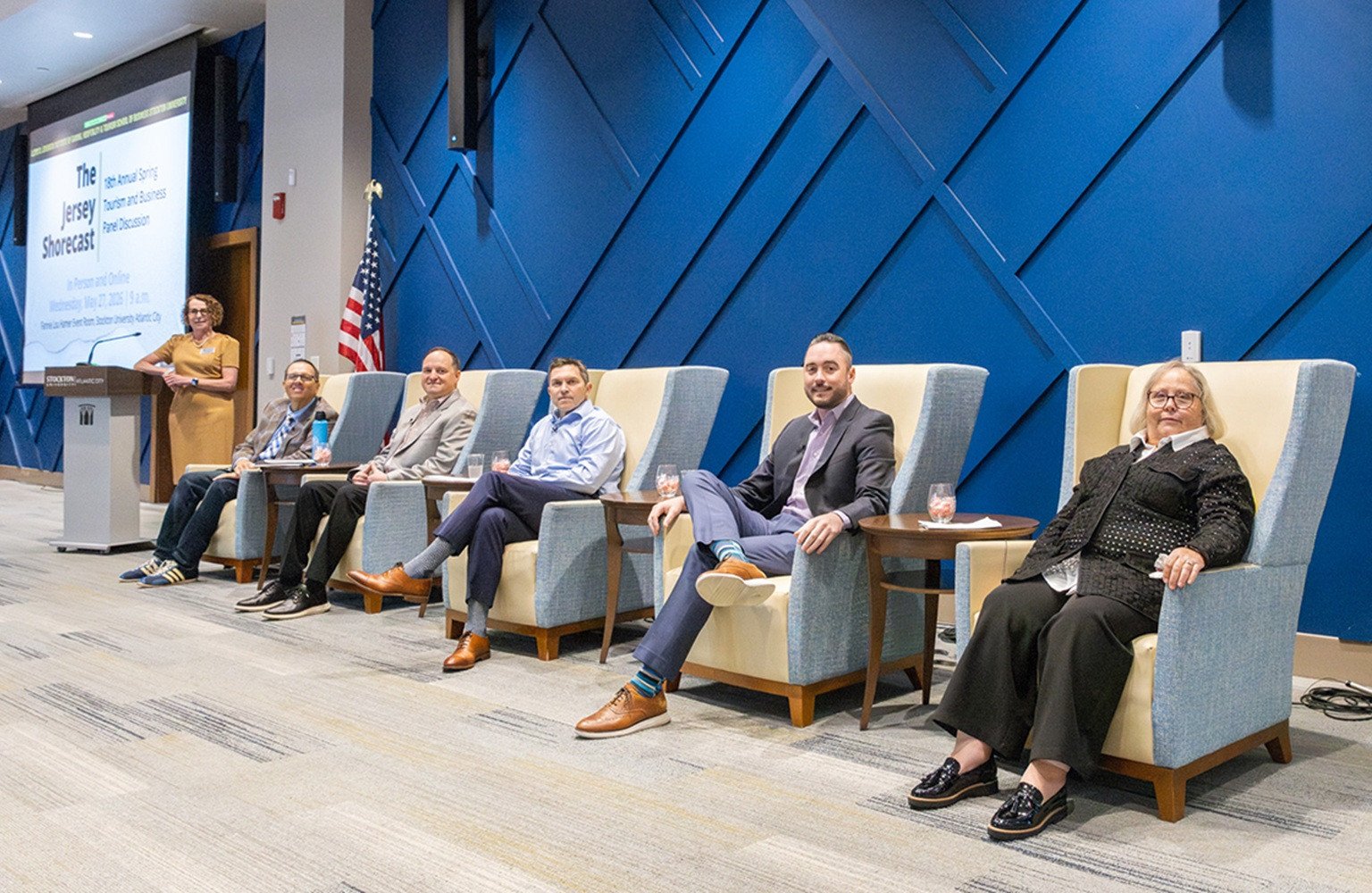
Just days after Memorial Day officially kicked off the summer season, local tourism experts are projecting a resilient yet evolutionary summer for the Jersey Shore. Despite economic uncertainty and shifting traveler behaviors, regional leaders express an optimistic but cautious outlook for the months ahead.
The discussion took place at the 18th annual Jersey Shorecast, sponsored by the Lloyd D. Levenson Institute of Gaming, Hospitality and Tourism (LIGHT) at the Stockton University School of Business. Held at Stockton’s Atlantic City campus and streamed online, the panel featured a cross-section of hospitality, economic, and tourism experts from Atlantic and Cape May counties.
To counter economic headwinds like inflation and reduced consumer confidence, regional leaders are pivoting toward event-driven and experiential tourism to attract visitors.
“Large-scale events are critical to our economy, and it keeps Atlantic City on the map,” Michael Chait, public information officer for the Casino Reinvestment Development Authority said. Chait noted that while overall daily visitor volume dipped slightly last year, overnight stays across Atlantic County rose, generating approximately $8.4 billion in visitor spend.
Major draws for the 2026 season include:
- The Soar and Shore Airshow: Moved to May 29–31 to secure high-profile acts like the Blue Angels and Thunderbirds.
- High-Profile Concerts and Entertainment: Upcoming beach concerts and events featuring Rufus Du Sol, Shakira, and the return of WWE.
- Sports Tourism: The American Power Boat Association races returning in late June, alongside the ongoing growth of youth sports clubs pulling in families.
- FIFA World Cup Activation: Though global visa issues have impacted international delegate numbers, local leaders are heavily marketing to regional fans. Atlantic City secured a state grant to host beach watch parties on July 18 and 19, and Stockton University will serve as the official base camp for the Haiti national team.
“Emerging travel trends show people are looking for local culture… they want to accumulate experiences and memories,” Diane Wieland, director of Tourism/Culture and Heritage for Cape May County explained. She noted that towns were packed over Memorial Day weekend.
Despite a strong start, panelists acknowledged several “wild cards” clouding the data for the upcoming season. Oliver Cooke, associate professor of Economics at Stockton University, pointed out that regional job growth in April rose by a robust 3%—half of which was driven by restaurant and bar hiring. However, he remains watchful of broader economic sentiments.
“The big wild card for me about this summer is we have recent indicators that consumer confidence is near or at all-time lows,” Cooke said. “Maybe this means folks still take their vacations, but the total spend is a little bit less.”
Panelists also noted a disconnect in state tax reporting metrics from the previous year. While Cape May County—the state’s top tourism destination—saw a 4.2% increase in overall visitor spending and a 6.7% increase in lodging, state treasury figures paradoxically showed a 32% drop in occupancy tax.
Furthermore, LIGHT Faculty Director Jane Bokunewicz presented data from 2025 showing that while total gross gaming revenue jumped 14%, it was driven entirely by internet gambling and table games. Brick-and-mortar casino gaming has officially been surpassed by online gaming, a trend showing no signs of slowing down.
Compounding the financial caution, visitors are actively changing how they vacation. Anecdotal data suggests more tourists are opting for short-term rentals like Airbnbs, bringing their own groceries, and sticking to strict budgets.
Additionally, seasonality is expanding. “We’re seeing more and more people coming in fall,” Wieland noted. “We are seeing continued growth in the fall and into the winter. That is a great change for us.”
Ultimately, sustaining momentum through 2026 will require adaptability. “You have to have a really diverse portfolio,” said Dan Gallagher, executive director of the Atlantic City Sports Commission. “It’s about consistent messaging, branding, and letting them know Atlantic City remains open for business, not just three months out of the year.”


