


Jeff Cantor noticed something on his arm that didn’t look right.
He almost didn’t think much of it. A few years earlier, he had been stationed in Kirkuk, Iraq, living in a converted Iraqi intelligence compound that American forces had taken with J-DAM bombs — ordnance that carries depleted uranium. Cantor and his soldiers posted snipers on top of the building they’d struck. They rubbed up against it daily.
The spot on his arm turned out to be malignant melanoma.
“Holy cow, I can’t believe that I was diagnosed,” Cantor said. “I had nothing that I knew of. I just saw something on my arm that just didn’t look right.”
He had it removed at the Cancer Institute of New Jersey, along with the surrounding tissue and lymph nodes. Melanoma is aggressive. Caught later, it could have killed him.
“Those people saved my life,” he said. “That could have easily spread and easily killed me, had I not gotten screened.”
***
Cantor, a retired Army colonel and founder of the New Jersey State Veterans Chamber of Commerce, has spent the years since turning that close call into a mission. He now serves as director of product development and partnerships for Braven Health, the Medicare Advantage program co-owned by Horizon Blue Cross Blue Shield of New Jersey, RWJBarnabas Health and Hackensack Meridian Health, and he has helped run 11 veterans health fairs across the state.
The premise behind all of them is simple, and it comes directly from his own experience: veterans often don’t know what they were exposed to during their service, and they don’t know what that exposure might be doing to their bodies years later.
“The issue with health care and veterans is they don’t know what they’ve been exposed to, and they don’t know the long-term effects of what that exposure means,” Cantor said.
He thinks often of a soldier he served with, Lou Rose.
Rose, he said, was recently diagnosed with esophageal cancer directly attributable to burn pits — the open-air waste disposal sites used at military bases throughout Iraq and Afghanistan. By the time symptoms appeared, the cancer had spread to his brain and liver. He died shortly after.
 “It’s things like that where you just don’t know,” Cantor said. “You’ve been exposed to all these things, and you don’t know what the long-term ramifications are for your health. That’s why it’s important to get checked out — both for physical health and mental health.”
***
The federal government has started to catch up. The PACT Act, passed in 2022, expanded VA health coverage specifically for veterans exposed to burn pits, depleted uranium, and other toxic substances during their service. Cantor said the law represents real progress — but progress only matters if veterans actually get screened, and screening only matters if it goes deep enough to catch what a five-minute health fair conversation might miss.
That’s where the health passport comes in. At each event, veterans get a simple document tracking what they’ve been checked for — blood pressure, basic screenings, the kinds of things that surface in minutes. They’re encouraged to take it to a primary care doctor, VA or otherwise, and follow up on anything flagged.
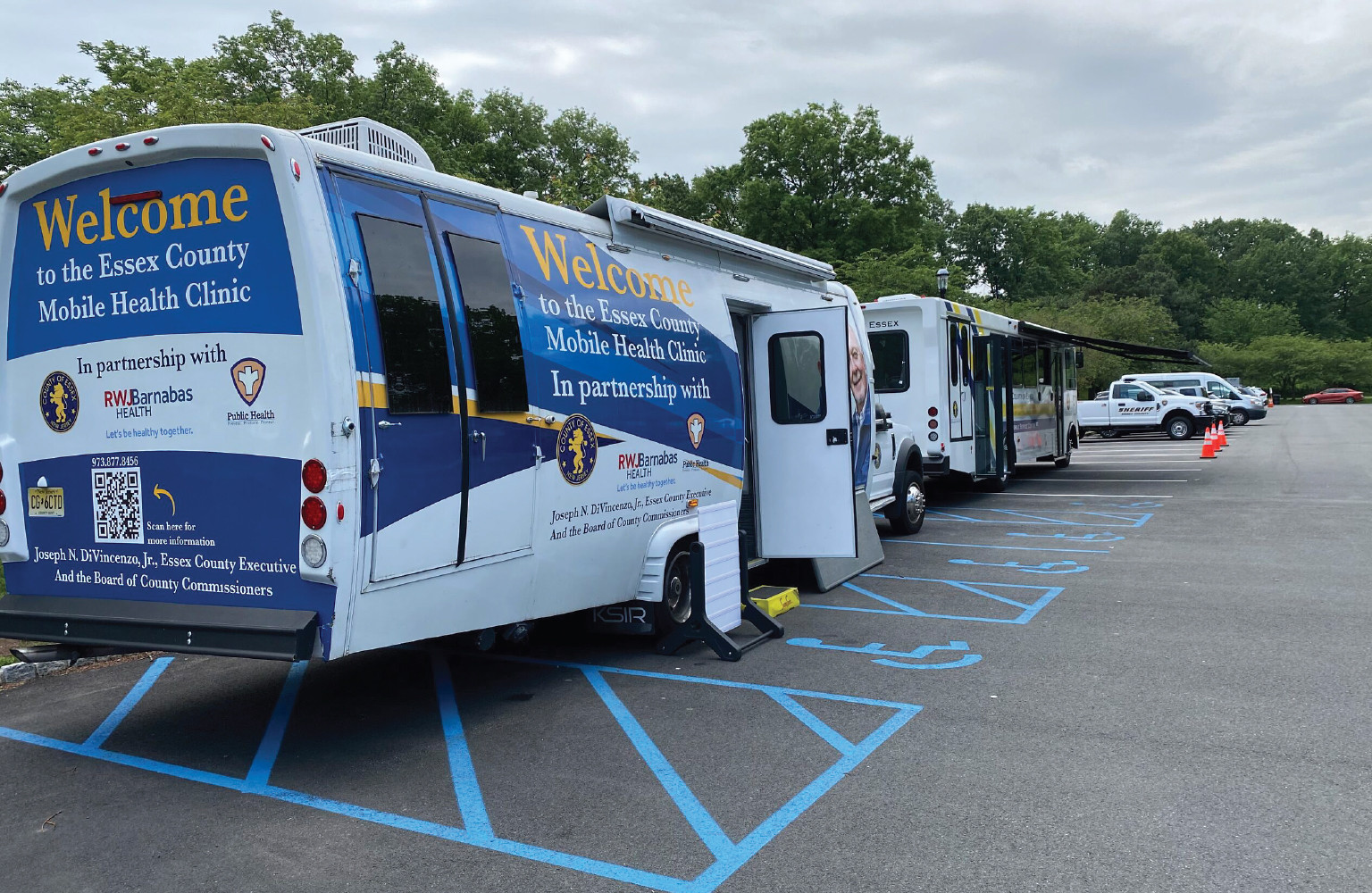
The system has already caught real problems. At one health fair in Essex County, a nurse working a screening table discovered that the VA had double-prescribed a veteran the same medication. He was experiencing side effects and had no idea why.
“Thankfully we had a pharmacist — she was a nurse — that found it,” Cantor said. The team flagged it to the VA directly. “He’s double dosing, he’s experiencing side effects as a result of it, and the director there is like, ‘All right, we’ll take care of it.’”
It is exactly the kind of catch the model is built to make — not a replacement for a veteran’s full medical care, but a gateway into it.
***
Cantor’s work splits across two organizations that increasingly overlap. Through Braven Health, the focus is direct access to quality medical care. Through the Veterans Chamber’s Veterans Foundation of America, the focus shifts toward mental health — resilience training seminars, outdoor therapy programs like fishing trips, and ongoing programming designed to address what veterans carry home that a blood pressure cuff can’t catch.
Asked whether physical or behavioral health deserves more attention, Cantor didn’t hesitate.
“Behavioral health is health care,” he said. “The United States of America asked these veterans to do some pretty incredible things while overseas, or while serving domestically. A lot of what they’ve seen or been exposed to impacts both their mental health and physical health.”
 Also true is this: One of the biggest obstacles standing between veterans and the care they need is themselves and their sense of inner strength.
And while this can be true for both men and women who have served, the mindset impacts men far more, Cantor said.
“Sometimes they think they’re invincible, and they don’t get screened,” he said. “They don’t get the health care, they don’t get the mental health care that they need, and then things deteriorate.”
Cantor said the pattern holds especially true for men.
“It’s 100% true,” he said.
***
Cantor is less generous when it comes to the systems veterans have to navigate once they decide to seek help.
Services provided
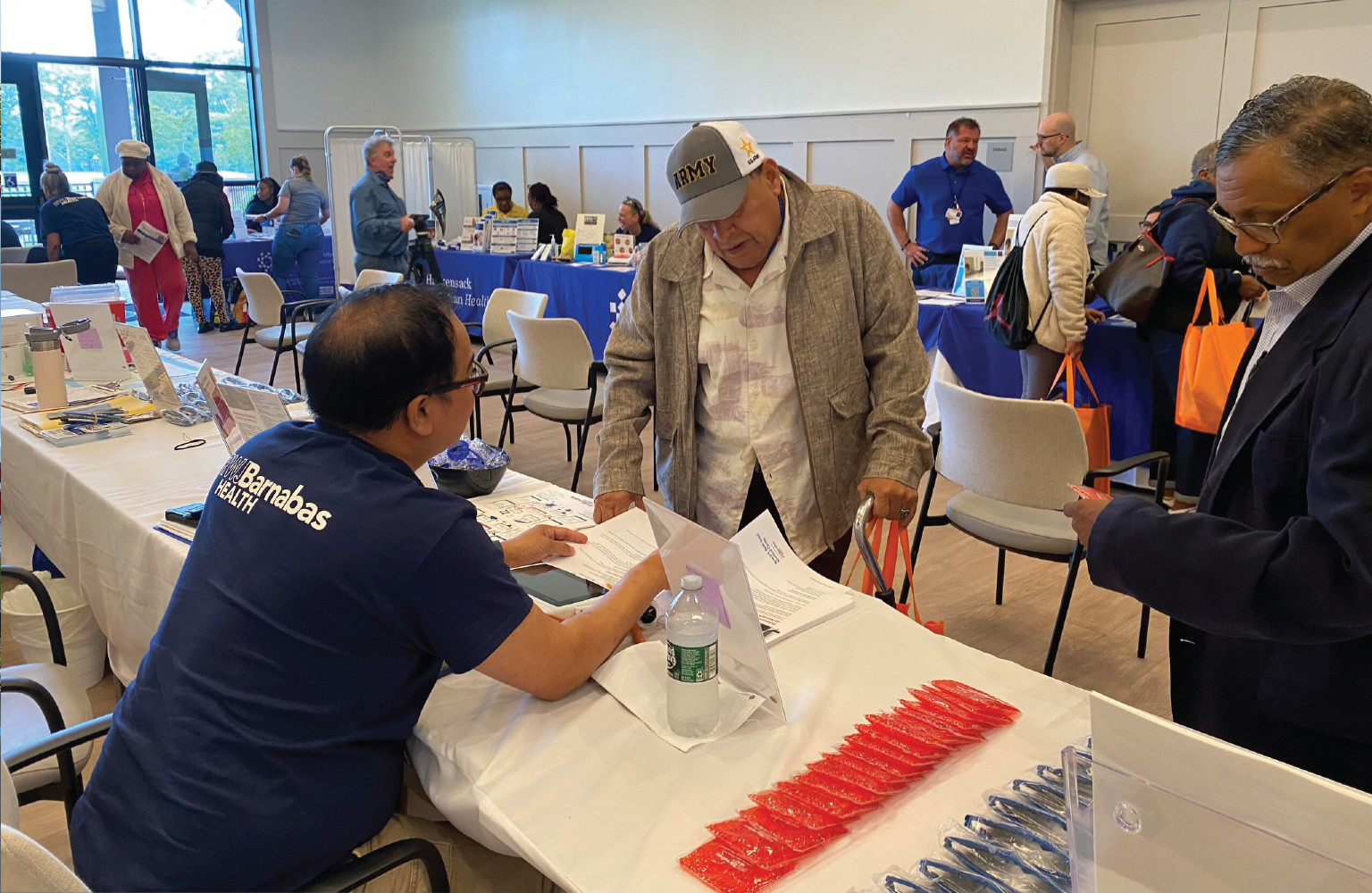
As part of Braven Health’s ongoing mission to support the health and well-being of our nation’s heroes, attendees at the health fairs receives free health screenings and assessments, including:
The VA’s Community Care Network is supposed to be a safety valve — if the VA can’t get a veteran in to see a specialist within 30 days, it’s required to refer them to outside providers. In New Jersey, that network has long been run by Optum, which Cantor said has performed poorly. He experienced it firsthand, waiting more than six weeks for an appointment for a back issue, despite having other insurance options available to him through his civilian career.
“It was a long, drawn-out process,” he said.
Cantor said he eventually had to escalate to patient advocates, and then to national-level VA advocates, just to get seen.
The VA recently put out a request for proposals to replace the Community Care Network contract — a deal Cantor said is worth roughly a trillion dollars. He’s hopeful a new operator will do better. He’s less optimistic about what the state itself contributes to veterans’ health care specifically, noting that most state-level veteran services focus on housing — programs like Veterans Haven North and South for homeless veterans, and the Bringing Veterans Home initiative — rather than medical care.
That gap, he said, is being filled largely by the state’s major health systems. RWJBarnabas Health, Hackensack Meridian Health, Virtua Health, Cooper University Health Care and Deborah Heart and Lung Center have all stepped up outreach to veterans in ways state government has not.
***
Cantor doesn’t frame any of this as charity. He frames it as a debt.
A man who nearly died from a cancer he didn’t know he had, standing at folding tables across New Jersey trying to make sure other veterans get checked before their own version of that mole on the arm turns into something they can’t outrun.
“No one deserves our support more than veterans,” he said.
For information about Braven Health, go to bravenhealth.com/2026.


