



Every month, a grandmother in Bridgewater heads to the local pharmacy to pick up her heart medication. But one month, she’s shocked to find that her co‑pay has tripled from $40 to $120. Nothing about the drug has changed — not the manufacturer, the dosage, or her insurance plan.
What has changed was the decision of an unseen middleman: the pharmacy benefit manager, or PBM.
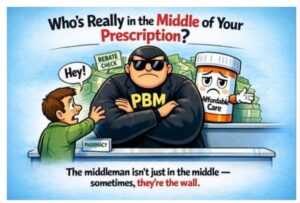 PBMs sit between insurers, pharmacies, and drug manufacturers. They decide which medicines are covered, which pharmacies patients can use, and how much is billed to health plans. These decisions happen behind closed doors — and increasingly, they lead to higher out‑of‑pocket costs for patients.
PBMs often profit when prices rise. Through tactics like spread pricing (charging health plans more than they reimburse pharmacies) and tying their fees to drug list prices, PBMs can make more money as patient costs climb. Families never see these mechanics or even know they’re happening — until they feel the hit at the pharmacy counter.
Why This Matters for New Jersey
New Jersey families already face some of the highest living costs in the country, and prescription drug prices, in addition to monthly health insurance premiums and other healthcare costs, can make life even more expensive. PBM practices play a significant role in that burden.
PBMs determine how much patients pay and what local pharmacies are reimbursed. When they use spread pricing, restrict pharmacy networks, or structure rebates around list prices, New Jersey residents end up paying more — even when the underlying cost of the drug hasn’t changed.
The scale of the system PBMs influence is enormous. According to the Drug Channels Institute, prescription dispensing revenues across U.S. pharmacies reached $683 billion in 2024. With that level of spending at stake, even small PBM pricing decisions can significantly increase patient and employer costs.
These practices also threaten New Jersey’s independent pharmacies, many of which face unsustainable reimbursements. When these pharmacies close, communities — especially rural, urban, and lower‑income areas — lose essential health care access.
For employers, including small businesses, school districts, and municipalities, PBM opacity makes it nearly impossible to understand or manage rising health benefit costs.
A Bipartisan Model for Reform
Last week, Congress passed a bipartisan package that includes major PBM reforms for Medicare Part D, including:
- Delinking PBM compensation from drug list prices;
- Stronger transparency for employers and plans; and,
- CMS oversight of PBM–pharmacy contracts, with real enforcement power.
This blueprint aligns with Governor Mikie Sherrill’s commitment to making New Jersey more affordable and accountable.
What New Jersey Can Do Now
To bring these protections to the commercial market — where most New Jerseyans get coverage — state leaders can act quickly by:
- Banning spread pricing and requiring transparent pass‑through pricing
- Delinking PBM fees from list prices across state‑regulated plans
- Strengthening transparency and audit rights for employers and regulators
- Establishing fair‑contracting standards to protect pharmacy access
The Bottom Line
That grandmother in Bridgewater shouldn’t have to wonder what her medicine will cost every time she goes to the pharmacy counter. A fair system would ensure her insurance works for her — not for a middleman.
By advancing PBM reforms that increase accountability, transparency, and affordability, New Jersey can protect patients, strengthen pharmacies, and finally put an end to hidden costs that families can no longer bear.
Chrissy Buteas is the president and CEO of the HealthCare Institute of N.J.


