


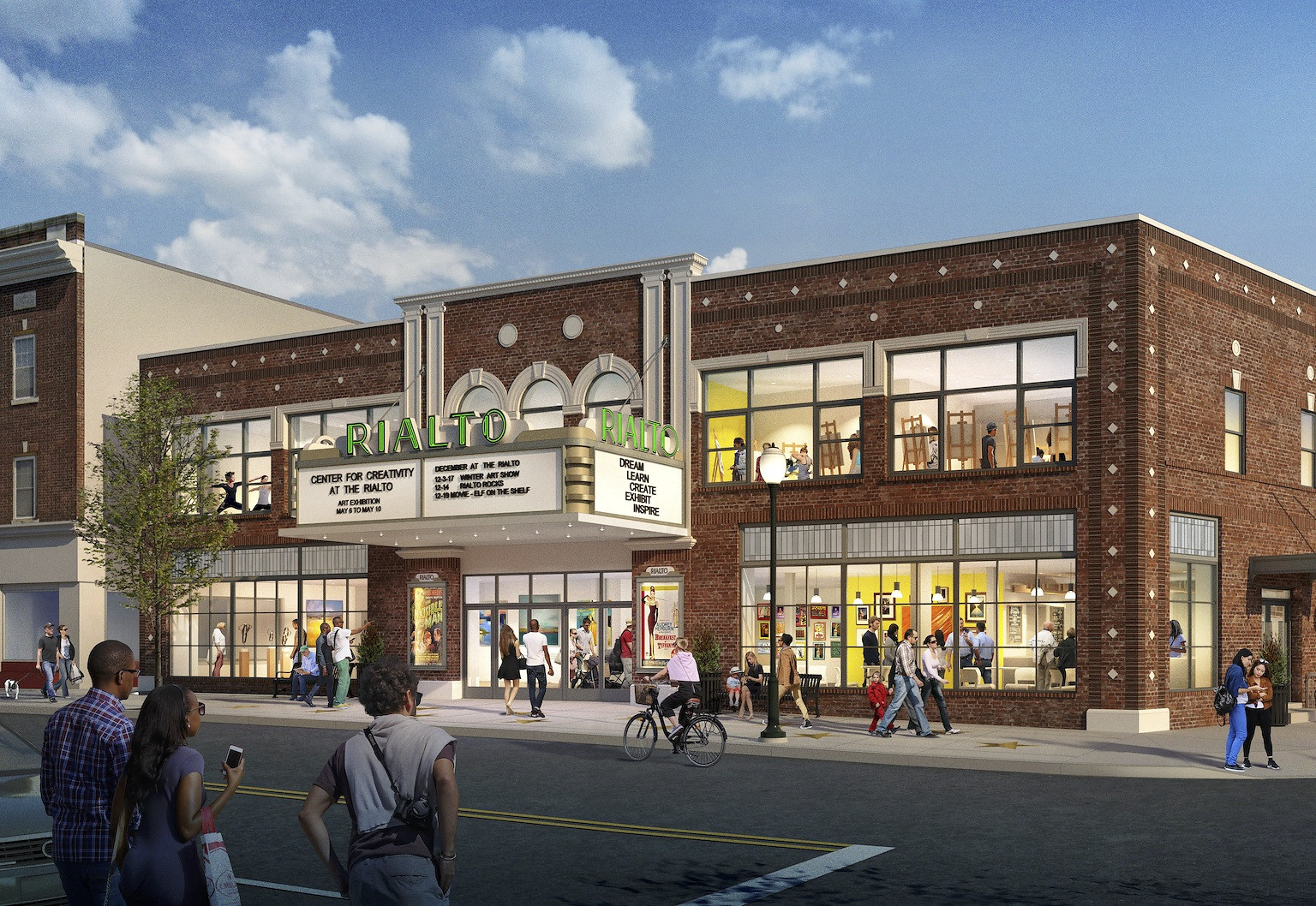
The New Jersey Economic Development Authority (NJEDA) Board has approved two major funding awards under the Cultural Arts Facilities Expansion (CAFE) Program, providing a powerful economic and cultural boost to Union and Essex counties. The decisions direct up to $43.3 million to the Center for Creativity at the Rialto in Westfield and $24.8 million to the historic Paper Mill Playhouse in Millburn.
Together, the state investments aim to revitalize regional cultural destinations, drive foot traffic to downtown small businesses, and expand accessibility to world-class performing arts programming for residents and students across New Jersey.
“New Jersey’s arts and culture sector is a powerful economic driver, fueling local businesses, creating good-paying jobs, and strengthening communities across the state,” NJEDA Chief Executive Officer Evan Weiss said. “Through the CAFE Program, the NJEDA is increasing access to major arts and cultural institutions, which helps attract visitors, support regional economies, and ensure that residents from every community can share in the economic and cultural benefits that these organizations provide.”
Project spotlight: The Rialto Center for Creativity (Westfield)
The NJEDA’s $43,381,250 tax credit award marks a monumental milestone for downtown Westfield, instantly kicking off the public-private “Rialto Reimagined” campaign. To cross the finish line, the organization is launching a concurrent $10 million fundraising drive—backed by an initial $5 million leadership gift—to fund final construction and early operations ahead of a planned 2029 grand opening. Construction is slated to begin in 2027.
Designed by Mills + Schnoering Architects (M+S), the adaptive reuse and gut renovation will transform the vacant 1920s-era theater into a state-of-the-art community hub. Key features of the multi-level layout will include:
-
Flexible Performance & Event Space: A dynamic main floor featuring a 450-person capacity for live performances, independent films, lectures, and community events, supported by a lobby, ticketing area, and dressing rooms.
-
Education and Studio Spaces: Four multi-use classrooms on the second floor dedicated to cultural arts education, workshops, rehearsals, and classes.
-
Galleries & Public Amenities: Dedicated visual art gallery spaces on both floors, a public café, a catering kitchen for private celebrations, and vital infrastructure upgrades including a geothermal wellfield, modern HVAC systems, and an elevator.
Operating models for the center will feature sliding-scale rental fees, scholarships, and discounted tickets to ensure broad community access, alongside specialized programming for youth and individuals with cognitive and mobility challenges.
“The Rialto’s return marks a new chapter for Westfield,” Bill Crandall, president of the Rialto Board of Trustees, said. “Thanks to the NJEDA’s generous commitment to the arts, we’re rebuilding more than a theater; we’re creating a home where creativity thrives and people come together.”
Westfield Mayor Jeremy Berman echoed the enthusiasm:
“The Rialto is one of our community’s most cherished historic landmarks, and its restoration represents an extraordinary opportunity to honor our past while investing in our future.”
Project spotlight: Paper Mill Playhouse (Millburn)
In Essex County, the legendary Paper Mill Playhouse has been approved for up to $24,800,000 in CAFE Program tax credits to execute a sweeping “Front of House” renovation.
Founded in 1938 and serving over 200,000 patrons annually—including 40,000 students—the theater functions as a statewide cultural asset. The upcoming improvements will overhaul outdated mechanical, electrical, and plumbing systems while resolving critical structural, circulation, and accessibility barriers.
Key project highlights include:
- A brand-new two-story main lobby featuring a box office, concessions, and merchandising areas.
- Monumental stairs, modern elevators, and an enlarged donor lounge.
- Brand-new, fully ADA-compliant restrooms replacing undersized and outdated facilities.
“The patron experience at Paper Mill will be greatly enhanced and improved for generations to come with the upgrades that are included in this project,” Mike Stotts, executive director of Paper Mill Playhouse, said. “Greater accessibility and a more thoughtful layout of our public spaces are the driving forces of this project.”
Millburn Mayor Frank Saccomandi celebrated the announcement, noting, “The Paper Mill Playhouse is our crown jewel. We’re incredibly lucky to have a theater of this caliber right here in Millburn, and we are thrilled to see the State stepping up to support its future.”
Driving statewide economic vitality
The CAFE Program provides tax credits covering up to 100 percent of eligible project costs (up to $75 million) to build and modernize cultural destinations like historical societies, galleries, museums, and performing arts centers. By pairing public state investments with private philanthropy, the initiative strengthens local small businesses, creates good-paying construction and operational jobs, and bolsters downtown vibrancy across New Jersey.


