


Verizon CEO Dan Schulman thinks artificial general intelligence — AI that can do much of what humans can, better and faster — could arrive within six to 18 months, and humanoid robots by 2035.
More from Verizon:
- Verizon putting $70M behind free AI training for workers, small businesses
- Verizon gives $1M to Liberty Science Center for AI programming
- Sherrill: AI economy shows Reagan-era hands-off government has run its course
- Zwicker pitches AI jobs bill: Make companies report cuts, reward them for retraining
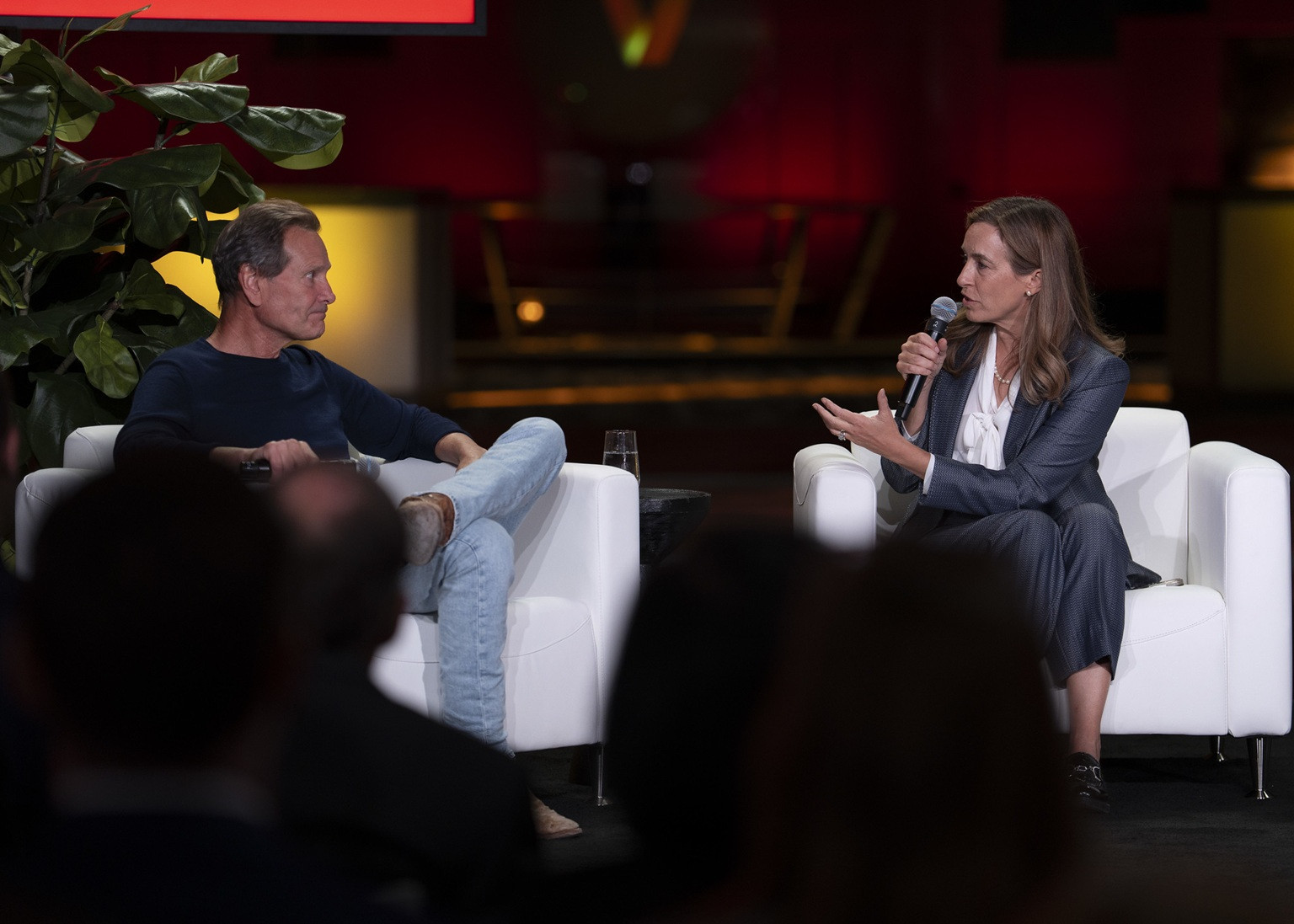
Schulman laid out his timeline Wednesday during a fireside chat with Gov. Mikie Sherrill at Liberty Science Center in Jersey City, where Verizon launched Verizon AI Skills for America, its $70 million initiative to offer free AI training to workers, small businesses and educators.
“My estimate is that we’ll move towards AGI, general intelligence, where machines do much of what we can do better than we do and faster than we do, maybe as fast as six to 18 months from now — that’s how close we are,” he said.
He estimated humanoid robots would come between 2030 and 2035. And in between, he said, comes quantum computing, in two or three years.
His point: the training can’t wait.
“We live in a time right now where there is unprecedented change in technology,” he said. “It is moving at a pace that I’ve never thought was possible or experienced in my career. It’s profound.”
***
Schulman laid out what he sees coming.
It starts with the models themselves, which he said are improving “in a step function manner” every two or three months.
“The models that we’re using today are the worst models we’ll ever use in our life,” he said.
He pointed to Astra, the new model OpenAI released earlier this month, as measurably better than what came before. Then he went further.
“The next release after that, which I’ve had the pleasure of seeing, is a step function above that,” he said.
After general intelligence, he said, comes quantum.
“The way that I think about quantum is everything we’re talking about times 1,000,” he said.
Then the robots.
“This isn’t just what’s happening right now,” Schulman said. “This is what’s going to happen over the next decade.”
A decade moving that fast, he said, demands guardrails: the right regulatory framework, and products that are safe for consumers.
Schulman said AI has to be thought about separately in at least three areas: its impact on society, from jobs to medicine to new materials; its military uses; and cybersecurity.
But he said no one should expect the technology to stop.
“Although we may slow, we will not pause on the technological deployment,” he said. “It will continue, and it will continue at breakneck speeds. And so we need to be prepared for it. We can’t be scared of it.”
***
Schulman said he’s been preaching that message inside Verizon since he became CEO.
At one of his first all-employee meetings, he told workers that whether or not they’d embraced AI, they needed to, at work and at home.
“You need to understand how it works, what it can do for you, how it can accelerate your innate potential, your work, because it is going to change the entire workforce,” he said.
Like most big companies, he said, Verizon has a bell curve: some employees have worked with AI from the start, and others not so much. So the company built week-long training programs for all employees, with certificates they can put on LinkedIn or a résumé.
Jobs will shift, he said, and every company is now working out “what gets handed off to machines” and “what stays with humans.”
That’s why, he said, Verizon is taking its training beyond its own walls, to make sure people everywhere are ready.
He said there’s both fear and excitement inside Verizon, and that familiarity tips the balance.
“The more you get to know the technology, the less you fear it,” he said.


