


Sometime in mid-2028, WBGO will move into new space as part of NJPAC’s ongoing development in Newark — a state-of-the-art, digital-forward performance venue paired with modern studios, giving the station its first real public-facing home.
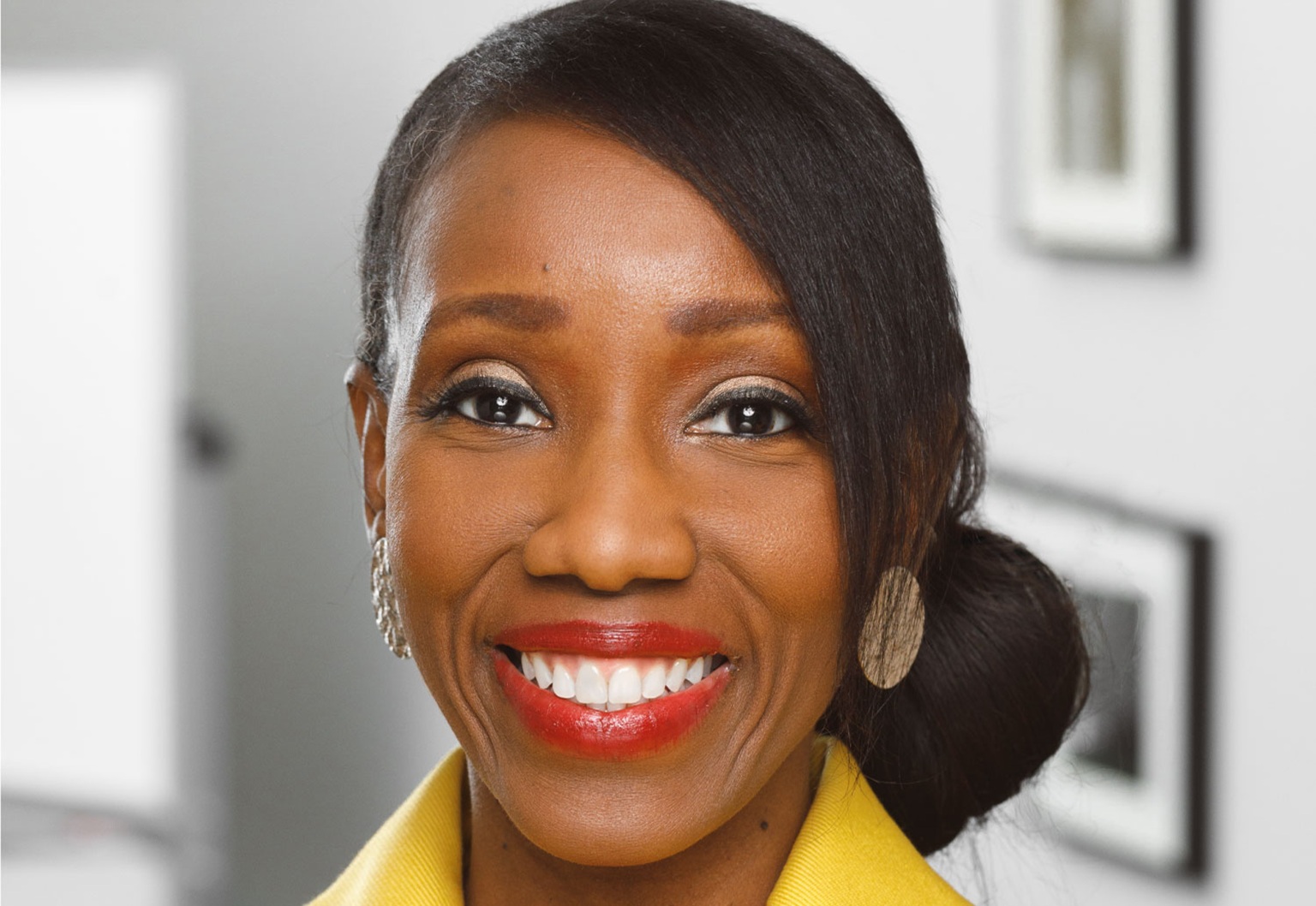
For incoming board chair Tara Dowdell, the timing couldn’t be better.
How to Help
Those looking to support WBGO — and jazz as a genre that connects communities in a time when we need it more than ever — can contribute here.
Dowdell, who takes over as WBGO’s board chair Oct. 1, said the move will further connect WBGO to the biggest arts institution in the state, strengthening the City of Newark’s vibrant arts and cultural scene and building on its historic jazz legacy.
But that’s not all.
Dowdell, the founder and longtime leader of her own marketing and public relations firm (the Tara Dowdell Group), feels the physical visibility will be just as impactful.
Folks walking down the street in Newark will be able to see into a new building — a modern and stylish storefront for a station that’s spent decades broadcasting from behind closed doors, and a chance to put Newark’s jazz legacy on display for anyone passing by.
“From a marketing perspective, it’s an ideal location,” Dowdell said. “We’re a global station with big audiences all over the world, but we’re firmly rooted in the city of Newark, and we benefit the city and the state of New Jersey.
“Being more visible is important for us, and good for the city of Newark.”
Dowdell is inheriting the role at a genuinely difficult moment for public media. The Corporation for Public Broadcasting, which once supplied roughly 20% of WBGO’s funding, was defunded by the federal government this year, pushing the station to lean harder on listener donations and, increasingly, corporate and foundation support.
WBGO Board of Trustees
WGBO, the legendary Jazz station in Newark, has an all-star board:
- CHAIR: Tara Dowdell, Tara Dowdell Group / TDG Speakers
- Newton Burkett, WABC-TV
- Jon Harold Dutton, The Cavalcade Group
- Linda Epps, 1804 Consultants
- Brenda Feliciano, self-employed
- Karl Paul Frederic, Clark Hill
- Dr. Jordan Garrison, Surgeon
- Bill Hofstetter, self-employed
- Christopher James, RWJBarnabas Health
- David Komar, apparel industry
- Pamela Morgan, Woman In Media – Newark
- Bob Ottenhoff, Center for Disaster Philanthropy
- Patricia Perez, self-employed
- Bob Sommer, Awsom Associates, LLC
- Rick Thigpen, PSE&G
- David Weiner, Neuberger Berman
For Dowdell, it’s a labor of love. She has her own history with the music dating back to college, when she got hooked on John Coltrane’s “Blue Train” and started making regular trips into New York City jazz clubs. That personal connection, she said, is tied up with why she cares about preserving Newark’s often-overlooked jazz legacy — a city that produced Wayne Shorter and Sarah Vaughan, among other luminaries.
BINJE recently caught up with Dowdell. Here’s more of the conversation, edited for space and flow.
BINJE: You’ve gone from board member to vice chair to chair. What’s changed with each step?
DOWDELL: It’s been a journey, one marked with challenges and opportunities. Right now, the lack of federal funding is making it a very difficult time for public media and arts and cultural institutions. WBGO is both.
But it’s also an exciting journey. We’re moving into a new building as part of the NJPAC development, a state-of-the-art, digital-forward performance space that will help us grow. WBGO is not just a radio station that broadcasts; we host interviews and live performances with some of the biggest names in jazz globally, including an ongoing partnership with Yamaha that brings artists in almost every other month.
I see my role as board chair as helping us leverage those opportunities and capitalize on those opportunities.
BINJE: Let’s talk about growing. Jazz has a passionate audience, but it’s one that tends to skew older, much like classical music. How do you reach a new generation?
DOWDELL: We’re already focused on being more digital-forward under CEO Steve Williams. We have an app we’re promoting heavily, and we ran a large ad campaign about a year and a half ago. We’re growing our digital audience across the website, the app, Instagram, TikTok and YouTube — our YouTube channel does especially well because we feature performances and interviews there.
There are a lot of exciting young jazz musicians people don’t realize exist, so we’re leveraging their audiences — collabs, as they say on Instagram — to get WBGO in front of new fans.
BINJE: Most people think of New Orleans when they think of jazz history. But Newark has its own deep jazz history that doesn’t get as much attention.
DOWDELL: You’re absolutely right. Newark has a rich jazz history — so many luminaries came from the city, like Wayne Shorter and Sarah Vaughan. We partnered with the city of Newark to name a street after Shorter. That’s something WBGO works to preserve and promote, and it benefits Newark by bringing more people into the city. If you listen, you’ll hear our hosts say we’re based in Newark every hour on the hour.
BINJE: What’s your own jazz background?
DOWDELL: I was listening to John Coltrane’s “Blue Train” back in college — that was my jam. I’d go into New York to jazz clubs; I still love going to this day.
BINJE: What is it about the music that grabbed you?
DOWDELL: It’s a uniquely African American art form created by our community — born out of our pain and struggle. We turned that pain into something beautiful that is celebrated around the world. There are Japanese jazz artists, Italian jazz artists, Polish jazz artists, African jazz artists, Black American jazz artists. A lot of jazz bands are incredibly diverse, and it’s a space where people unite around a love of the music.
On our 45th birthday celebration, two years ago, was at Newark Symphony Hall, where CEO Talia Young provided the space for us. People drove in from miles around. It was a super diverse crowd — people ranged from 20 to 80, and everybody got along. That’s the way things should be. Jazz brings people together, celebrates African American history in a beautiful way, and connects people from all over the world.
BINJE: Of course, connecting people comes with costs. Talk about the need to raise revenue?
DOWDELL: The Corporation for Public Broadcasting, which the federal government has since defunded, used to provide about 20% of our funding. That took a tremendous toll on WBGO. We get tremendous support from individual donors but we can always use more funding. Organizations such as Prudential and the Fund for New Jersey have been great supporters. But we need more support from corporations, high-net-worth individuals and foundations to preserve this art form and sustain the work we do here.
BINJE: Why is this such a passion of yours?
DOWDELL: This is about more than just arts and culture. WBGO promotes the state, it promotes the U.S. abroad, and it brings people together at a time when we need that more than ever.
BINJE: How can someone help?
DOWDELL: Our end-of-fiscal-year fund drive is underway right now. People can go to WBGO.org to donate. And while they are there, they can download our app.


