


Until May, Spirit Airlines carried about three of every four passengers at Atlantic City International Airport. Then Spirit shut down, nationwide and overnight.
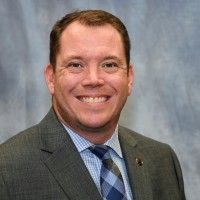
Stephen Dougherty, executive director of the South Jersey Transportation Authority, which owns the airport, put it mildly when he spoke last week at New Jersey Alliance for Action’s 24th annual statewide transportation conference.
“Spirit represented a significant portion of our commercial activity,” he said.
The numbers were blunter. Spirit accounted for approximately three of every four passengers at the airport.
Dougherty said the authority knew immediately what it had to do. It worked with carriers already serving ACY and kept talking with prospective new ones to replace lost service.
Today, ACY is served by Allegiant and Breeze, plus American Airlines, which runs a bus shuttle to its flights at Philadelphia International Airport. In May, airport director Tim Kroll said Breeze would cover every route Spirit alone had flown, including Fort Myers, Orlando, West Palm Beach and Myrtle Beach, S.C., by the end of the year.
To Dougherty, the episode was a lesson for the whole industry.
“An airport has to adapt when an airline changes its network,” he said, adding that highways, transit and rail all have to adapt when traffic patterns, job centers and travel habits shift.
“The transportation system can’t stand still while the economy and the needs of the people we continue to serve change,” he said.
Here are seven other key points from his talk:
7. Random lines shouldn’t decide who gets a ride
Earlier this year, Gov. Mikie Sherrill signed a law adding Burlington County to SJTA’s charter. On Sept. 21, the authority’s SJ Connects shuttle began running an 11-stop route there, linking the Pennsauken Transit Center with Moorestown.
Dougherty said that’s more than a new bus route.
“A county line on the map should not determine whether people can connect to opportunity, and neither should the jurisdictional boundaries of a transportation agency,” he said.
6. Move people, not just vehicles
SJ Connects launched in June with the Chamber of Commerce of Southern New Jersey, running five regional shuttle routes on ADA-compliant buses with backing from a $5 million NJ Transit investment. The routes connect residents without cars to jobs, health care, colleges, shopping and transit.
Dougherty said early ridership is encouraging.
“This isn’t simply about putting buses on the road; it’s about whether the transportation system is reaching the people who need it,” he said.
5. All-electronic tolling was a start, not a finish
The Atlantic City Expressway went to all-electronic tolling in January, ending stops at toll plazas. Dougherty said the Authority immediately saw less congestion and improved safety.
“In some ways, it is the beginning of the next one,” he said of the conversation about the road, because smoother traffic at the tolls means looking harder at what happens further down the road.
4. Fix the problem, not just the pavement
That next step is the third-lane widening project, which Dougherty said should break ground soon. It will create a continuous three-lane expressway from milepost 31.6 at Interchange 31 to Route 42 at Interchange 44, including major bridge and interchange work.
One fix: a dedicated right-turn lane and better signal timing at a single-lane ramp near Route 42, where backups have led to rear-end crashes. That turning movement carries about half the ramp’s traffic.
“This isn’t simply a capacity project; it’s a safety and operations project,” Dougherty said. “We are not building something simply because we can build it.”
3. Judge the system by the outcomes
Dougherty said the real test isn’t any single project. It’s whether people can get where they’re going.
“Can a worker get to a job? Can a student get to a campus?” he asked, adding patients getting to appointments, businesses moving employees and products and families getting to the Shore.
“Those are the outcomes that matter, and they require us to think beyond the boundaries of individual agencies,” he said.
2. Maintenance is the job, too
Dougherty noted that New Jersey already has plenty of transportation infrastructure in place. He said SJTA’s job, along with its partner agencies, is to maintain it, improve it and connect it, not just add to it.
He also credited his working relationship with the state transportation commissioner, who chairs the SJTA board, saying transportation problems don’t stay inside organizational boundaries.
1. It’s all one network
Dougherty said commuters don’t think about who owns the road.
“They don’t think about who operates the bus. They don’t think about who maintains the bridge. They simply need to be able to get to where they need to go safely and efficiently,” he said.
That’s how he framed the year at SJTA: tolling, SJ Connects, Burlington, the widening project and an airport rebuilding after Spirit.
“ACY is adapting to a rapidly changing aviation market. None of those things exist in isolation,” he said. “They’re all part of the same transportation story.”


