


Ask New Jersey business leaders why the state ranks so poorly in business climate surveys, and one answer consistently tops the list: taxes.
For Gov. Mikie Sherrill, however, New Jersey’s challenges extend well beyond its tax code.
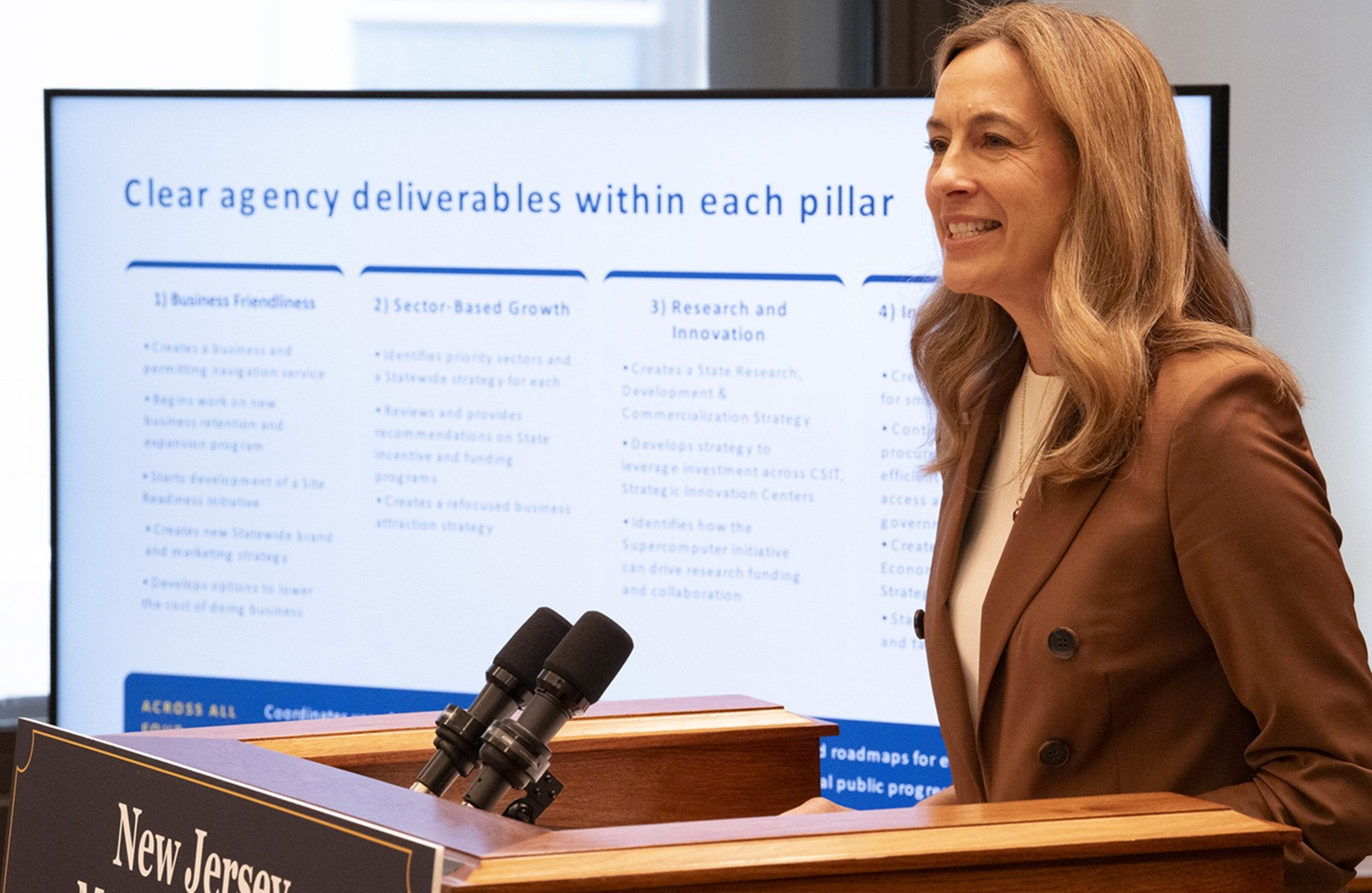
The state has the nation’s highest corporate tax rate at 11.5%, a frequent target of criticism from business groups. But Sherrill argued this week that New Jersey’s standing in business rankings is also shaped by factors such as permitting delays, regulatory hurdles and the overall cost of doing business, issues she says her New Jersey Means Business plan aims to address.
“There’s certainly concern about corporate taxes,” Sherrill said during a press conference. “We also hear about permitting and the broader costs of doing business here, and then other factors that affect where businesses choose to locate.”
Sherrill cited CNBC’s latest Top States for Business rankings, which put New Jersey at 31st overall and last in the nation for business friendliness. The state also scored poorly on the cost of doing business and infrastructure.
Those rankings capture more than a state’s tax burden. The cost-of-doing-business category includes expenses such as office space and property insurance, while the infrastructure ranking considers factors such as permit approval times, transportation networks and commuting times.
A separate survey from the New Jersey Business and Industry Association (NJBIA) ranked New Jersey the least competitive in the region based on six costs: minimum wage, income tax, corporate tax, sales tax, property tax and unemployment insurance contributions.
“I think there are a whole host of reasons that drive business climate,” Sherrill said. “We have very ambitious goals for improving our position in those business climate surveys, and I think we can do that.”
Sherrill’s economic plan seeks to address at least some of these concerns. In an executive order signed this week, she gave state agencies 90 days to deliver recommendations for reducing the cost and complexity of starting, operating, and expanding a business in New Jersey. “The review will examine administrative processes, duplicative requirements, taxes and fees, licensing, and additional costs across different levels of government.”
While some business leaders and elected officials continue to push for tax relief, others said Sherrill’s focus on permitting delays, regulatory complexity and government responsiveness is a step in the right direction.
Michele Siekerka, CEO of the NJBIA, said she was encouraged by Sherrill’s commitment to review the full range of costs affecting business growth in New Jersey. In an op-ed published by BINJE, she wrote that the plan can succeed if it holds state agencies accountable, reduces unnecessary mandates, and ensures businesses have a seat at the table.
In her remarks, Sherrill also pointed to Washington, arguing that federal policy is making it harder for businesses to invest and plan for growth.
Michael Forrest, CEO of Thomas Foods International’s U.S. operations, said trade policy and the costs of labor, healthcare and fuel have created uncertainty for businesses. The company, an importer and processor of meat, is based in Australia but has South Jersey operations due to its proximity to the Port of Philadelphia.
Despite the rising costs, Forrest said general economic conditions remain solid and his outlook is optimistic. He spoke to a group of South Jersey business leaders in Cherry Hill on Thursday.
“The nation’s love affair with protein continues,” he said.


