


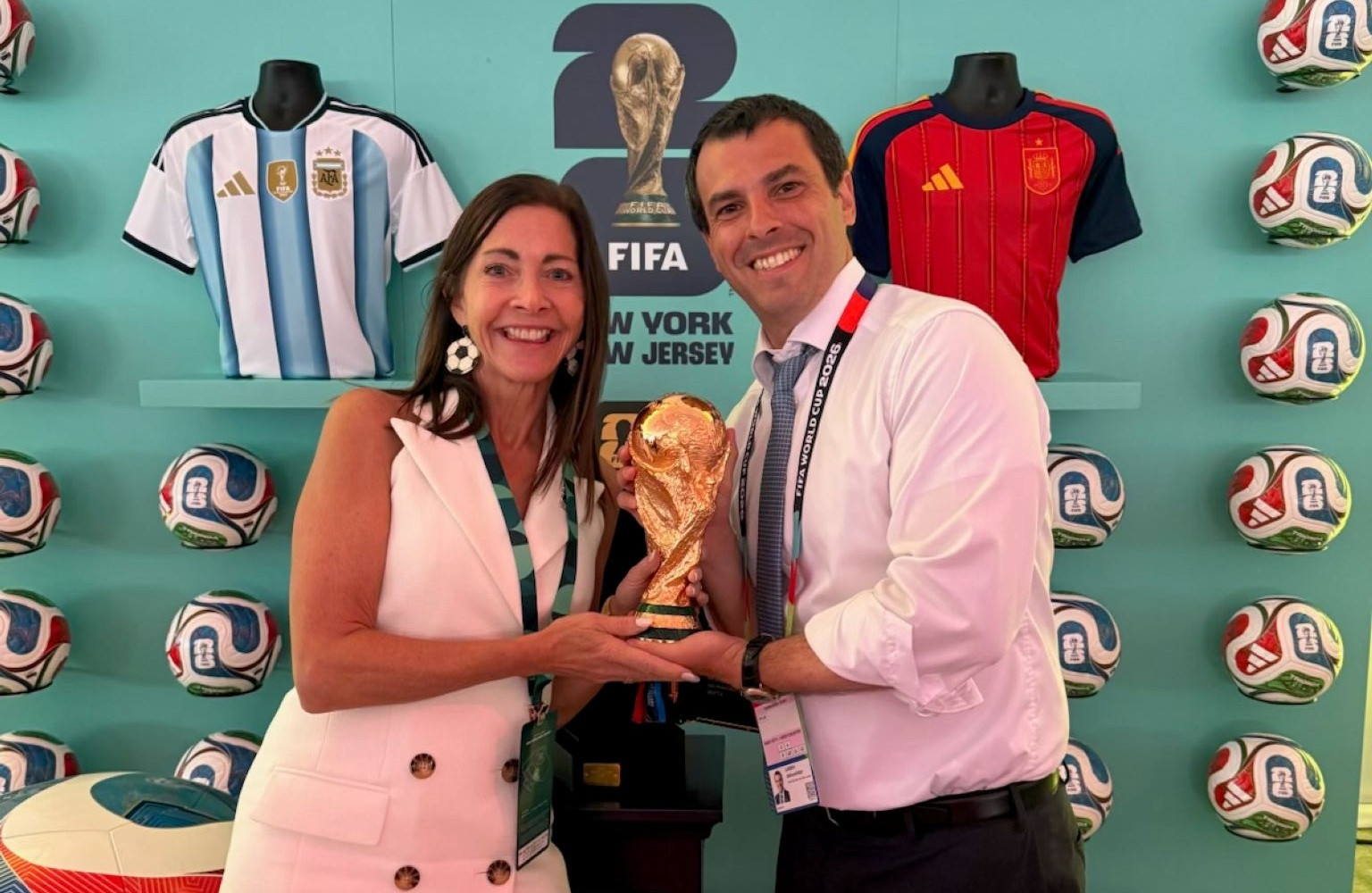
NJNY Host Committee Chair Tammy Murphy said the World Cup delivered something far bigger than economic impact or lessons in logistics and security: It produced a rare moment of unity.
“It was a real balm that our state, our country, our world needs right now,” she said. “Just seeing the absolute unity and the peaceful approach of competing nations standing side by side, not talking about politics, but actually just enjoying the sport for what it is.
“At the end of the day, that is perhaps the most important thing the World Cup means to me, because I think that was its biggest gift.”
Murphy said she never doubted the event would have its impact — even if getting everyone to believe that early on wasn’t easy.
“Bringing people along and making them believe that this could be what it was, was not always easy,” she said. “There’s a lot of competing things that are going on. But having been to World Cup games and international tournaments that involve soccer, there was no question in my mind that this was going to be and do everything we wanted, from economic impact to transportation and security to fan experience.”
Her most emotional moment came on June 13, the Saturday night match between Brazil and Morocco, the first of eight matches played at MetLife Stadium.
“I was almost in tears that day as I stood in the stadium and just watched the crowds come in,” she said. “I saw that it was coming together. There were all the naysayers who said transportation wasn’t going to work, or this was going to go wrong, or that was going to go wrong. Just seeing the stands filling up, everybody getting along and being excited and enthusiastic for the match, was incredible.”
The World Cup took place six months after Gov. Phil Murphy left office, but the former First Lady said it served as a capping moment of an administration that prioritized the idea of making New Jersey the world’s state. The event, much like the dozen or so international trips the governor made during his eight years in office, helped elevate the state’s global profile.
For most, Sunday’s final marked the end of the World Cup in New Jersey, an effort that began in the summer of 2018, when the U.S. (along with Mexico and Canada) were awarded the event by FIFA.
For Murphy, the event will go on a bit further as she continues in her role at the Host Committee for much of the rest of the year as it winds down operations and pays all its bills. The true economic impact — how much the state benefited from hotel stays; how much the state will pay to provide transit service — will only be known then.
Murphy said the true impact goes beyond that. The value of putting New Jersey in a global spotlight can never be truly measured. But she believes it is so significant — so substantial — the state should work to be there again.
“We have to lean in,” she said. “We should be unabashedly forward-leaning and really pitch for big sports events, big entertainment events, big exhibitions for industries. The sky’s the limit — we can do it in New Jersey. We have proven we can do it.
“Whether you look at the incredible concerts we’ve hosted with Taylor Swift and others, and the way we’ve just risen to the occasion so many times, we’ve made sure it’s working for New Jersey in the long run.”
Murphy points out these events bring other lasting impact.
“Look at all of the hard infrastructure updates: state police, the new buses and trains, the overhead signaling wiring, the pedestrian bridge, the mini pitches,” she said. “There are ways to do this, to have your cake and eat it too, and make New Jersey shine.
“We never say, ‘We can’t do something.’ We just hosted the biggest event to have ever taken place on planet Earth. So why wouldn’t we go for the next one?”


