


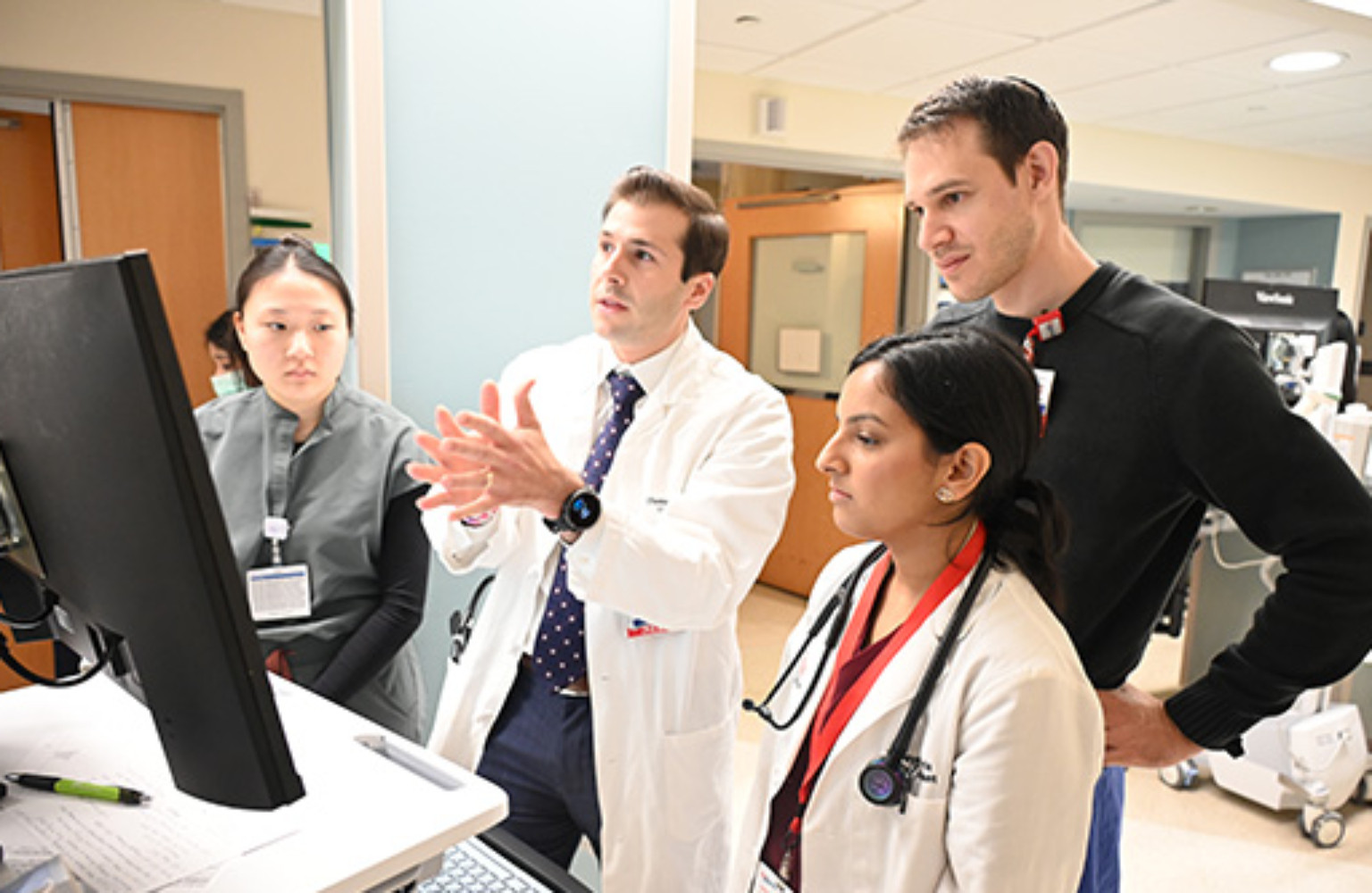
To anyone questioning the use of AI-enabled or AI-assisted healthcare, listen to this:
An AI-enabled early warning system helped RWJBarnabas Health and Rutgers Robert Wood Johnson Medical School catch hospitalized patients on the verge of rapid decline sooner — and, according to a new study, saved lives doing it.
The study, published recently in NEJM AI, a journal from the New England Journal of Medicine group, evaluated outcomes among 23,132 high-risk patients across 11 RWJBarnabas Health hospitals. Deaths among those high-risk patients fell from 23.1% to 18.6% after the system was implemented, an 18% reduction in the risk-adjusted odds of in-hospital death.
Hospitalized patients can deteriorate quickly, often before obvious warning signs appear. Researchers evaluated the Epic Deterioration Index, an AI-enabled tool that continuously analyzes information already captured in the electronic health record — vital signs, lab results, nursing assessments and age — to flag patients at rising risk of serious decline. The system recalculates a patient’s risk score every 15 minutes and automatically alerts rapid response teams once a patient reaches the highest-risk category.
Getting there took years of groundwork.
RWJBarnabas Health and Rutgers first built and piloted the systemwide approach at Robert Wood Johnson University Hospital, the system’s academic medical center, refining how and when alerts went out, setting up automatic notifications to rapid response teams, and training clinicians on the tool before expanding it to the health system’s other 10 hospitals.
Thomas Nahass, vice president of health informatics and an intensive care physician at RWJBarnabas Health, and assistant professor of medicine at Rutgers Robert Wood Johnson Medical School, led the study.
“Our goal was to identify patients earlier, before they reached a point where intervention becomes much more difficult,” Nahass said. “The deterioration index gives us an earlier point in time. If we can get a critical care eye on the patient sooner, we can change the course of their outcome.”
Once patients crossed into the highest-risk threshold, automated alerts went straight to hospital rapid response teams, letting critical care specialists move quickly to assess the patient and decide whether more intervention was needed. Rapid response team activations among high-risk patients rose from 25.3% of hospital stays to 37.5% after the system went live — but transfers to intensive care units didn’t significantly increase alongside that jump, even as mortality dropped substantially.
Andy Anderson, chief medical and quality officer at RWJBarnabas Health and a co-author on the study, said the findings point to what’s possible when technology and clinical teams work in tandem.
“Every minute matters when a patient’s condition begins to worsen,” Anderson said. “This study demonstrates how AI-enabled tools, when paired with experienced clinical teams, can help us identify patients at risk sooner and deliver the right care at the right time. These findings highlight the potential for innovation to improve quality, safety and outcomes for the patients we serve.”
Stephen O’Mahony, senior vice president and chief medical information officer at RWJBarnabas Health and the study’s senior author, credited the partnership behind the technology as much as the technology itself.
“This is what an integrated academic health system is for,” O’Mahony said. “We combined Rutgers’ methodological rigor with the operational reach of 11 RWJBarnabas hospitals. The mortality benefit was not produced by an algorithm but by the partnership around the algorithm.”
Researchers believe the mortality improvement came from a combination of factors working together — staff education, sharpened clinical awareness, EHR alerts and automated rapid response notifications — rather than any single piece of the system on its own. Because the tool they studied, the Epic Deterioration Index, is already built into Epic, one of the most widely used electronic health record systems in the country, the findings could carry implications well beyond New Jersey.
Researchers are now studying a next phase of the work, aimed at catching patients whose risk scores are climbing rapidly, in hopes of intervening even earlier.


