


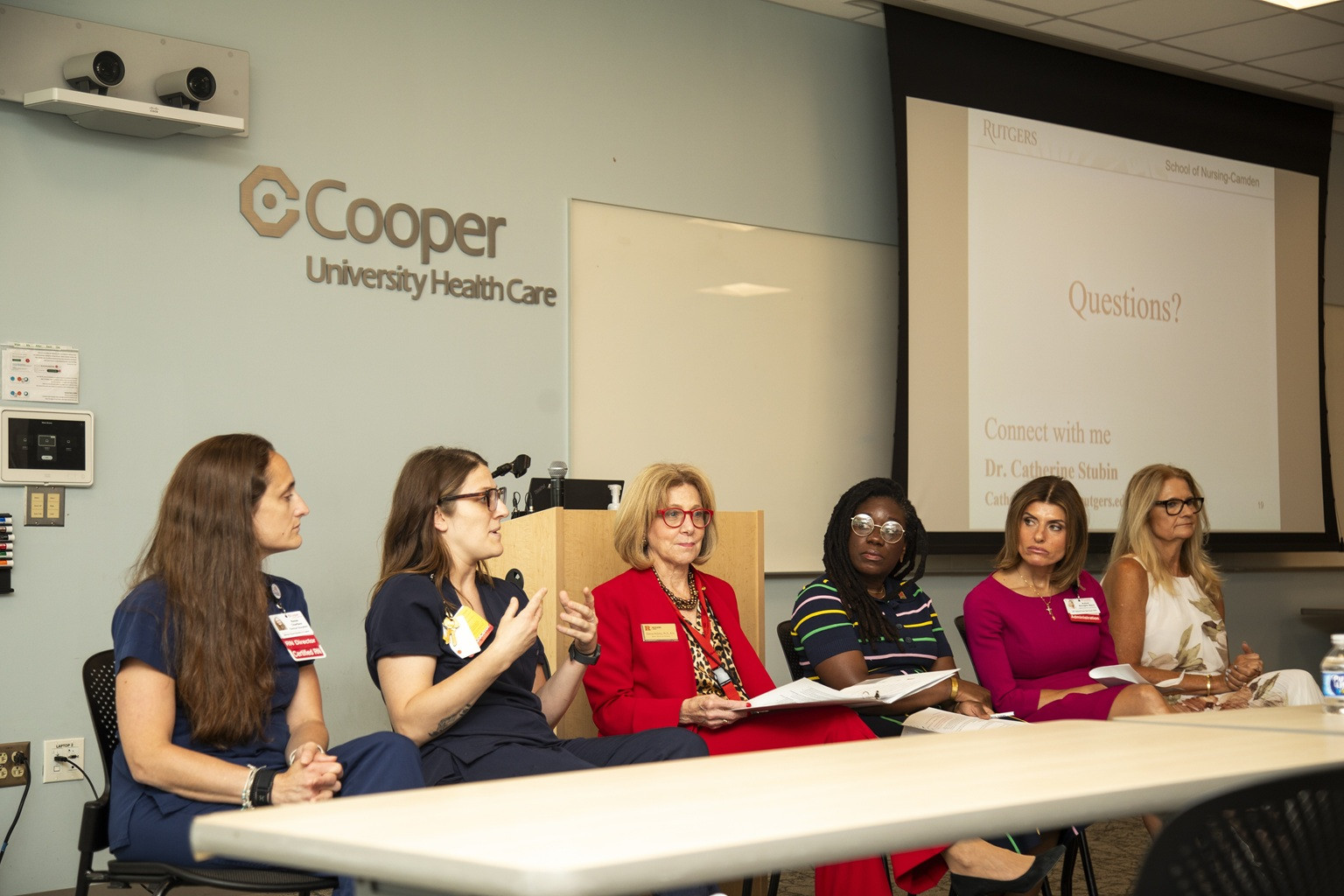
Addressing one of the most critical challenges facing the modern medical landscape, leaders from academia and health care recently gathered for a landmark event: “Managing Stress and Preventing Burnout in the Future Nursing Workforce.”
Hosted by the Rutgers School of Nursing–Camden, the Walter Rand Institute for Public Affairs, and Cooper University Health Care, the discussion centered on the emotional realities of the nursing profession and the need for structural support to ensure the well-being of the next generation of caregivers.
The event showcased findings from research conducted by Catherine Stubin of Rutgers School of Nursing–Camden and supported by the Walter Rand Institute as part of the Hillary Project.
The Hillary Project was established to honor the memory of Hillary Herskowitz, a Rutgers School of Nursing–Camden alumna whose life was lost to burnout during the pandemic. Today, the project serves as a vital platform for research, education, and advocacy to combat trauma and stress in the field.
“This research confirms that nursing students are receiving strong clinical preparation, but it also highlights an important opportunity to better prepare future nurses for the emotional realities of the profession,” Stubin said. “We have a responsibility to equip future nurses with the tools they need to navigate stress, prevent burnout, and sustain long, fulfilling careers.”
The panel of experts emphasized that mitigating burnout requires a cohesive strategy involving academic institutions, health systems, and policymakers. Kathy Devine, senior vice president and chief nursing executive at Cooper, highlighted the urgency of this collaborative effort.
“Nursing is a deeply meaningful profession, but it is also one that can be emotionally and physically demanding, and we must support nurses’ well-being from the very beginning of their careers,” Devine said. “Cooper is proud to join Rutgers School of Nursing–Camden and the Walter Rand Institute in advancing this important conversation.”
As health care systems nationwide navigate workforce shortages and retention challenges, the event served as a call to action. By embedding wellness, emotional preparedness, and resilience training directly into nursing education, leaders hope to improve long-term retention and ensure that the future nursing workforce can continue to deliver safe, high-quality patient care in an increasingly demanding environment.


