


The first time Chris Christie visited the Camden office of the U.S. Attorney’s Office, in 2002, he stayed late.
He had just been named U.S. attorney. He met with the prosecutors in the office, and the meeting ran until about 7:30. When he walked out, two U.S. marshals were waiting for him. They hadn’t been there when he arrived.
They were there to walk him to his car.
Christie told them his car was just down the street. He could make it on his own.
“No, no, no, sir. It’s after dark here. You cannot go by yourself,” he recalled them saying.
It stuck with him.
“And I thought to myself, how am I, as the chief law enforcement officer, federal side, allowing this to happen in one of the most important cities in our state,” he said.
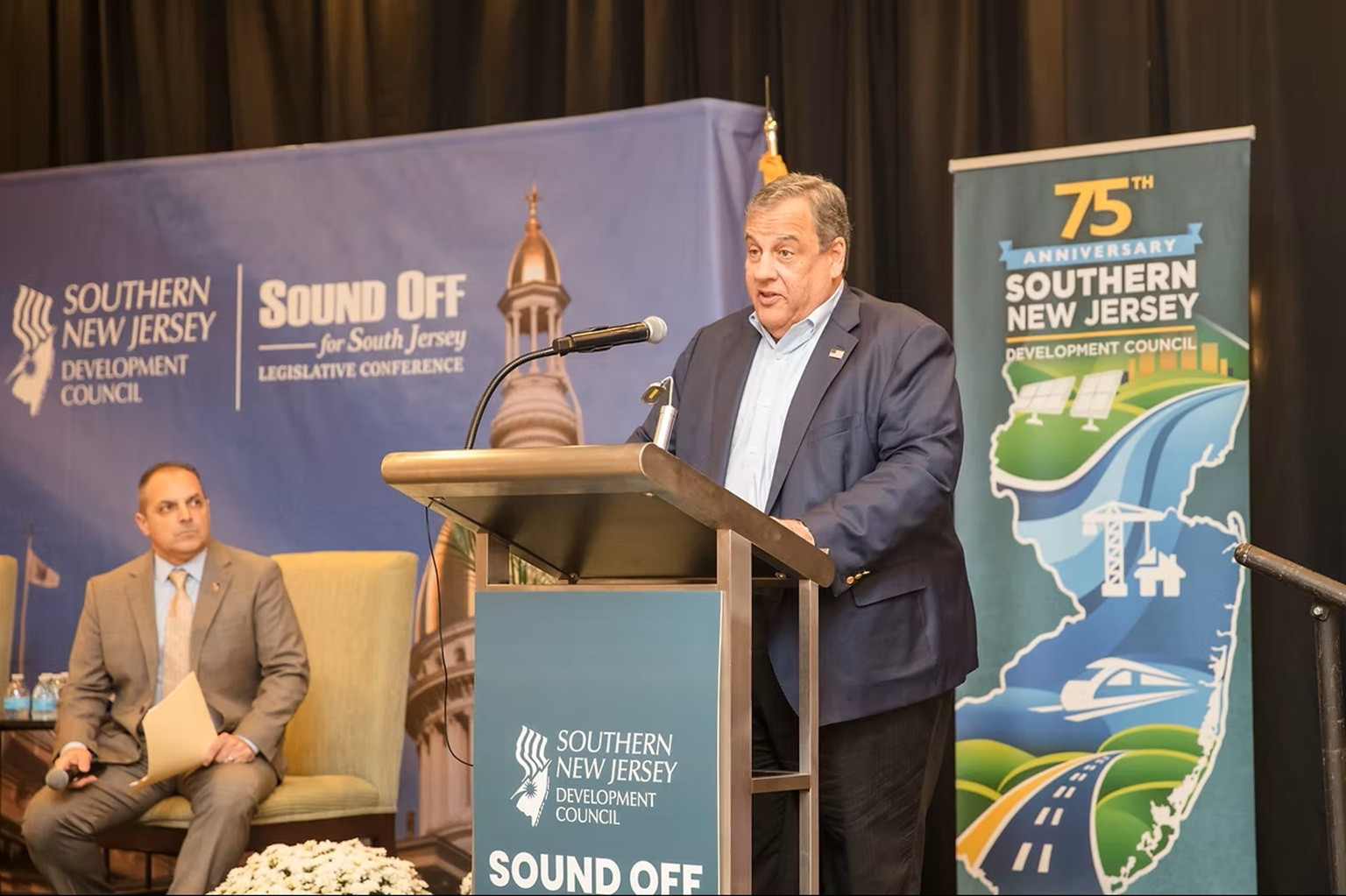
Christie told the story earlier this month at the Southern New Jersey Development Council’s 44th annual Sound Off for South Jersey legislative conference at The Westin Mount Laurel.
Most of his keynote was about national politics, with the midterm elections 18 days away. But the moderator, Nick DiRocco, a former Christie staffer who is now a vice president at South Jersey Industries, asked a question closer to home: Why did a governor from Morris County put so much time and so many resources into places like Camden and Atlantic City?
“Because they needed it,” Christie said.
He was candid that politics didn’t require it.
“I know that two thirds of the vote is north of 195, and that you really don’t need anything from South Jersey to be elected governor,” he said.
As U.S. attorney, Christie said, he was limited in what he could do, so he leaned on federal law enforcement to try to make things a little better. As governor, he had more tools. And he said he had something he didn’t have in other struggling cities: partners.
He said the mayors of Trenton and Paterson at the time wouldn’t work with him. In Camden, then-Mayor Dana Redd would.
Together, they disbanded the Camden city police department in 2013 and replaced it with a metro division of a new county police force. It was an unlikely partnership, as Christie described it.
“Think about the fact that an African American female Democrat mayor and a white Republican governor from North Jersey teamed together to fire the entire Camden Police Department, recreate a county police metro division, and crime has not been lower in Camden in 50 years,” he said.
Christie pointed to investments in higher education and in Cooper University Health Care. He also pointed to Renaissance and charter schools, which he said South Jersey legislators supported, unlike their North Jersey counterparts, whom he described as beholden to the NJEA.
Today, he said, Camden has the best K-12 system for urban students in New Jersey, at about half the cost.
Christie also credited the working relationship he built with Democratic legislative leaders, including South Jersey’s Steve Sweeney, then Senate president, and the late Sheila Oliver.
“Me and Steve Sweeney and Sheila Oliver decided we cared more about getting things done than we cared about scoring political points,” he said.


