


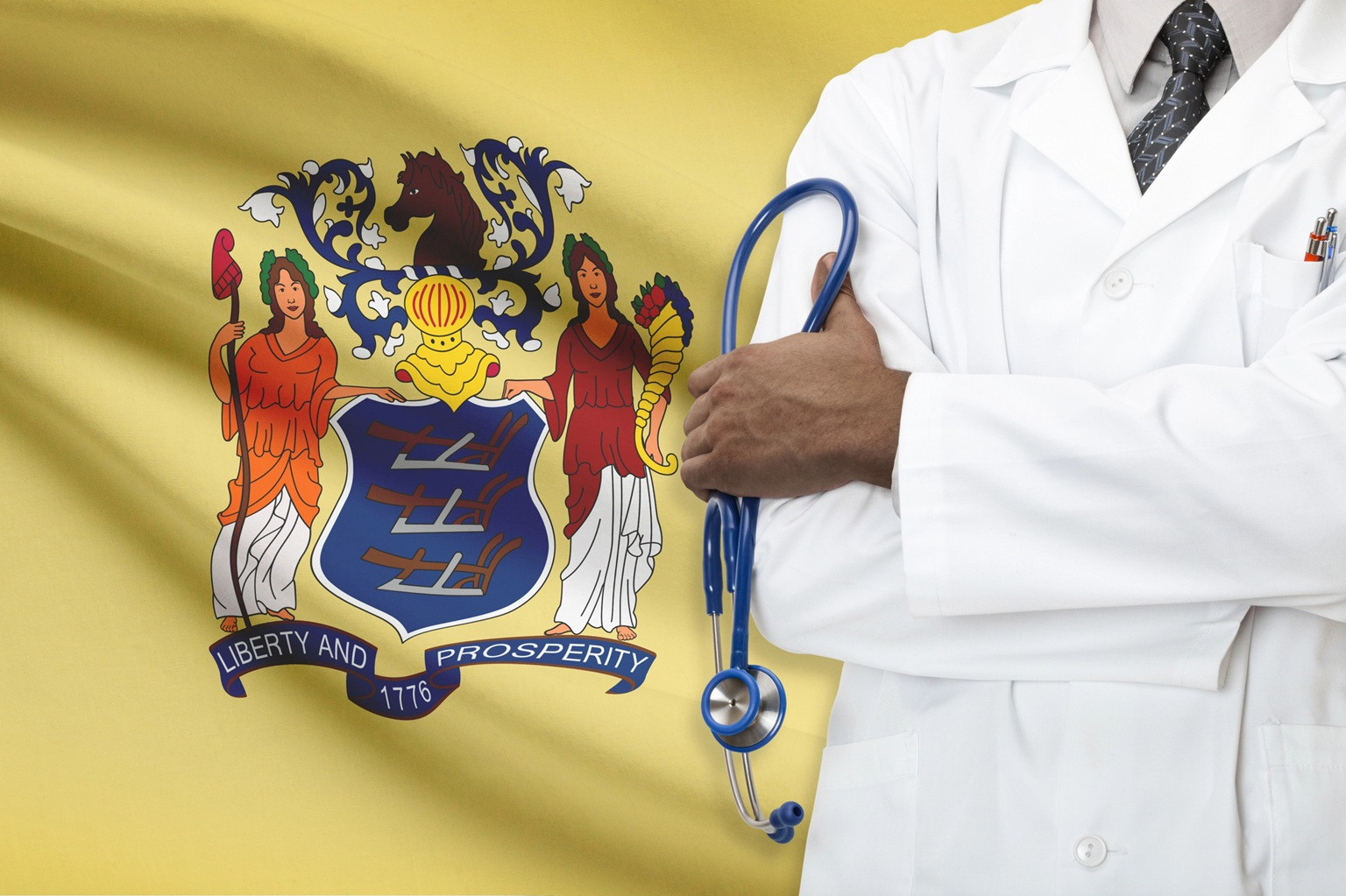
Fulfilling a commitment made last month alongside an agreement with 17 state employee unions, Gov. Mikie Sherrill on Thursday announced the launch of the State Health Benefits Program (SHBP) Reform Working Group.
The initiative brings together a broad coalition of state officials, labor organizations, health care leaders, program vendors, and public-employer representatives to address the structural challenges facing New Jersey’s public employee health benefits. The group is tasked with delivering concrete, data-driven recommendations to ensure high-quality healthcare remains affordable and sustainable for public workers, retirees, and taxpayers.
“From Day One, I have been focused on making New Jersey more affordable, and that means tackling hard problems instead of kicking them down the road,” Sherrill said. “For too long, New Jersey has responded one rate cycle at a time. We are taking a different approach by bringing stakeholders together, working from shared data, and pursuing long-term changes that preserve high-quality benefits while making these programs more affordable and sustainable.”
Led by Chief Operating Officer Kellie Doucette, the working group will examine critical facets of the public healthcare ecosystem, including:
- Program administration and employer/member participation structures.
- Provider network organization, payment models, plan pricing, and premium-contribution frameworks.
- Long-term governance, information-sharing, and operational capacity.
Dedicated subcommittees will drive deep-dive analysis into these focus areas, engaging subject-matter experts and additional external stakeholders to ensure actionable implementation strategies.
“The challenges facing public employee health benefits demand a collaborative approach,” Doucette said. “We look forward to building a road map for systemic reform, focusing not just on the what, but on the how — ensuring a plan for implementation is just as robust as the recommendations themselves.”
Broad stakeholder representation
The working group features an extensive roster of cross-sector participants, including:
- Labor & Employee Organizations: Representatives from 17 state employee unions, the NJ AFL-CIO, communications workers, teachers, building trades, law enforcement associations, and firefighter groups.
- Healthcare Organizations & Experts: The New Jersey Association of Health Plans, New Jersey Hospital Association, Medical Society of New Jersey, and state nurse and primary care associations.
- Program Vendors & Public Employers: Current health plan administrators (Aetna, Horizon Blue Cross Blue Shield of New Jersey, Optum Rx) alongside municipal, county, and school board associations.
- Legislative Leadership: Representatives from both the Majority and Republican offices in the Senate and Assembly.
Because New Jersey administers several distinct health-benefit systems—spanning state, local government, and educational employees—the Administration will coordinate the working group’s output with parallel efforts addressing the Local Government Group and the School Employees’ Health Benefits Program.
The working group will convene for its inaugural meeting on Oct.16, meeting regularly to draft its preliminary recommendations for the Governor, with detailed design and implementation planning expected to follow through 2027. Any resulting policy updates will navigate through standard collective negotiations, administrative, or legislative pathways.


