


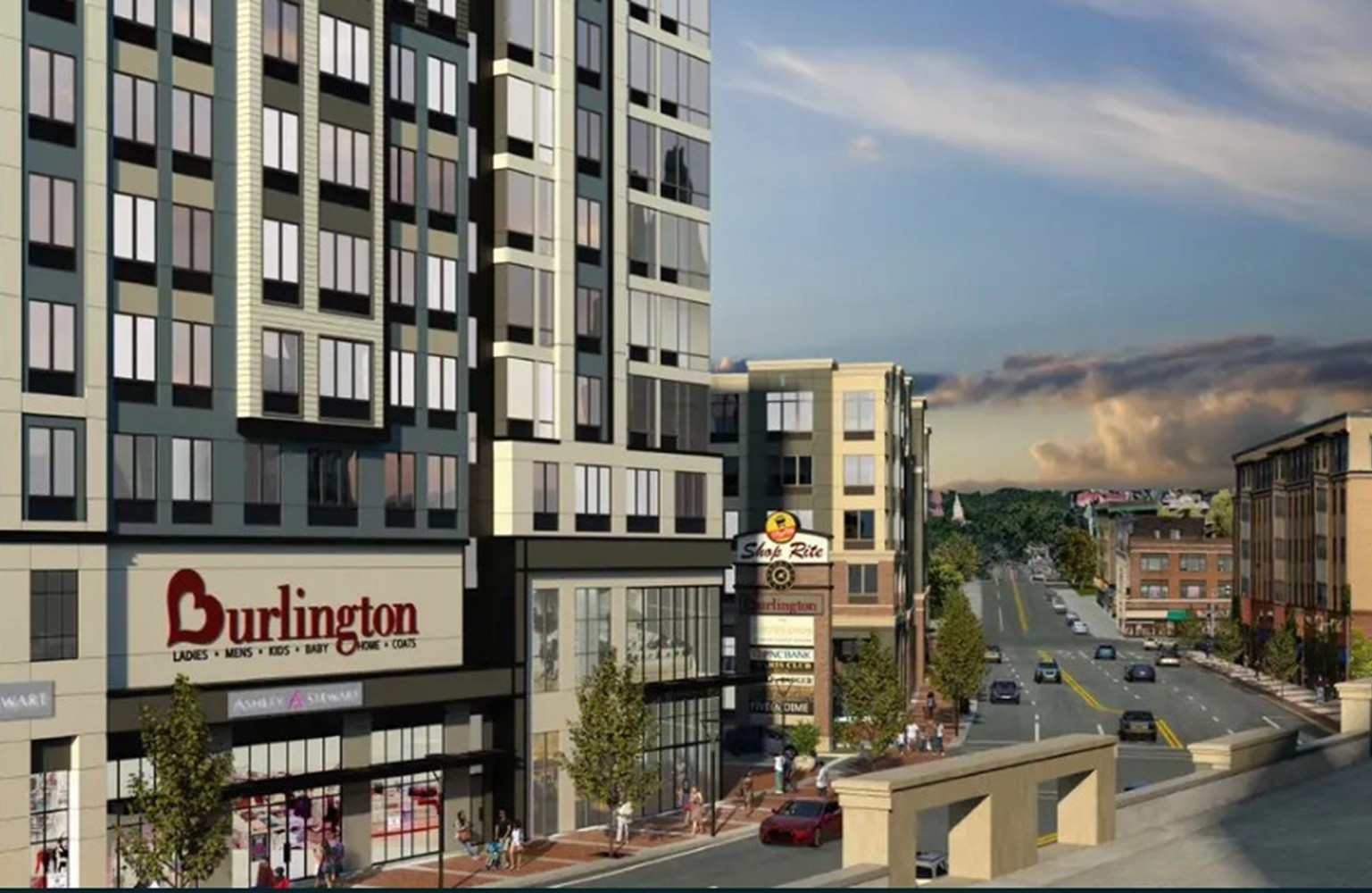
Mixed-use development, retail investment, and public-private partnerships are helping to create broader economic opportunities on projects such as Triangle Equities’ The Crossings at Brick Church Station in East Orange.
Phase 1A of the project is currently open and occupied. Phase 1B construction is expected to begin after construction financing closes, anticipated later this year.
Josh Weingarten, EVP of acquisitions and development at Triangle Equities, said placemaking is a word that gets used loosely, but for Triangle Equities, it describes an actual discipline, and it is the reason a project like The Crossings at Brick Church Station (Brick Church) moves a city rather than simply adding units to it.
“Housing on its own gives people a place to sleep and then a car ride to everything else,” he said. “Retail on its own gives people a place to shop and a place to drive home from. Neither is a catalyst.
“One is a bedroom community; the other is a shopping center. A place emerges only when you build enough of the pieces so that someone can live, work, shop, and spend an evening within the same few blocks.”
At Brick Church, Triangle Equities is building three things at once. First, homes: roughly a thousand across the phases, with affordable units in the same buildings, at the same addresses, and with the same amenities as the market-rate units.
Second, a front door to the train: a pedestrian promenade that carries you from your building onto the platform and into Midtown Manhattan in about 25 minutes.
Third, a main street of genuine everyday retail: a full-service supermarket, general merchandise, health care, and food.
“Deliver one, and you have a building,” Weingarten said. “Deliver all three, and you have a place.”
Recapturing local spending is a real part of the case, he said. By the city’s own accounting, at last measure, East Orange lost more than $1.4 billion a year in consumer spending to surrounding towns and getting some of that back is what allows the retail to underwrite.
“But that is the arithmetic, not the reason the project changes the city,” Weingarten said. “The reason is that people finally have somewhere to be.”
When done effectively, Weingarten said an area will begin to see more investment outside of the developers.
“When we opened the supermarket at Brick Church, the first full-service grocery in East Orange in a generation, it changed what lenders would underwrite on that block,” he said. “That is worth more than any economic impact study.
Retail component serves area’s residents
Retail in an underserved market offers a variety of goods people already drive 20 minutes to buy, including groceries, general merchandise, and health care.
At Brick Church, the first phase is anchored by a ShopRite and the second by Burlington, with Five Below and Rainbow signed alongside it. All these retailers offer exactly what residents have been leaving town to purchase, Weingarten said.
Triangle’s first-phase retail was 95 percent leased at construction completion, reinforcing a strong existing demand.
That said, food is not an afterthought; it is the center of a community, according to Weingarten.
“Thriving neighborhoods are anchored upon the places where people eat and gather: the supermarket, the restaurant, the coffee shop,” he said. “That is where people run into one another, and running into one another is most of what a community actually is. A retail program cannot only offer places to buy things; it must include places to sit down, linger, and build community.”
Brick Church does all of it. The first phase already has a full-service ShopRite with prepared food. For the next phase, Triangle is negotiating with a range of food concepts, from a roughly 150-seat full-service restaurant to a coffee shop, a quick-service option, and a food hall, all connected by a public promenade.
Weingarten said one financing point that often gets missed is that retail on a triple-net lease produces income that is structurally additive to the residential side of the building, and in a mixed-income deal that income is part of what makes the affordable component financeable.
“Retail is not decoration on an apartment building; it is a credit source,” he said. “Treating it that way changes how much affordable housing you can actually deliver.”
Choosing a viable development market
Weingarten said one way to identify potential development areas is to look for a gap between a location’s quality and the amount of capital invested in it.
“When those two things are far apart, the market is telling you something, and it usually is not that the location is bad,” he said.
Brick Church is an express stop about 25 minutes from Midtown Manhattan. New Jersey designated it a Transit Village in 2012, specifically to draw commercial development and jobs to the station area.
For roughly a decade afterward, almost nothing of scale was built. That gap was never a demand problem; it was a capital-stack problem. Assembling the site, the approvals, and eight or nine layers of public and private financing are difficult enough that most developers pass, which is precisely why the opportunity is still there, he said.
Strong evidence supports the value of this location. The Regional Plan Association studied roughly 45,000 home sales along the Morris & Essex corridor, where Brick Church is located, and isolated about $23,000 per home attributable to rail access, rising to about $34,000 within walking distance of a station.
“Brick Church is on the platform, so we capture the premium a park-and-ride site cannot,” Weingarten said.
He suggested developers underwrite the neighborhood that exists today, not the one it intends to create.
“If you are right about the market, the improvement shows up as upside,” he said. “If you underwrite the improvement itself, you have no margin for being early, and in this business, you are almost always early.”


