


The first rung of the career ladder is disappearing. AI is getting so good at entry-level work that employers are starting to skip hiring beginners altogether, workforce experts say.
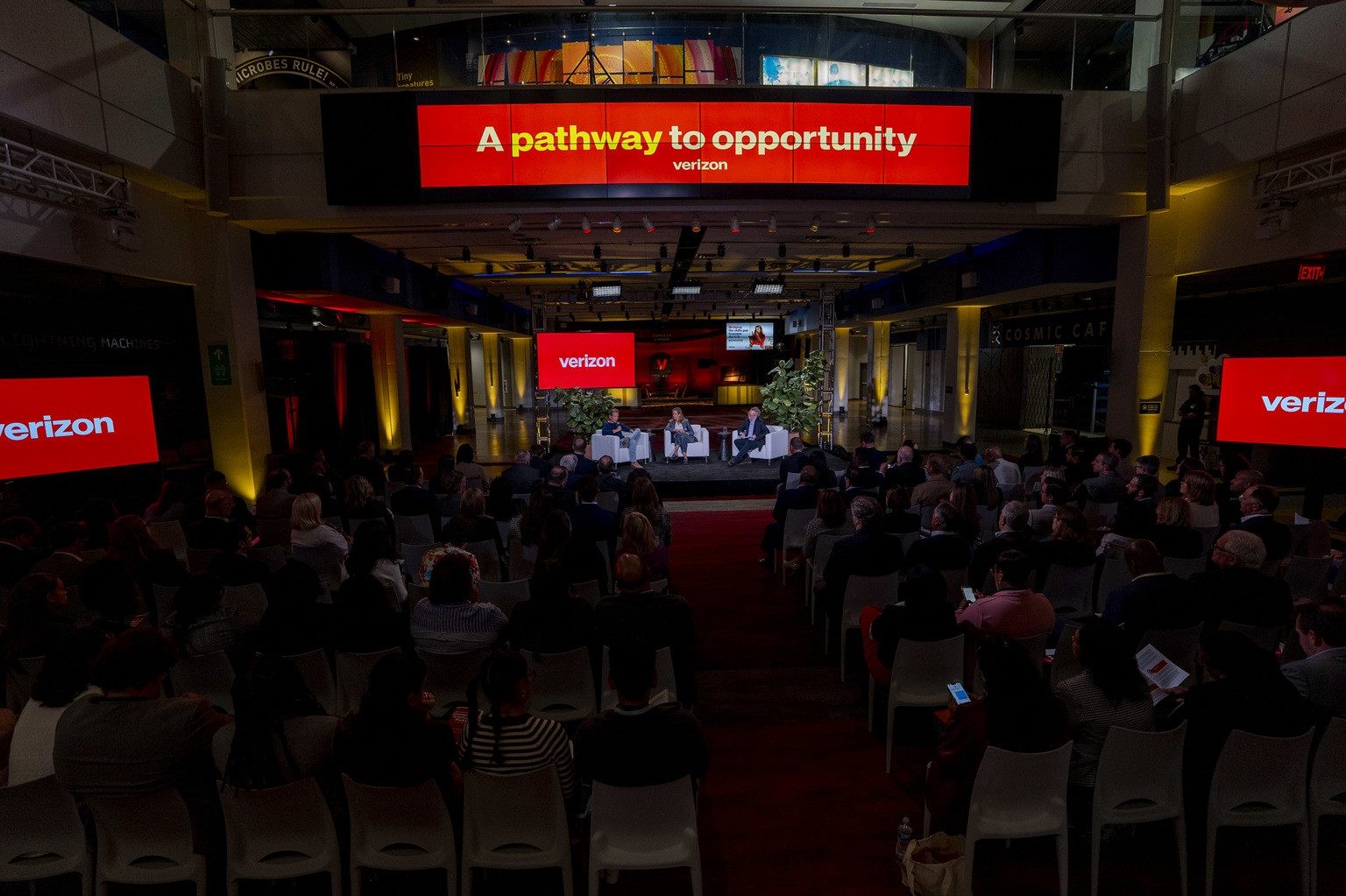
That was one of the starkest messages from Matt Sigelman, president of the Burning Glass Institute, during a panel discussion last week at Liberty Science Center in Jersey City, where Verizon launched its $70 million Verizon AI Skills for America initiative.
More from Verizon:
- Verizon putting $70M behind free AI training for workers, small businesses
- Verizon gives $1M to Liberty Science Center for AI programming
- Sherrill: AI economy shows Reagan-era hands-off government has run its course
- Zwicker pitches AI jobs bill: Make companies report cuts, reward them for retraining
“AI is very good at those kind of tasks that people used to do at the entry level, by which you gain experience and ultimately build expertise and judgment,” Sigelman said.
As a result, he said, employers are shifting away from hiring at the entry level and toward hiring experts. That leaves a hard question for young workers.
“How do we make sure that there’s a way for those who are launching their careers to start their careers not at the beginning but in the middle,” he said.
New Jersey is already trying to answer that. The New Jersey AI Hub has launched “sprint internships” with Breakthrough Tech at all 18 of the state’s community colleges, so students get real experience before they graduate.
***
Who else AI is hitting first may also be a surprise, Sigelman said. It isn’t the college-educated professionals who worry about it most.
People with college degrees, he said, are looking at AI and thinking, “Wait a second, that wasn’t supposed to be me.”
“We’re actually missing that the biggest measurable impacts today are actually with people who are working in clerical jobs, administrative jobs, in sales support jobs, and a range of things like that,” Sigelman said.
That lines up with a Brookings Institution study released in January, which found that the 6.1 million U.S. workers most vulnerable to AI are concentrated in clerical and administrative roles, and that 86% of them are women.
Sigelman said the bigger story is quieter: jobs are being “rewired from within.”
The skills needed to get into a given job today are different from what was required three or four years ago, he said. That means someone who has held a job for decades may no longer have the skills to stay relevant in it.
***
One answer, the panel said, is faster pathways that don’t require a four-year degree.
Rebecca Corbin, CEO of the National Association for Community College Entrepreneurship, pointed to South Jersey. Lockheed Martin went looking to hire engineers, she said, and found that what it really needed were technicians.
That’s where community colleges come in, Corbin said, by identifying the core skills technicians need and training people quickly.
“How can we upskill people very quickly, but make them nimble enough that they could serve different industries?” she said.
The challenge, she said, is speed.
“Higher ed moves very slowly,” Corbin said. “And as your CEO pointed out, AI is moving very quickly.”
***
The other answer is more human support.
Steven Preston, CEO of Goodwill Industries International, said more than 85% of the people Goodwill serves have a high school diploma or less. Many come from deep-need backgrounds, including incarceration, addiction and homelessness.
“Many of the people that come to us have never seen a career path, have never had people coaching them,” he said.
Goodwill’s answer is what Preston called its “special sauce”: career navigators, frontline professionals who walk with people through the process and keep them on the path.
Preston said AI will make them better, not replace them. He described a near future in which AI takes a job seeker’s skills assessment and life situation, matches it against local job market data and builds a personalized path of classes, contacts and tools. Adaptive learning would then help the person through any trouble spots.
The navigator, in turn, gets more time for face-to-face work, Preston said, “freeing up time for our people to do the most important part of their job, which is that human support.”
Donna Epps, Verizon’s senior vice president and chief responsible business officer, who moderated the panel, said that was exactly the point.
“Coming from a technology company, I really love that you’re saying technology is actually going to expand the capacity of the folks to be able to be effective,” she said.
***
Preston put the national numbers in stark terms. About 40 million Americans are unemployed, underemployed or earning very low wages. At the same time, there are real openings in skilled trades, health care, logistics and emerging AI roles, many of them reachable through credential programs.
“I’ve never seen anything where such outsized risk and outsized opportunities stand right next to each other, especially in the workforce,” said Preston, who has led corporations and government agencies.
The stakes are local, too. Jersey City Mayor James Solomon, who welcomed the crowd, said his city faces an affordability crisis, and good jobs are part of the answer.
“We need Jersey City residents to have jobs that pay them good, decent living wages to afford the city,” Solomon said. He said he wants to make sure workers, “particularly those who may be susceptible to losing their jobs, have training and access.”
Sigelman said the key is getting ahead of the change. Plenty of programs are already trying to reskill workers, he said.
“It’s far more effective if we can pre-skill workers,” he said.
That takes foresight, he said: not a two-week forecast, but something closer to a Doppler radar that tells workers whether the thunderstorm is going to cross their picnic blanket this afternoon.
“How is my job going to change?” he said. “What can we do about it?”


