


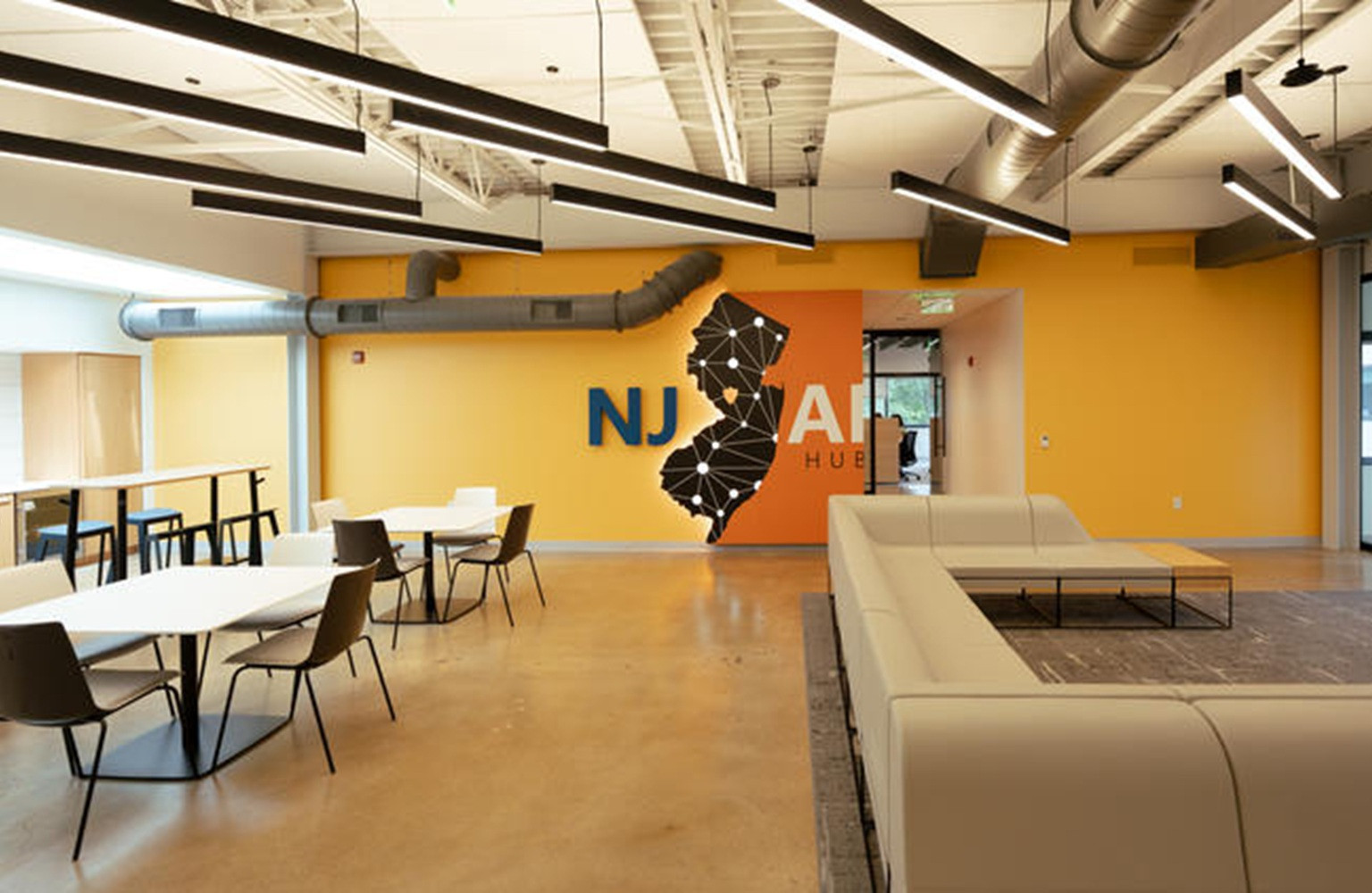
New Jersey’s plan to get residents ready for AI may start somewhere unexpected: the public library.
The New Jersey AI Hub is piloting a program at five libraries around the state that trains librarians to teach patrons AI literacy, AI for job seekers and AI for small businesses. The idea is to reach people who aren’t in school or a corporate training program.
“How do you reach every individual, and what does true last mile distribution of training look like?” Liat Krawczyk, the Hub’s executive director, said last week during a panel discussion at Liberty Science Center in Jersey City. If the pilot works, she said, the Hub will refine it and scale it.
The Hub is one of the community partners in Verizon’s new program. Its approach is a bit unusual.
***
The Hub is an independent organization founded by the state of New Jersey, Princeton University, Microsoft and CoreWeave, which represent the kinds of institutions it works with every day: government, education and research, technology and infrastructure.
Those founders, Krawczyk said, came together to answer one question: “What would it take to truly make a region AI ready?”
Her answer is to work between institutions, not inside them.
“We work in the white space in between institutions,” she said. “We are trying to become an AI intermediary. These entities don’t really exist across the nation yet, but we think they will become more ubiquitous because they are necessary to kind of grease the wheels of the system to become more adaptive.”
The core problem, she said, is a mismatch: AI moves at extraordinary speed, while institutions move slowly. So the Hub looks for places where handoffs between sectors fail, such as between employers and educators, or between research and commercialization. It also looks for duplicated work that could be shared, and demand that could be pooled for economies of scale.
Most important for this moment, she said, the Hub creates room for “contained experimentation” in fields where trial and error isn’t normally accepted, then hands what works back to the institutions responsible for scaling it.
***
Krawczyk offered a case study from higher education.
The Hub mapped AI activity across 36 New Jersey colleges and universities and found more than 200 AI initiatives. Almost every school, it turned out, was working on the same three things: governance, AI literacy and faculty training.
So, the Hub pulled the schools into shared working groups. They are building modular AI literacy curricula that are easier to transfer between schools than full courses, working through common governance questions and tackling hard problems such as AI in writing. The results go into an open-source forum.
It’s also rethinking how students get experience. With employers hiring fewer entry-level workers, the Hub has launched “sprint internships” with Breakthrough Tech at all 18 of the state’s community colleges, so students get real-world experience before they graduate.
Beyond education, the Hub supports dozens of startups through its accelerator programs, works to give researchers access to AI tools, compute and data, and holds about 100 events a year to get different parts of the ecosystem talking. Because it sees so many pain points, Krawczyk said, it can also elevate them to policymakers.
Donna Epps, Verizon’s senior vice president and chief responsible business officer, who moderated the panel, called it a real statewide case study.
“Not surprisingly, New Jersey is early to the issue,” she said.
***
Krawczyk said the national conversation about AI tends to swing between extremes: a utopia where disease is eradicated and no one has to work, or a dystopia where every job is lost.
“Thought leadership is great, prediction is great, but what we need is a strategy,” she said.
That means giving every person and every company a clear first step, she said, which is why she praised Verizon’s program for “giving people the place to start.”
“That is kind of the hardest thing to do,” she said. “Where do I begin?”
And she said no one should expect certainty anytime soon.
“Everyone wants answers. We don’t have answers, and I don’t think we’re going to have answers for a very long time,” Krawczyk said. “It’s knowing we’re not going to know what’s going to happen, and still being nimble enough, and adaptive enough, and collaborative enough to start to move systems where we need them to be.”


