


The concept behind the company is so simple — employees should have access to their pay at the end of the workday rather than after a two-week period — that the company is named DailyPay.
Educating the work world of this business model — how it empowers employees, how it aids attraction and retention, how the work world used to operate in this fashion — is a greater challenge.
One that DailyPay is taking on with creativity.
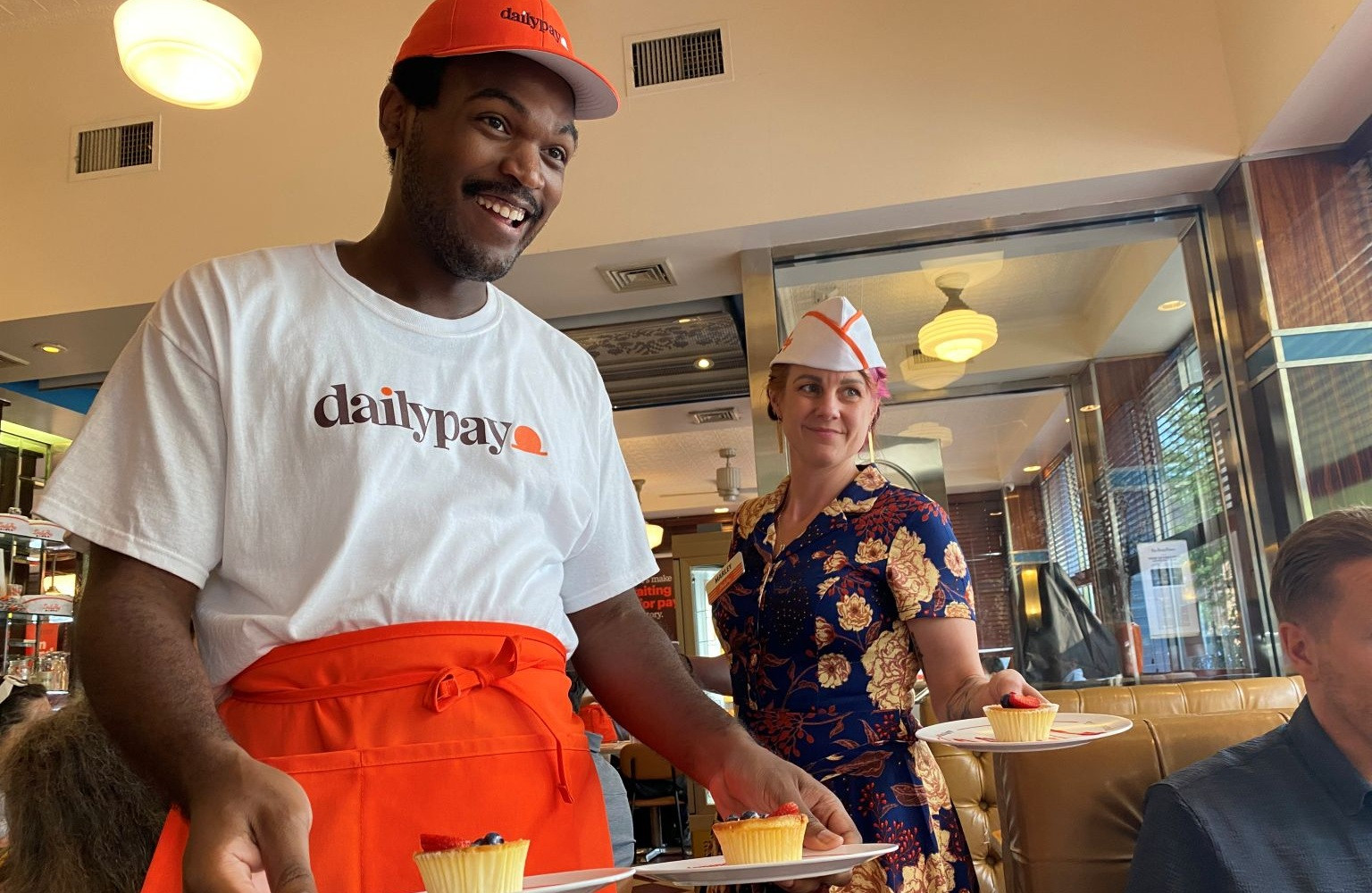
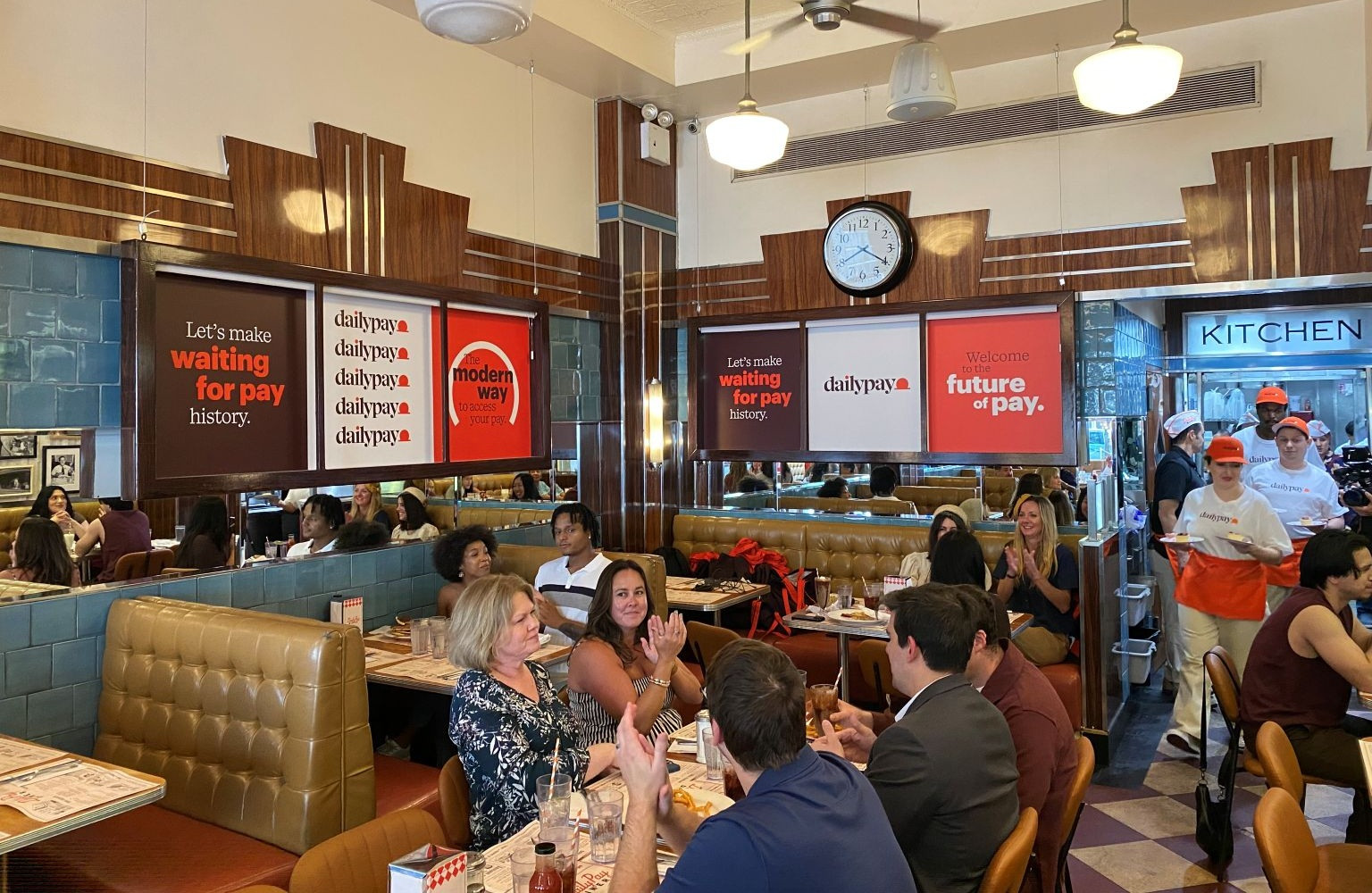
This week in New York City, DailyPay has created the DailyPay Diner — transforming a modern-day diner into a retro version that would have existed in 1938, the year the company says the pay process was changed to the two-week cycle.
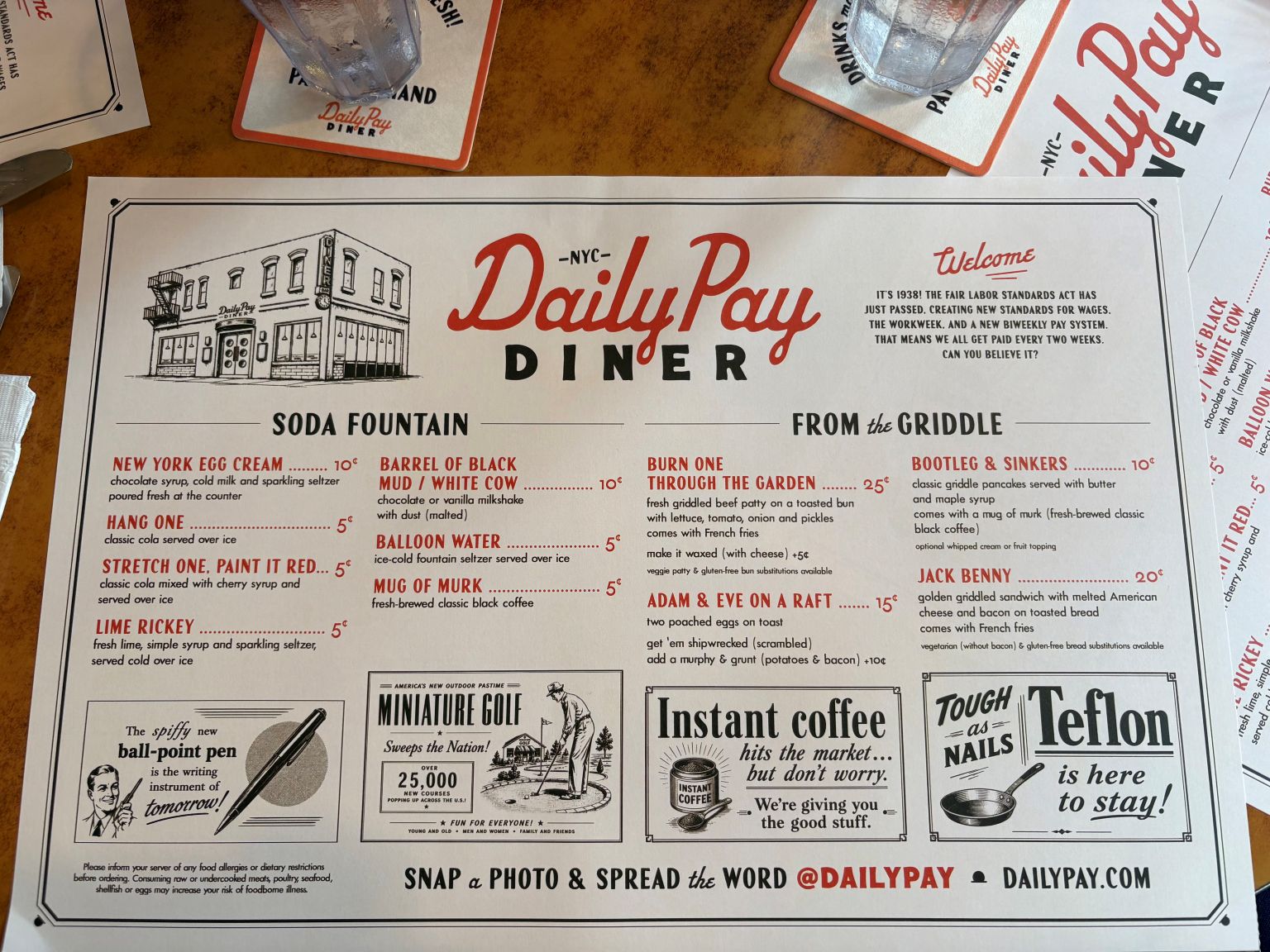
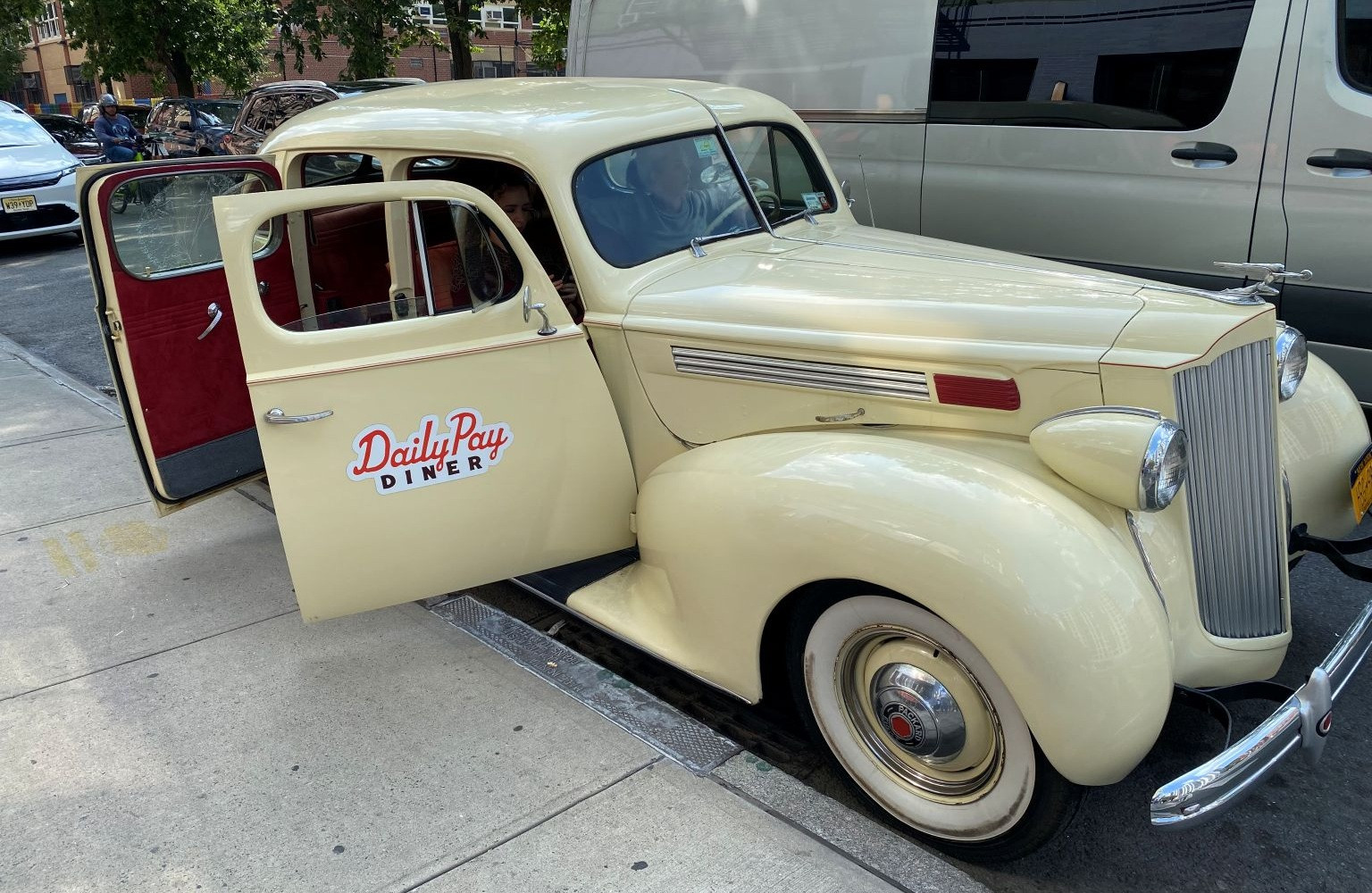
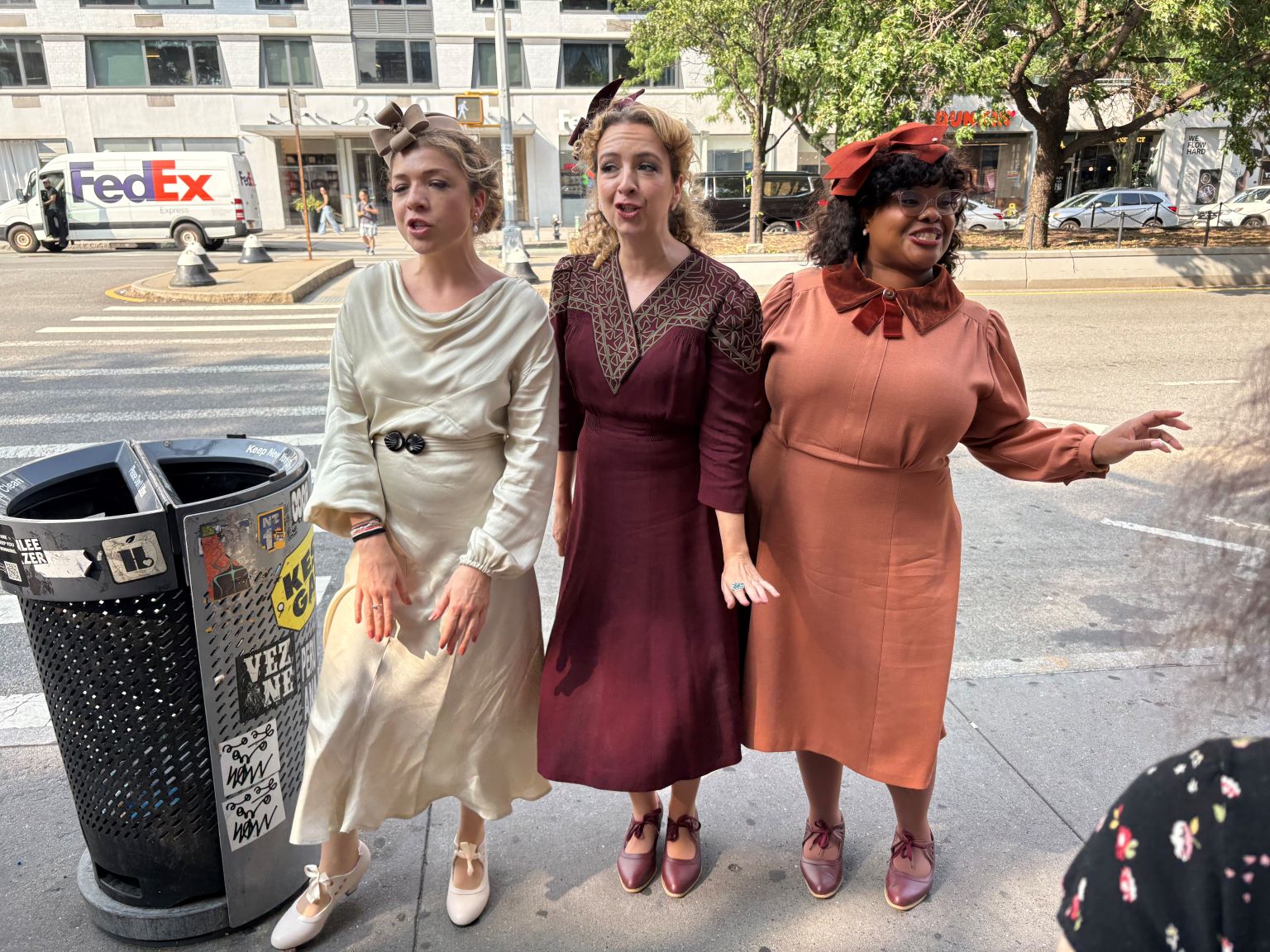
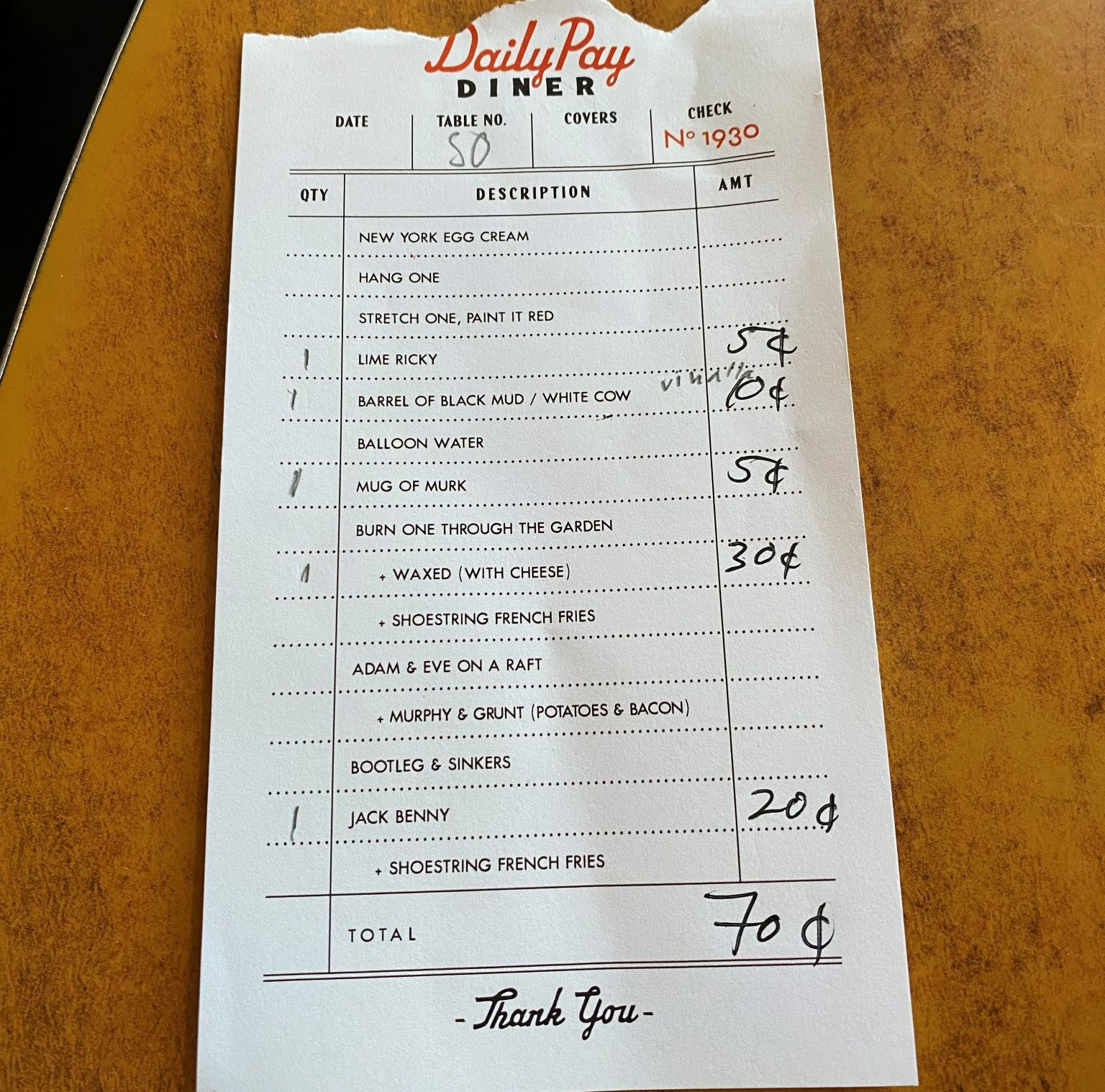
There were cars from the era parked out front, a newsboy hawking an afternoon paper, women dressed for the day while singing tones of the era and a menu complete with items and prices of the day: 30-cent cheeseburgers, 10-cent milkshakes and something called a ‘Lime Ricky’ for a nickel.
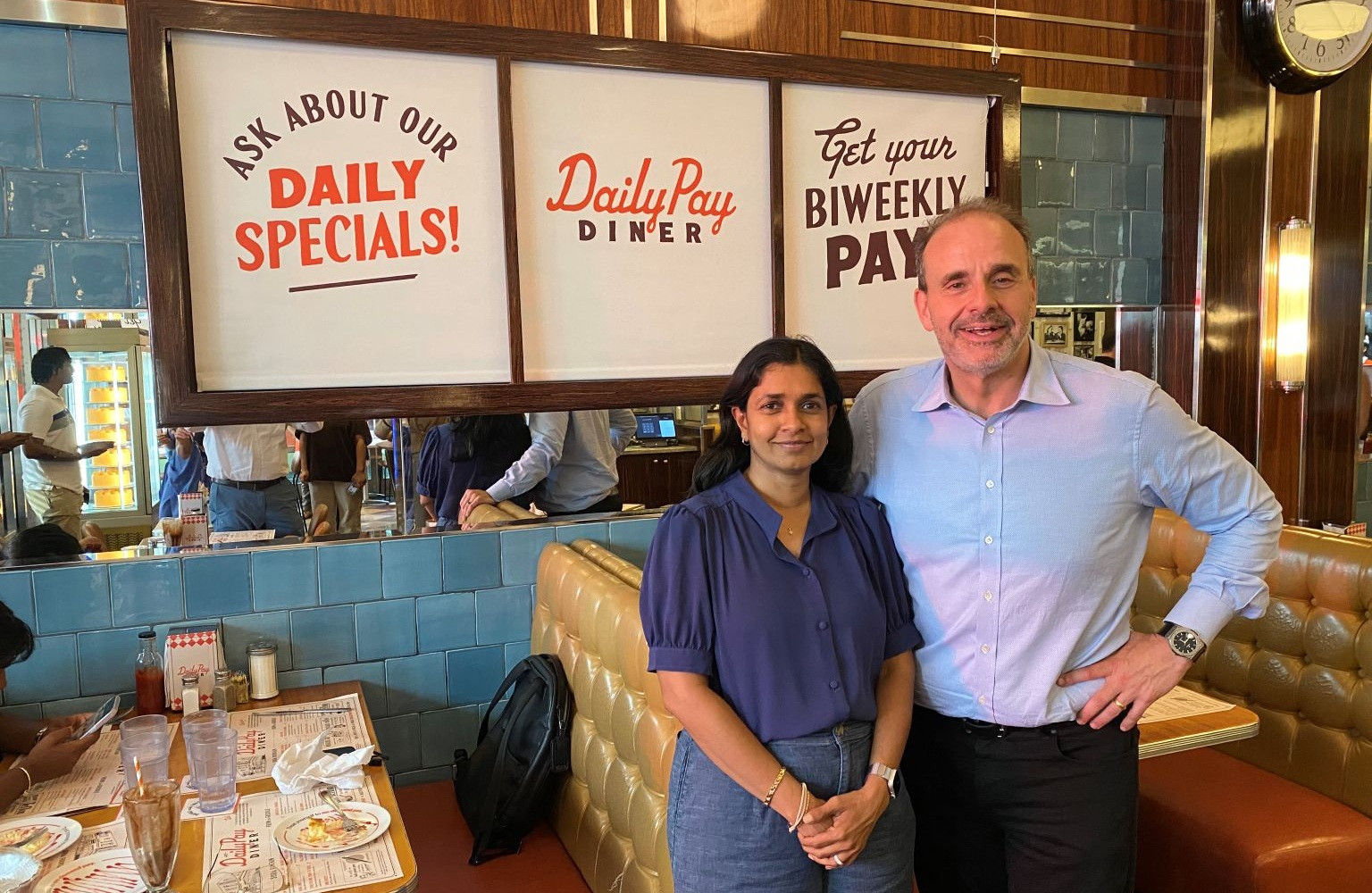
DailyPay Chief Operating Officer Andrew Brandman said the effort is part of a greater category awareness marketing campaign.
“Every person who walks in here is going back to the way it was in 1938, because payroll hasn’t changed since 1938,” he said. “We thought it’d be fun to actually bring everyone back to what the world as it was in 1938 to make that point.”
And spur a discussion.
“We did this to help educate people and get them to ask the question: Why should pay still be something that’s just like it was in 1938?” Brandman asked. “Shouldn’t people have the ability to access their pay when they’ve earned it?”
* * *
DailyPay’s effort is about more than just a period piece with local actors filling many of the roles. You can find that at Disney World.
The two-day takeover of the Remedy Diner on the Lower East Side started with a roundtable discussion led by Brandman about the nature of pay and how it impacts an employer’s relationship with its employees.
“We met with HR leaders and benefit advisors, talking about how employers and employees should be working together,” he said. “And the thing that everyone agreed to is that financial stress is real.
“When two thirds of Americans are living paycheck to paycheck, how do you give someone something they’ve earned with dignity?”
Brandman said one person at the table recalled an instance where an employee came to the company, looking for an advance on their paycheck because they needed money to repair a flat tire.
“There’s no dignity in that,” Brandman said. “Why does an employee have to go to their employer to ask for something they’ve already earned?”
The concept is catching on — around the country, where DailyPay says it serves more than 6 million employees, and in New Jersey, where the company says it reaches approximately 200,000. It’s a number that’s rising quickly.
Brandman said DailyPay is a platform that offers more than just quick cash. In 2024, it launched Credit Health, a feature that gives users enhanced financial wellness tools.
And DailyPay is not just for large companies. There are features specifically set up for small business owners and one that helps tipped workers get their money on the spot, too.
Brandman stressed the payoff is felt by the employees as much as the employers.
“If you give people back their dignity, they are going to be happy,” he said. “And a happy worker is a more productive worker.”
* * *
DailyPay has been telling this story to investors for more than a decade, raising hundreds of millions while earning media coverage on national platforms and Best Places to Work honors, too.
It’s been doing so with an energetic and creative team empowered to come up with entertaining ways to spread the word.
The takeover of the Remedy Diner is just the latest. Its impact already has been felt. Thanks to outreach through traditional means and influencers — videos of the diner quickly go viral — the company says it has a waiting list of more than 4,000 people hoping to get in Thursday for a bite.
Brandman says DailyPay could keep the diner open for months.
“But I’m not sure selling cheeseburgers for 30 cents is a good business model,” he joked.
Neither, Brandman will argue, is paying your employees every two weeks.
“This is a fun reminder of what the world was like in 1938, but it proves the point that everything has changed,” he said. “Everything now happens in real time — except the way we are paid.
“So, why live the way we did in 1938, when we’re in 2026?”


