


Micro markets driving Jersey City’s next housing wave – The Heights, Journal Square, Bergen-Lafayette, and downtown – each offers something different. The variable that decides how things move forward is zoning, and it changes block by block, according to Patrick Southern, salesperson at Properties by Southern at SERHANT in Jersey City.
Journal Square has large, dense sites available now, and “the zoning there clearly favors new construction,” Southern said. “The density allowances make the ground up the obvious best use.
The Heights is a different situation entirely, he said, because there are often 25-by-100 lots here, and the decision becomes a value-engineering exercise.
“Is it worth knocking the property down, or does the rehab make more sense given what is allowed on that lot?” Southern said.
Bergen-Lafayette carries the same question. So does downtown, where zoning can shift from block to block, bringing real differences in density and lot coverage, even between properties that sit close together.
Then there is the historic layer.
“A property does not need to carry an official historic designation to trigger this,” Southern said. “If it is old enough and has enough original character, you need historic approval before you can knock it down. That single factor can decide whether ground-up is even on the table before you get anywhere near a pricing conversation.”
Ground-up vs. Retrofit
Deciding between a ground-up project and a retrofit starts with what zoning and historic rules allow, not with what a developer or owner wants to build.
Retrofits can save time because the planning board and extension process can be avoided – not to mention a long fight with the city, Southern said.
But most of the existing stock in these areas is either 100 years old or built in the 70s, 80s, or 90s, with ceiling heights and layouts that do not match what buyers want today.
“Sometimes the retrofit pencils out,” Southern said. “More often, if you are trying to hit a strong price point at sell-out and the site allows it, ground-up is the better play.”
When done right, ground-up gives the developer control over unit count, unit mix, and optimization from day one.
Ideal case study in Jersey City
SERHANT proved that at 139 Christopher Columbus in downtown Jersey City. It sold 50 units in 11 weeks, with five separate price increases along the way.
Southern is working with a developer, Shape Equity Partners, an Italian development firm with European roots and a design sensibility that reflects it.
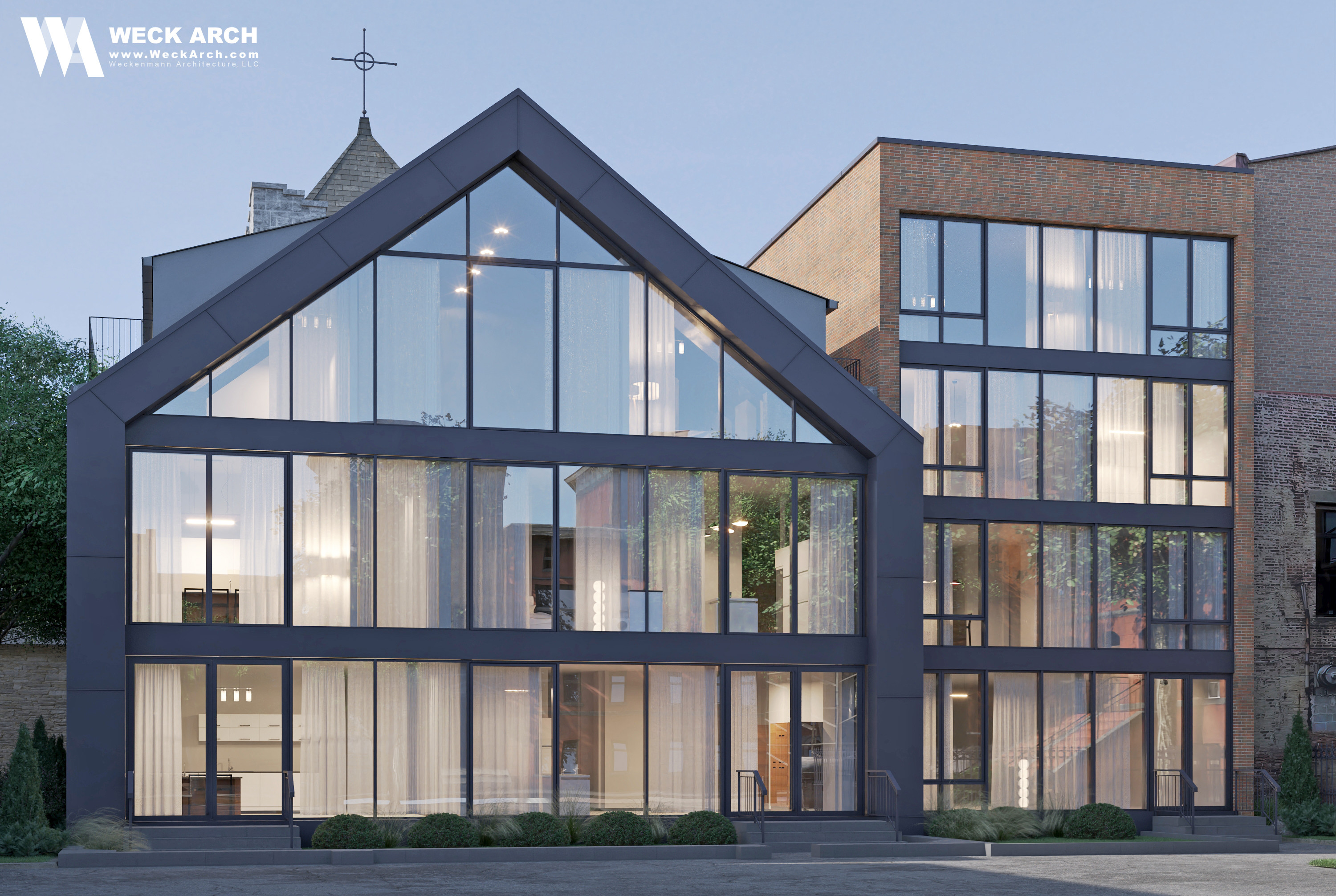
Shape has an approved adaptive reuse plan at 443 to 445 Jersey Avenue, a former church. The plan, designed by architecture firm Weckenmann Architecture, LLC, preserves the structure and historic charm of the building while adding modern glass and curtain wall construction at the rear.
“The result is something rare,” Southern said. “Buyers who want historic character but also want a modern living experience have very few options like this in the market, and that combination creates real desirability.”
Southern said the mistake he sees most often is building for today’s market.
“New construction takes time,” he said. “If you design for what buyers want right now, by the time you deliver two or three years later, your product is already dated.”
Boutique developments thriving in Jersey City
Lorenzo Sargenti, founder & managing partner, Shape Equity Partners, said the strongest micro submarket activity in Jersey City right now is concentrated in boutique developments — buildings with fewer than 30 units in established, transit-served neighborhoods such as downtown, Paulus Hook, Hamilton Park, and, increasingly, Bergen-Lafayette and the Heights.
“Well-priced properties in these submarkets are moving in under 30 days, and small new-construction projects are frequently selling out during construction or shortly after delivery,” Sargenti said.
Several factors drive this. First, scarcity: the development pipeline is dominated by large rental towers around Journal Square and the waterfront, so new-construction condos in boutique formats are structurally undersupplied relative to demand from end-users who want to own in these neighborhoods, he said.
Second, product quality: buildings of 4 to 20 units allow a level of construction and design that towers can’t match economically — full-floor or duplex layouts, larger average unit sizes, private outdoor space, superior finishes, and low carrying costs without the overhead of amenity-heavy high-rises.
Third, buyer profile: return-to-office momentum has renewed demand from NYC-anchored buyers. These buyers are disproportionately seeking the character and privacy of boutique buildings on brownstone-scale streets over tower living.
More boutique projects on the way
Over the next 12 to 18 months, Shape Equity Partners will deliver approximately 10 boutique projects, totaling just over 60 units.
Sargenti said the single biggest driver of demand is buyer sophistication.
“Today’s buyer — particularly in a market like Jersey City, where many are coming from NYC rentals or prior ownership — is the most informed in history,” he said.
“They’ve toured dozens of units online before their first visit, compared finishes and floor plans across every active listing, and often lived in enough poorly executed apartments to know exactly what they’re looking at.


