


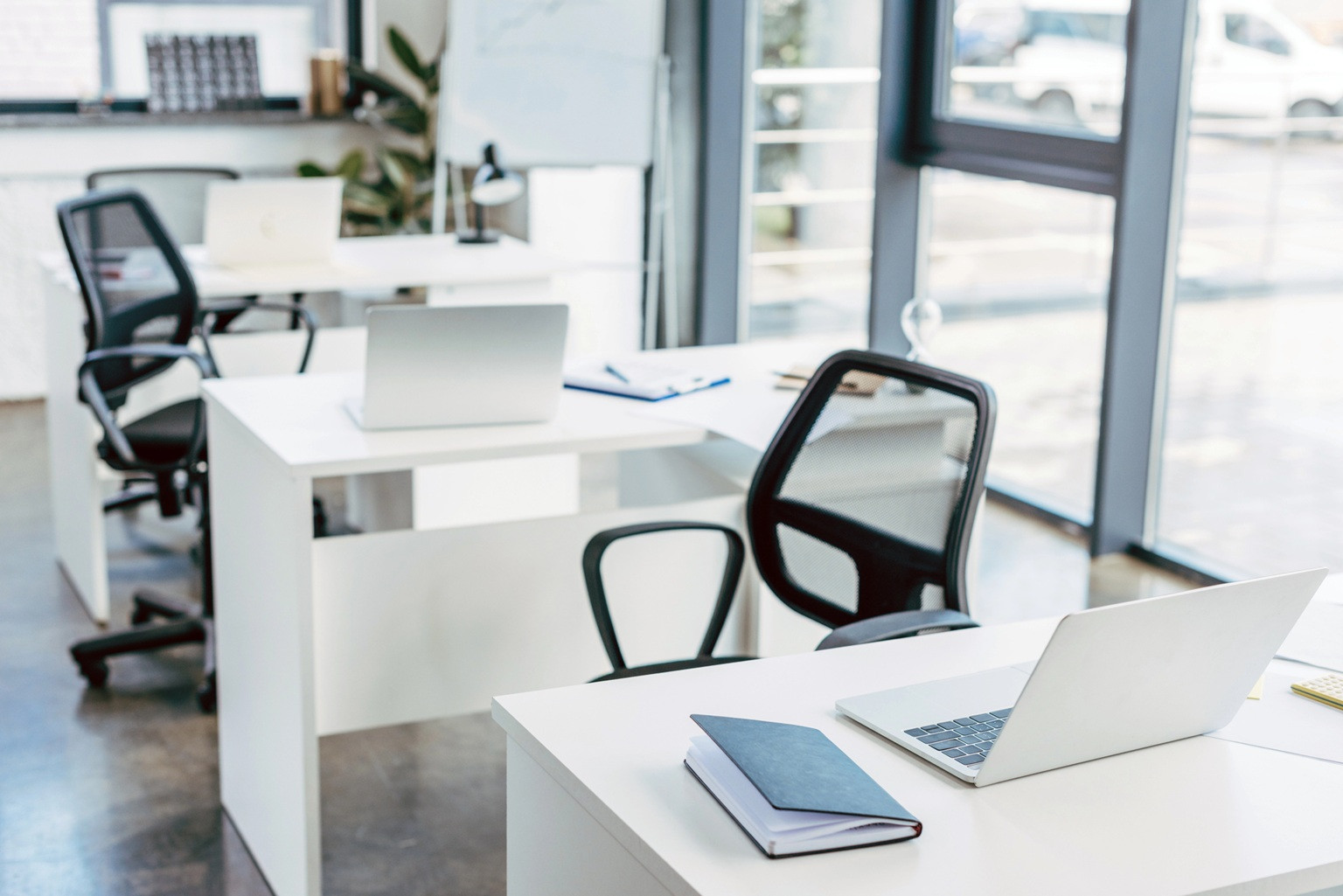
After several years of uncertainty, many office markets are beginning to show renewed momentum.
New Jersey is seeing increased touring activity, more serious conversations with occupiers, and a noticeable shift in how companies are evaluating office space. This isn’t a return to the office market of the past – it’s a recalibration, according to Andrew Koller, research analyst and advisor at Marlton-based Wolf Commercial Real Estate/CORFAC International.
Rather than expanding footprints or simply renewing existing leases by default, today’s tenants are being more intentional. The focus has shifted from quantity to quality, with companies prioritizing spaces that support collaboration, culture, and long-term flexibility.
In many cases, this flight to quality is reshaping both where companies choose to locate and how offices are designed from the inside out.
Reimagining today’s office space
Despite ongoing conversations about remote and hybrid work, the office continues to play a critical role for many organizations. What has changed is why employees come in, Koller said.
The office is no longer viewed as a place for individual, heads-down work alone; it’s increasingly designed as a destination for collaboration, connection, and team building.
As return-to-work policies evolve, companies are asking a different set of questions:
- Does this space encourage collaboration?
- Does it support employee experience?
- Will people want to come here?
These questions are driving demand toward well-located, thoughtfully designed buildings with modern infrastructure and amenities.
Flight to quality drives decisions
One of the most consistent trends Koller sees is a flight to quality. Tenants are gravitating toward Class A and well-maintained Class B buildings that offer updated systems, natural light, modern finishes, and access to amenities. In many cases, companies are opting for smaller footprints but higher-quality space.
This shift is especially evident as leases signed pre-2020 come up for renewal. Rather than carrying excess space that no longer aligns with how teams work, companies are rightsizing and reinvesting in environments that better reflect their culture and operational needs.
For landlords and investors, this trend underscores the importance of capital improvements and proactive asset management, Koller said.
“Buildings that evolve with tenant expectations are better positioned to capture demand as the office market continues to stabilize,” he added.
Changing layouts reflect changing workstyles
Office layouts are also undergoing a transformation. The traditional floor plan dominated by private offices or dense cubicles is giving way to more flexible, collaborative environments.
Koller said that today’s tenants are often looking for:
- Open bullpen or collaborative work areas
- Enclosed offices for focus and privacy
- Conference rooms of varying sizes
- Informal meeting spaces and lounge areas
The goal is balance, he said.
“While open layouts encourage interaction and teamwork, enclosed offices and quiet zones remain essential for productivity,” Koller said. “The most successful spaces accommodate multiple workstyles under one roof.”
Amenities matter more than ever
Amenities have moved from “nice to have” to “must have” in many office decisions, Koller said. “Employees expect more from their workplace, and companies recognize that amenities play a role in attracting and retaining talent,” he said.
Commonly requested features include:
- On-site or nearby food and beverage options
- Fitness centers or wellness spaces
- Outdoor seating or green space
- Updated common areas designed for informal meetings
- Access to co-working or shared conference facilities
Co-working concepts have influenced traditional office design. Even companies that do not lease co-working space are drawn to the flexibility, hospitality-driven design, and sense of community those environments provide.


