


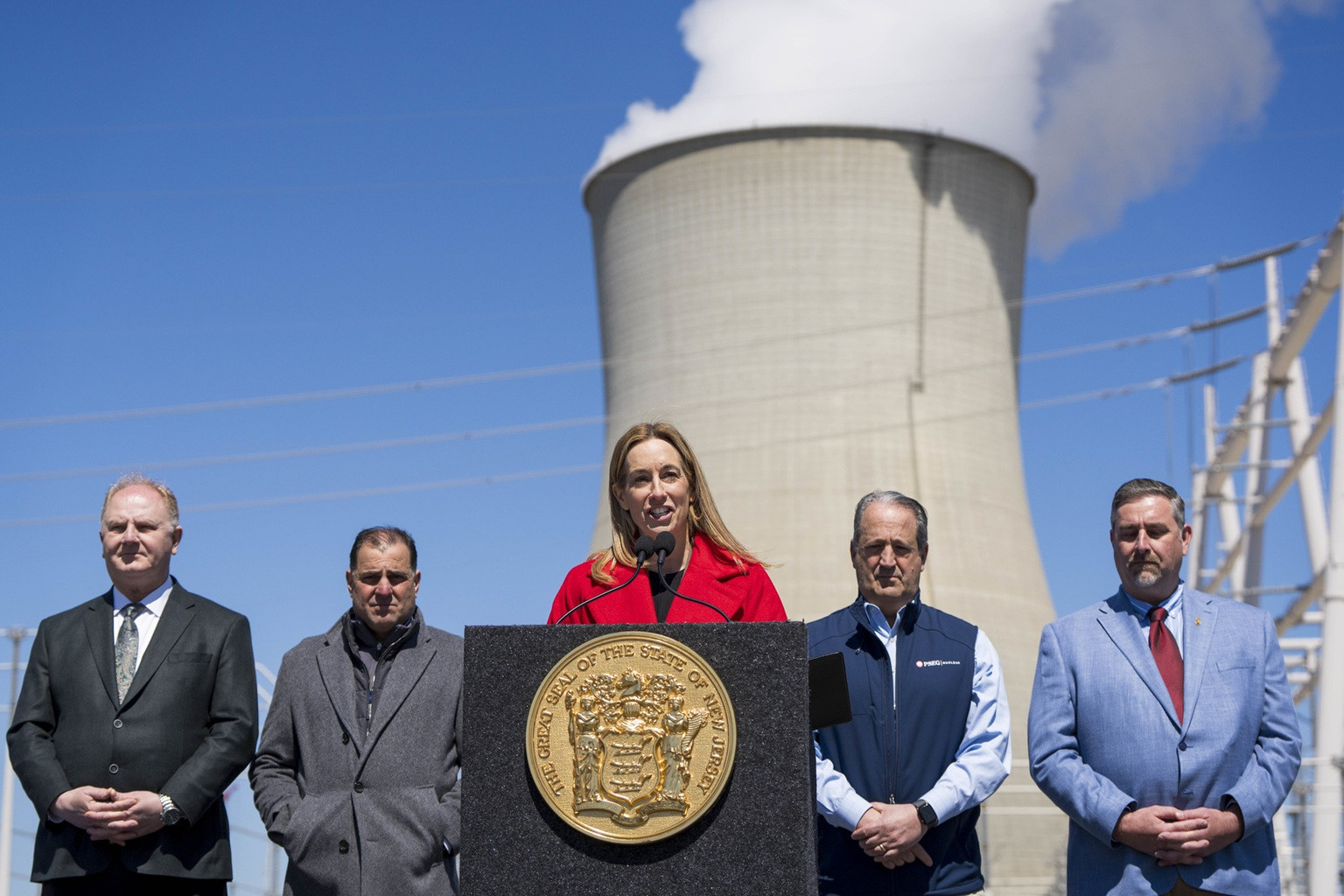
Gov. Mikie Sherrill on Monday signed the Power NJ Act into law, officially launching a competitive procurement process for new, advanced nuclear energy to meet the state’s escalating energy demands.
Passed unanimously with strong bipartisan support in both houses of the State Legislature, the landmark legislation establishes a structured framework to evaluate nuclear proposals while implementing aggressive consumer protections designed to shield New Jersey utility customers from construction costs and financial overruns.
Nuclear energy currently accounts for over 40 percent of New Jersey’s total energy generation and more than 80 percent of its clean energy supply, operating at an efficiency capacity of 90 to 95 percent.
The signing marks the next phase of the governor’s “all-of-the-above” energy strategy. It follows her administration’s action in April to lift New Jersey’s 50-year moratorium on new nuclear development, all within her first six months in office.
“The decisions we make today will determine the future we leave our kids, so we are putting New Jersey on a path to an affordable and secure energy future,” Sherrill said. “I am excited to launch our state’s process to procure new, advanced nuclear power that will provide clean, reliable energy at scale for generations to come and meet our growing energy demands – from powering our small businesses, schools, and hospitals, to strengthening grid capacity and reliability for extreme weather.”
A central pillar of the Power NJ Act is its mandate to insulate consumers from financial risk. Under the law, ratepayers will bear zero costs until a approved nuclear project is fully constructed and actively supplying operational energy to the grid.
Additional safeguards include:
- Shifting financial risk: Projects are strictly required to secure federal financing, moving the burden away from state residents.
- Cost overrun protections: Developers, not consumers, are legally responsible for any cost overruns during construction.
- Independent oversight: The New Jersey Board of Public Utilities (NJBPU) and the New Jersey Economic Development Authority (NJEDA) must integrate independent assessments from the Division of Rate Counsel.
- Public accountability: The law mandates at least two separate public comment periods and an official public hearing in any proposed host municipality.
The Power NJ Act (A4881/S4296) targets the procurement of at least 1,100 MW of new nuclear generation. The state has established a strict multi-year timeline to review and approve prospective developers:
| Deadline / Phase | Action Required |
| By March 10, 2027 (Within 180 Days) | NJBPU opens the formal request for expressions of interest. Developers have 60 days to submit environmental, financial, and workforce proposals. |
| By June 8, 2027 (Next 90 Days) | Provisional Qualifications: NJBPU qualifies or denies projects to move forward. |
| By June 8, 2028 (Next 12 Months) | Negotiations & Stipulations: NJBPU and NJEDA negotiate exact cost estimates, electricity pricing, and terms. |
| Before September 6, 2028 (Next 90 Days) | Final Board Order: NJBPU issues final approval only if the project guarantees a net benefit to ratepayers and secures federal backing. |
Once an approved plant begins delivering power, suppliers will purchase Reliable Capacity Credits (RCCs) at a fixed, negotiated rate to prevent exposure to volatile market spikes.
The nuclear initiative builds upon a rapid series of energy policies enacted by the Sherrill Administration, which independent estimates by Synapse Energy Economics project will save New Jersey ratepayers $1 billion annually.


