


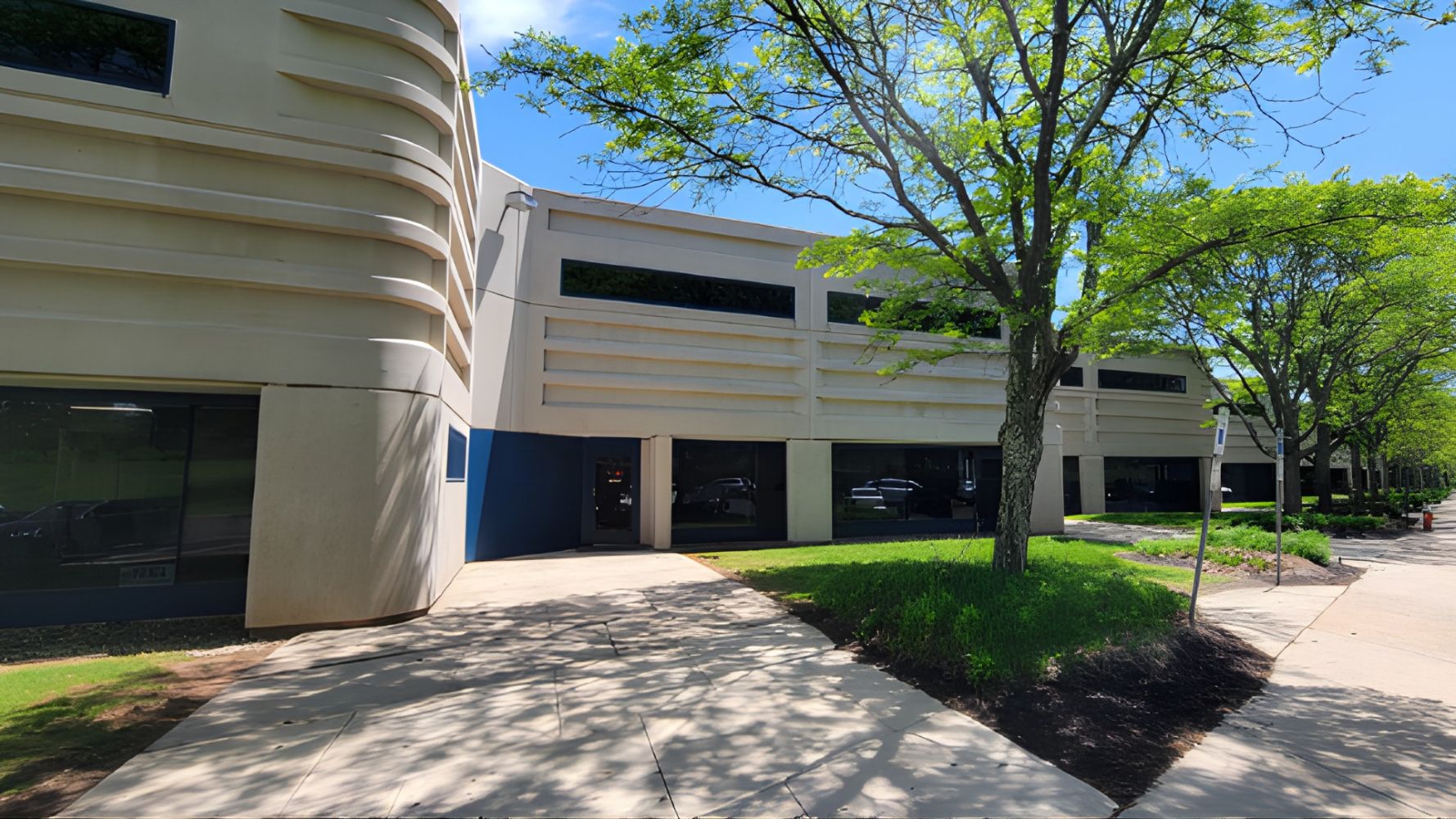
For 50 years, few invested in small-bay industrial properties. It was the asset class institutional capital walked right past on its way to bigger, flashier deals.
That’s starting to change, and quickly.
Investors are circling small bays now, drawn by their steady cash flow and a tenant base that has proven reliable for decades. Some are even comparing the moment to what happened with industrial outdoor storage a few years back, once institutional money finally caught on.
Local distributors and service companies still anchor small bay buildings, making up between 75 and 85 percent of the tenancy, and that hasn’t changed much over the years.
But now there’s a real uptick in recreational uses showing up alongside them, including pickleball operators, dance studios, trampoline parks, and batting cage businesses, all leasing small bay space instead of traditional retail strips.
It’s a small slice of the tenant mix, but a telling one, and it points to just how much untapped demand this asset class has been sitting on.
Greek Real Estate Partners owns and manages a portfolio of approximately 23 million square feet, with 6.5 million classified as small bay concentrated in two core markets: Central and Northern New Jersey (approximately 3.9 million square feet, centered on East Brunswick with additional holdings in Somerset and Parsippany) and the Greater Philadelphia region of Pennsylvania (approximately 2.5 million square feet, including the Runway Road industrial cluster in Bucks County).
The portfolio houses 167 tenancies ranging from 1,400 square feet to 30,000 square feet in small-bay units. The tenant base is led by light manufacturing, transportation and warehousing, and wholesale trade, with a notable pharmaceutical manufacturing cluster in East Brunswick and a diverse layer of service, recreation, and contractor tenants in the small-bay product. Portfolio occupancy stands above 95 percent.
David Greek, managing partner, said Greek is a long-term owner-operator. The firm self-manages its portfolio through Greek Management, and the small-bay assets are a deliberate hold rather than candidates for disposition.
The qualities that historically made small-bay unattractive to institutional investors, namely management intensity and constant lease rollover, are precisely where a vertically integrated operator creates value: frequent rent resets allow rents to be marked to market faster than in big-box product, the granular rent roll spreads risk across dozens of tenants, and hands-on management drives high renewal rates because tenants scale in place.
Tenants expanding into multiple suites
Within GREP’s own portfolio, several tenants have expanded into multiple suites over time, which illustrates that dynamic in practice.
GREP’s own rent roll illustrates this trend directly, with a children’s trampoline and play facility, a dance and theater school, an indoor cricket training center, and a cross-fit gym all operating within the firm’s Central New Jersey small-bay buildings.
The economic case these operators find in small-bay industrial is threefold, David Greek, Managing Partner, said.
“First, industrial rents per square foot run well below retail rents, which matters enormously for uses that need large footprints but generate revenue per participant rather than per square foot of merchandising,” he explained.
“Second, the physical plant is better suited to the use: clear heights that accommodate trampolines, netting, and courts, wide column spacing, durable slab floors, and loading access, none of which strip retail provides without expensive retrofit.
“Third, fit-out costs are lower because these operators need open volume rather than storefront finishes, and industrial landlords typically deliver space in a condition that requires less demolition. Ample surface parking and evening and weekend traffic patterns that complement daytime industrial neighbors round out the fit.”
Taking a ‘Higher-For-Longer” Approach
The Federal Reserve held the federal funds rate at 3.50 to 3.75 percent at its June meeting, unchanged since a 25-basis-point cut in December 2025. New Chairman Kevin Warsh emphasized a near-term focus on price stability, which bond markets read as mildly hawkish.
Policymakers are expected to leave rates unchanged at the July 28 to 29 meeting while preserving the option to tighten further if inflation proves persistent.
“In short, the market has shifted from expecting cuts to a higher-for-longer posture, with some probability of a hike late this year,” Greek said.
Investor Interest Rising
Interest in small-bay is clearly rising, and the data supports it, Greek said.
Industrial transactions under $100 million recently represented about 70 percent of all industrial trades, the highest share in more than a decade. Small-bay vacancy nationally is near 4.2 percent, versus 7.4 percent for large-scale product, and small-bay rents have grown by more than 40 percent since 2020.
“Institutions are looking for ways to participate in real estate markets while reducing risk and vacancies in their portfolios without cutting large checks,” Greek said. “They look for downside protection, stability, and a narrative that provides upside without relying on macroeconomic changes.
“This has made small-bay one of the most popular investment strategies over the last year. Meanwhile, ground-up small-bay development remains largely uneconomic, meaning the supply constraint is structural.
Greek’s NJ Small Bay Profile
Across the portfolio, 99 suites measure under 30,000 square feet, representing nearly 60 percent of all tenancies. Representative assets include the following.
400 Apgar Drive, Somerset: 111,874 square feet across 11 units, predominantly 9,000 to 11,000 square feet. The tenant mix spans automotive, advanced manufacturing, industrial and electrical components distribution, and indoor recreation.
10 Alvin Court, East Brunswick: 67,165 square feet across five suites housing children’s recreation, a dance and theater school, refrigeration and electrical supply distribution, and water treatment products, a strong illustration of small-bay demand diversity under a single roof.
40C Cotters Lane, East Brunswick: A 38,400-square-foot, pharmaceutical-oriented, small-bay building housing four pharmaceutical and life sciences tenants in 4,800- to 9,600-square-foot units.
Walsh Drive Cluster, Parsippany: Five buildings totaling approximately 330,000 square feet along Walsh Drive at 71, 81, 91, 260C, and 280, demised into units ranging from approximately 14,000 to 44,000 square feet. The tenant mix spans snack food manufacturing, packaging and labeling services, stone and construction materials distribution, electrical components distribution, dietary supplement manufacturing, pharmaceutical warehousing, and industrial supplies. One packaging tenant occupies space in two buildings within the cluster, consistent with the scale-in-place dynamic seen across the portfolio.


