


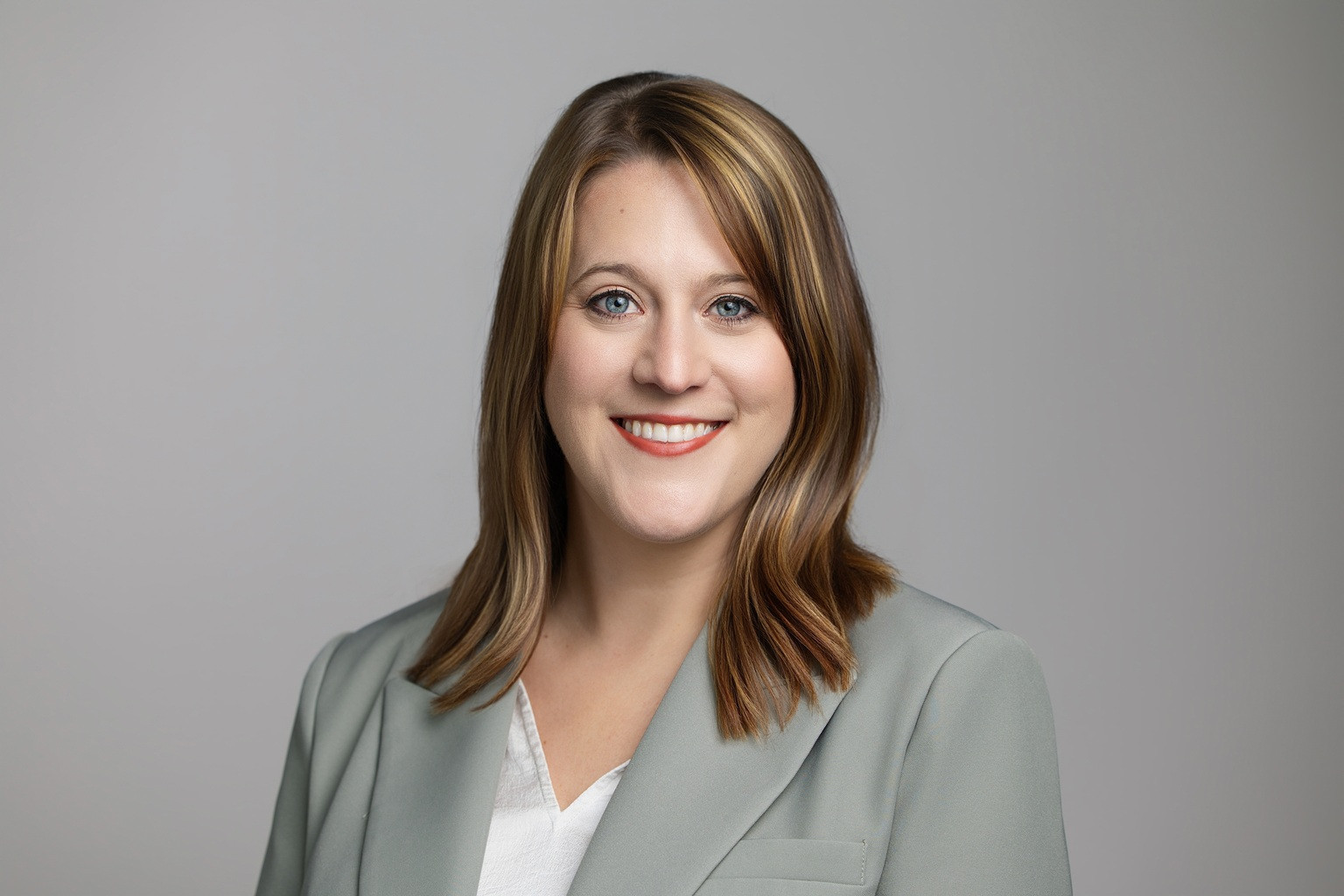
So much of the new NJ PBS has centered around where it is located: inside Montclair State University. Ashlee Smith, the station’s first general manager, is more interested in talking about where the station needs to go. Out into the community.
Smith, one of six big hires announced last week, said the station must be more engaged with the state and that people other than the on-air talent need to be part of that relationship. Montclair takes over full control of NJ PBS’s programming and daily newscast from WNET on Oct. 1.
The on-air talent
It’s the answer everyone wants.
BINJE: Our last question is the biggest question: Who’s going to be the lead anchor, and how many reporters will you have?
Smith: I can’t announce any names today, but our next round of hire announcements will include our on-air team, our reporters and an anchor. Several of these offers are going out in the next week, so we’re really excited. We have some fantastic talent coming our way, and I think it’s going to be some pretty big news.
“In the past, NJ PBS perhaps has not been as involved in the community as they needed to be or should have been,” Smith told BINJE. “I think that is completely key. It’s part of what public media is intended to be — out and about in community — and I truly believe that’s one of the ways you get people to engage with you.”
Creating human connection means everything, Smith said.
“We can’t rely on an algorithm to put us in front of people that never would have been in front of the media that we’re doing and never would have co-created with us,” she said. “It’s my belief that the best way to engage with community is by showing up where they already are.
“I’ll be looking for our people — including our reporters, our news director, myself, members of our leadership team — to be ambassadors for this work. And looking for the next set of ambassadors who can help us build what’s next.”
Smith, speaking to BINJE after her hiring was announced, said the key to the station’s success moving forward is having a forward-looking philosophy — a PBS built for 2026 and beyond. That means meeting today’s audience where it is, and recognizing today’s audience could be — and should be — different from the PBS viewers of the past.
“I think this station in particular is at a really interesting crossroads between public media and being almost a startup,” she said. “We have a lot of people coming in from commercial media, and we’ve hit this landscape where public media is no longer federally funded.
“So, I think NJ PBS has the opportunity to really lead public media in what our work looks like for the future.”
One of the ways Smith intends to do this is to find content partners around the state, she said.
“We’ll be partnering with other outlets, partnering with local creators who may already have a presence online, and getting shorter-form — making sure we’re in the spaces people already are,” she said. “Some recent studies show people aren’t sitting down to watch their news anymore; they’re scrolling on Instagram and seeing their information from creators.
“We want to be that for the community as well. But we’ll also need to lean into where media is going with artificial intelligence and other emerging areas, while being incredibly careful to maintain the trust of our community — because that will be paramount.”
Smith has worked in public television for 11 years. She comes to New Jersey from Michigan, but made previous stops in Arlington, Virginia, and Duluth, Minnesota. She is familiar with the Mid-Atlantic, having gone to high school in Maryland before graduating from Muhlenberg College.
Smith spoke with BINJE about that vision, the state’s unusual lack of a true hometown TV station, and why Montclair might be an asset instead of a headache. Here’s more of the conversation, edited slightly for space and story flow.
BINJE: There’s no New Jersey TV station, period. That’s a bizarre statement for a state with a population of 9 million people. What do you make of that?
Smith: It is partially what drew me to this opportunity — how unbelievable that is. It’s something that I was shocked to hear, especially because we see this decline in local journalism in so many places, and news and information is heavily related to voter engagement, civic engagement, turnout at elections.
This is really an opportunity to hyper-inform people on what they need to know about their own community, by the people who are in the grocery store with them. We plan to hit several touchpoints: our weekday newscast, some public-affairs roundtable programming, election coverage of state government, some national coverage, and at least six hours a week of New Jersey-focused programming. And we’d like more than that.
We really want to showcase news and information at all levels, but also get into what makes people proud of New Jersey: arts, culture, experiences.
BINJE: If you had a target audience, what would it be?
Smith: That’s tough, because traditionally the public media audience has been our older generation — an incredibly important generation that very much understands and supports public media. We don’t want to lose that audience. But an audience that’s really been missed by public media is our Gen X audience, our older millennials, the folks with younger children.
There are so many opportunities through public media beyond content consumption — educational experiences, community experiences, resources for parents connecting their kids’ classroom work to the house.
The other area I’m interested in is our youngest audiences. Public media has always reached the birth-to-age-8 audience well, with standards-aligned PBS Kids programming. But across all media, not just public, that 6-to-11 age group doesn’t have much created for them — they end up jumping to older-age content. I think this is a place where local media in particular can really excel.
BINJE: A lot of people here think it’s unique to be connected to a major university. Talk about the opportunities and challenges that presents?
Smith: It does present challenges, because universities have a lot of rules you have to follow, a lot of hoops to jump through. But at the same time, it’s an established entity, and you can see the passion for public media. I can’t imagine somebody taking on a public media rebuild right now if they weren’t deeply passionate about it.
What’s most exciting about this partnership with Montclair is the opportunity to engage students. We can help grow the next generation of creators and media consumers, which is an excellent way to start cultivating that audience so they know what public media is.
BINJE: Talk about the impact of the administration.
Smith: Dean Strudler put out a video speaking to students about this new space — what used to be a classroom becoming a place where we’re going to have a public media station — and he spoke about how excited students should be to work alongside working professionals as they build their portfolios moving into their careers. What they’ve set up already is so strong that it’s going to make the transition that much smoother.


