


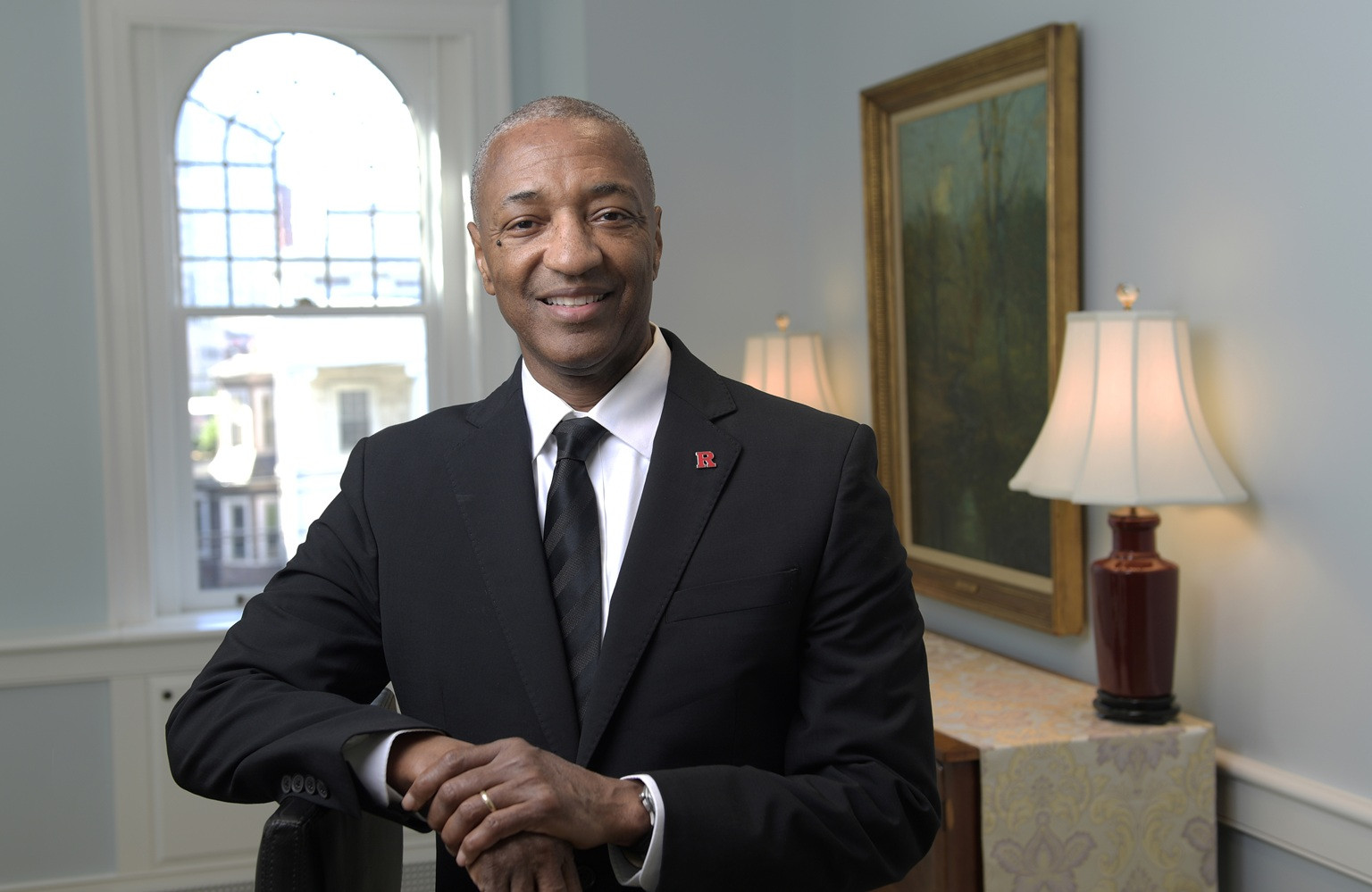
William Tate balanced the budget in his first year as Rutgers president. No mass layoffs. No major programs cut. And a 3% tuition increase that was below the rate of inflation.
He isn’t promising a repeat.
“Let’s be candid; it was a great first year,” Tate told BINJE in an exclusive sit-down conversation this week. “We’re going to have some hard decisions to make in the future.”
The problem is simple math. Health benefits, energy bills and aging buildings are getting more expensive every year, and Tate says revenue won’t keep pace, even if Rutgers does everything right on enrollment.
“That will generate new revenue, but not significant enough to keep up with the cost,” he says. “At some point, you’ll have to make some hard decisions, as our colleagues have across the country.”
What those decisions look like, he doesn’t know yet. He says the university will work through them with his leadership team and the University Senate, the university-wide advisory body of faculty, staff, students and alumni. But he isn’t pretending they won’t come.
***
Tate arrived July 1, 2025, from LSU and walked into a long list of problems.
TATE Talks
BINJE sat down with Rutgers President William Tate earlier this week. Here’s the three-part series that came from it:
Wednesday: Tate’s warning: After a balanced first year, “hard decisions” are coming
Thursday: Q&A: Tate on talent, research and affordability — and the Newark and Camden campuses
Friday: 10 things: What Tate wants New Jersey to know about Rutgers
Federal research dollars were in question, and so was the cost of doing research. Federal financial aid rules were being rewritten. Benefit costs were climbing fast. And Rutgers, like nearly every old campus in New Jersey, had buildings that needed work and no money set aside for it.
“They’re lovely buildings,” Tate says, but “there is no budget for that.”
Rutgers had also spent three years chipping away at a structural deficit under former President Jonathan Holloway. It ran $88.5 million in fiscal 2023, $77.6 million in fiscal 2024 and roughly $80 million in fiscal 2025, according to university figures.
Most Big Ten schools, Tate says, have already made the hard turn: major program cuts, big tuition hikes, mass layoffs. Rutgers didn’t. It froze hiring, tightened spending and changed how it builds a budget.
“Only do what you can pay for, and it’s very simple,” Tate says. “Coming from the American South, that’s pretty normal.”
The Board of Governors approved a $6.2 billion budget in July that carries the 3% tuition increase, the hiring freeze, and reviews of vendor and service contracts.
***
Tate’s answer to the cost squeeze starts with the money coming in.
Most universities, he says, build their budgets off last year’s budget and hope for the best.
“They don’t take into account revenue, and then at the end of the year, they’re like, ‘Oh, boy, how are we going to do this?’” Tate says. “That’s how you get two, three, $400 million in structural deficit, and you’re never really out of it.”
And waiting on the state to bail you out isn’t a plan.
“I don’t think the cavalry’s coming through the door,” he says.
So, Rutgers is going revenue-first. Tate’s finance team now forecasts revenue month by month. The University Senate is represented on the revenue forecasting committee, and the budget gets built off what’s actually coming in.
Tuition is one of the biggest levers. Tate says Rutgers is taking a more data-informed approach to enrollment management, emphasizing stronger student recruitment, retention, and long-term academic success.
“The most expensive education for both parties, the university and the students, is when they don’t finish,” Tate says. “Increasing the retention rate is actually a fiscally sound policy for the family and for the university.”
Schools that don’t figure that out, he says, won’t make it.
“Universities that don’t attend to that enrollment management strategy are going to go under,” he says. “It’s just bad business.”
***
And then there’s college sports, where the money is moving faster than anyone can track.
Tate says Rutgers, along with the rest of the Big Ten, supports the SCORE Act, the federal bill that would put national rules on college athletics.
“It helps to bring some regulations in place that we think would really help on the cost side, and so we are supportive of that,” he says.
Until then, he says, athletics comes down to the same thing as everything else at Rutgers: hold costs down and put a product on the field that keeps the TV money flowing.
“The folks who are giving you TV revenue, et cetera, will continue to fund it at the rates they have or increase them,” Tate says. “That is the game.”
***
At the end of a nearly hour-long conversation, Tate offered his to-do list for year two, which included building a mature, data-driven enrollment system, hiring a chancellor for Rutgers Health, and becoming a top 10 public university. (Rutgers–New Brunswick is No. 14 in the latest U.S. News rankings.)
Through it all, one goal stays the same.
“My aim is to have a balanced budget every year for this board,” Tate says.
In year one, that took a hiring freeze, a tight grip on spending and some help from Trenton. In year two and beyond, he says, it may take more.
“If you’re running a business and your revenue can’t keep up with your costs, eventually you have to shrink your costs,” he says.


