


For many women diagnosed with breast cancer, surviving is only part of the journey. Holding onto their identity and confidence is the other.
At least two hospitals in New Jersey now offer what’s known as minimally invasive nipple-sparing mastectomies, a technique in which surgeons remove tissue through tiny incisions while preserving the breast’s appearance.
“The number one priority for cancer is survival,” said Dr. Lori Timmerman, a breast surgical oncologist at the Penn Medicine | Virtua Health Cancer Program. “But most breast cancer patients live, and so it’s a step further. It’s about their quality of life, how they feel about themselves, their self‑esteem, and what they look at every day.”

In June, AtlantiCare became the first healthcare system in the tri-state region to offer robotic nipple-sparing mastectomies. Virtua performs endoscopic nipple-sparing mastectomies, and another procedure that has the potential to restore sensation, and is introducing the robotic technique this month.
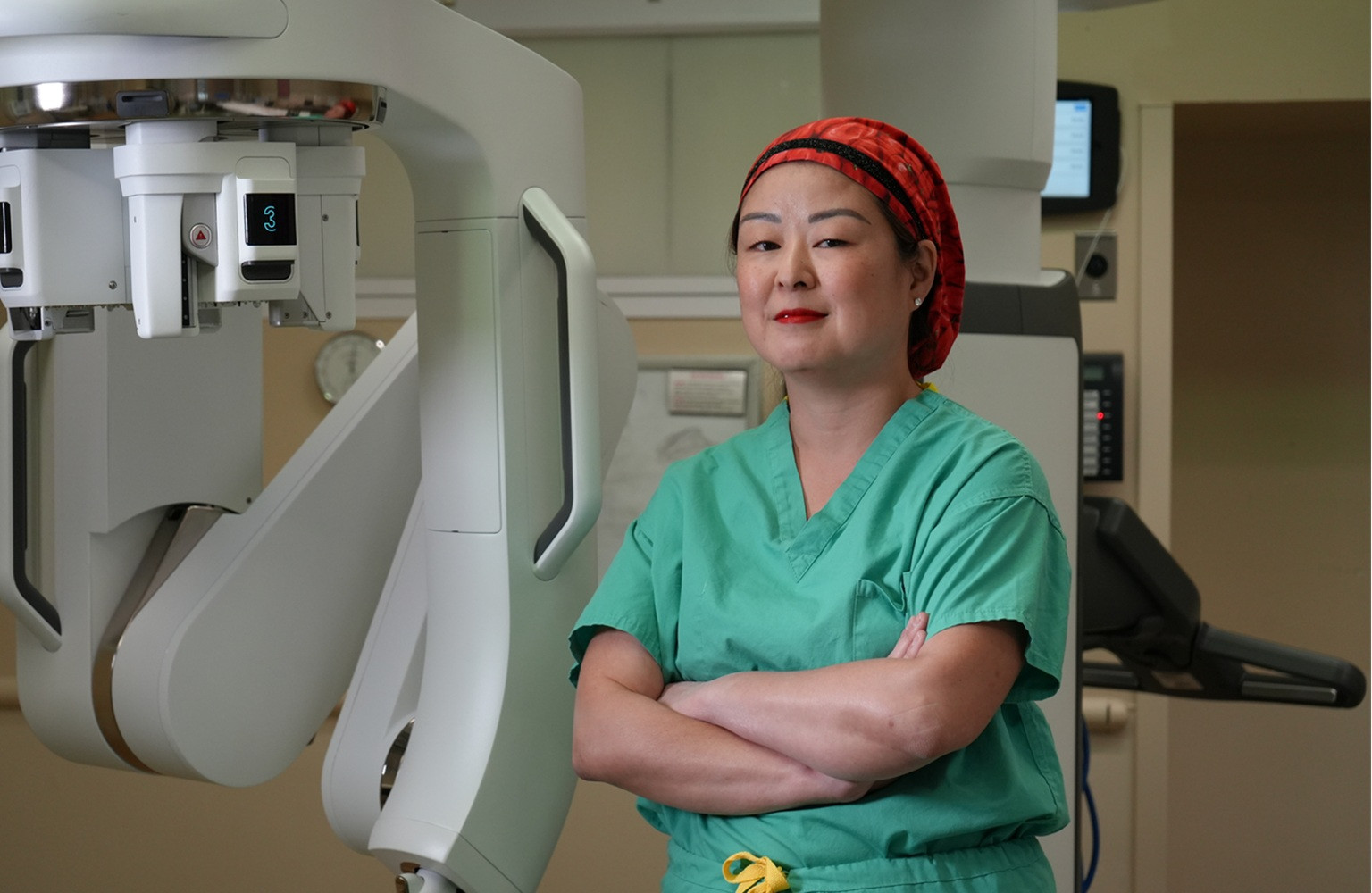
Kay Yoon-Flannery, chief of oncology at AtlantiCare, was the first breast surgeon from the U.S. invited to receive training on the robotic procedure in South Korea, where the technology has been used for a decade. The procedure was introduced in the U.S. only in 2025.
The U.S. Food and Drug Administration cleared the use of Intuitive Surgical’s da Vinci robotic surgical system for nipple-sparing mastectomies in late 2025. AtlantiCare performed its first robotic nipple-sparing mastectomy (RNSM) in July on Kaitlin McBride, a Cape May mother of three now recovering from Stage 2 triple-negative breast cancer.
McBride, 40, has documented her breast cancer journey, seeking to give hope to other women diagnosed with it. She’s known on social media as @chemogangsterkait, posting photos of herself before and after she lost her hair, in the hospital, on the beach and at home with her family.
“I really think Kaitlin was just the perfect person to be the first,” Flannery said. “As scary as it was, this has given her different outcomes than what she originally anticipated. She wants to really educate the other young women that are out there, near and far, that are going through very similar circumstances.”
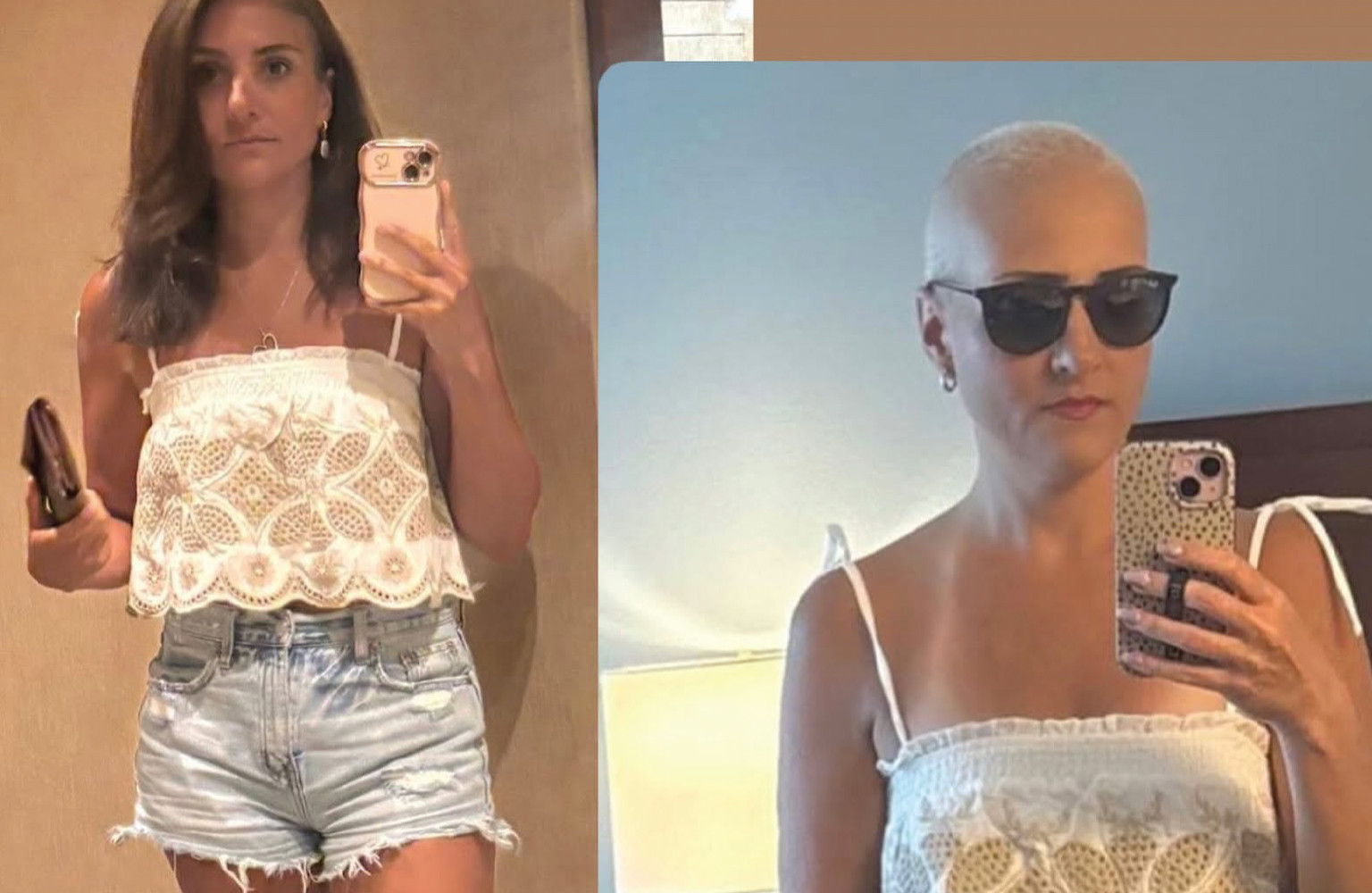
@chemogangsterkait
Virtua’s endoscopic nipple-sparing mastectomy has similar patient outcomes. The advantage of robotic over endoscopic, Timmerman said, is largely ergonomic: the surgeon can sit and doesn’t have to maneuver so much.
For the endoscopic procedure, the surgeon makes a 3-centimeter incision near the underarm and inserts an endoscope, a thin tube with a tiny camera that provides a clear view inside the breast. Specialized instruments are then used to remove the tissue through the small opening. Breast reconstruction is performed during the same surgery,
Dr. Prakash Mathew, microvascular plastic surgeon with Penn Medicine | Virtua Health, is among a limited number of surgeons nationwide and the first in South Jersey to offer a technique that restores sensation.
“Most women after a mastectomy are completely numb for the rest of their life, and that’s a huge deal,” Mathew said. “We’re able to reconstruct the damaged nerves to restore sensation to the breast.”

Breast cancer is the most common cancer diagnosed among women. About 1 in 8 women will develop breast cancer in their lifetime. But death rates have been decreasing steadily since 1989 amid an increase in screening and awareness and better treatments. The national five-year survival rate for all stages of breast cancer is 92%.
McBride discovered a lump during a self-exam in the shower in July 2025. She was diagnosed in October and had 16 rounds of chemotherapy that included Keytruda, an immunotherapy.
Her recovery has not been without setbacks. She spent more than half of the past month in the hospital fighting an allergic reaction to her immunotherapy treatment. But she was energetic, smiling and thrilled to be home and talking about her surgery.
“Every day and every week, I’m just praying and thanking God for my beautiful life that I’m blessed to be living,” McBride said.
For information about AtlantiCare atlanticare.org.
For information about Virtua health go to virtua.org.


