



Good news No. 1: The Sherrill administration willingly reached out to the Small Business Growth Council, seeking a meeting to talk about the state’s shameless record of procurement with women-, diverse-, LGBT- and veteran-owned businesses.
Good news No. 2: The Sherrill administration acknowledged at a public meeting Tuesday that it doesn’t need to reinvent the wheel when it comes to diversity spending – simply copying the gold standard established in New York would do the trick.
Good news No. 3: While passing legislation in this diversity-is-a-dirty-word era is next to impossible, changes in New Jersey can be done by executive order.
Good news No. 4: New Jerseyans have a history of doing the right thing and supporting those being unfairly treated by their government, a tradition going back to the Revolutionary War.
Roll call
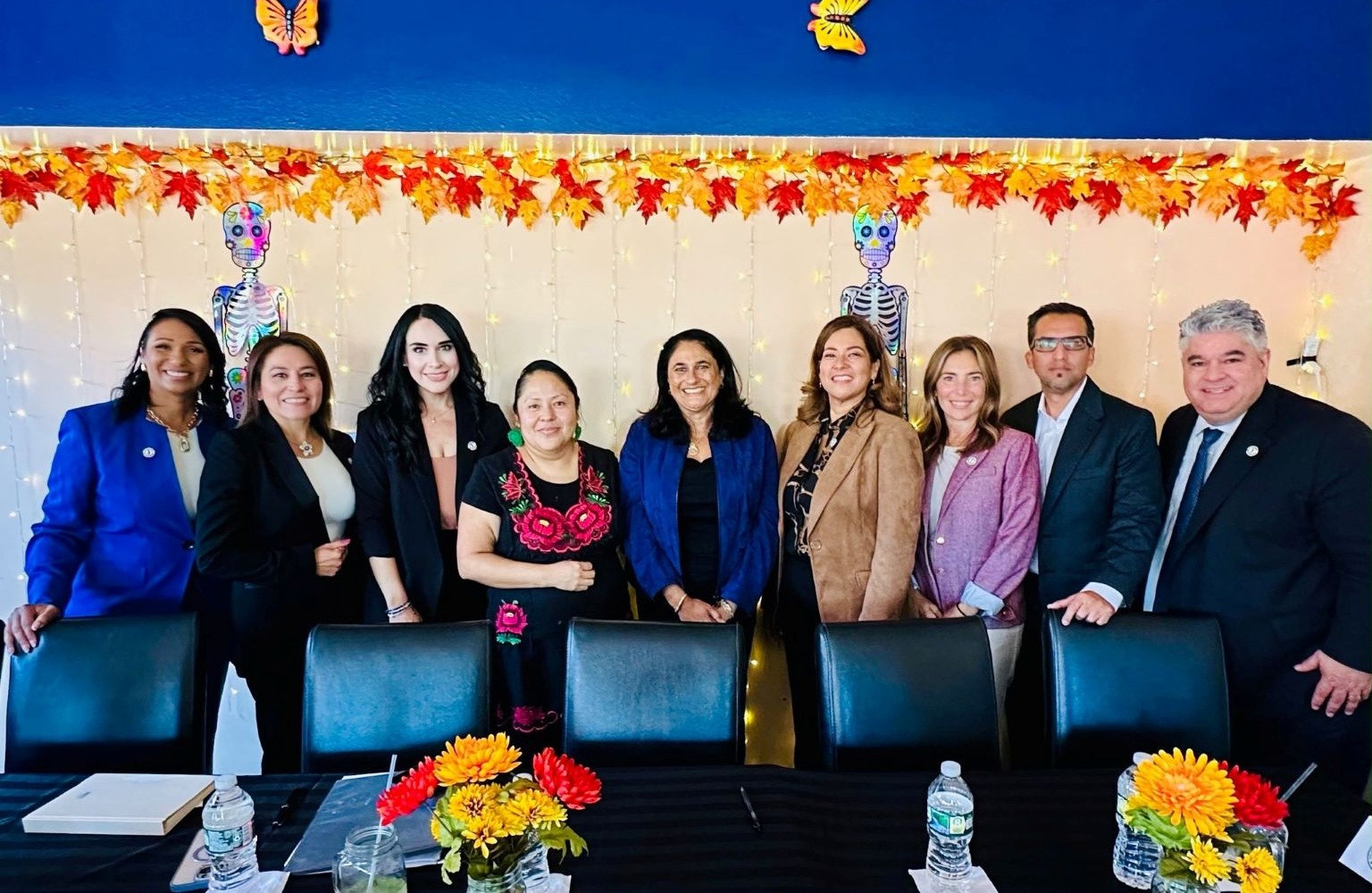
Attendees from the following chambers of commerce attended a meeting with Kellie Doucette about increasing minority procurement on Tuesday:
- African American
- Asian Indian
- Punjabi
- Statewide Hispanic
- Veterans
- Women’s
So … what’s the bad news?
Very little has been done to encourage or incentivize government entities (heck, the private sector, too) to support minority-owned small businesses since the state’s shocking disparity study was released nearly three years — and two administrations — ago.
Jeff Cantor, the head of the New Jersey State Veterans Chamber of Commerce, said he didn’t want to look back. Instead, he was thrilled when the office of Kellie Doucette, the state’s Chief Operating Officer, reached out to him to organize a meeting on minority procurement issues as part of her 21-county listening tour.
When it arrived at Las Marias in New Brunswick, Cantor was all ears — and he liked what he heard.
“It was definitely encouraging,” he said.
***
It must be said: This story has been told before. It certainly made the rounds after the Murphy administration’s long-promised disparity study was released in January of 2024, a report that acknowledged what everyone already knew.
Nothing — other than talk — has happened since.
At least in New Jersey.
New York has been leading on the issue for more than a decade.
In 2015, Gov. Andrew Cuomo committed the state to a 30% goal for minority- and women-owned businesses and 6% for service-disabled veteran-owned businesses. New York has hit the 30% mark every year, Cantor said. That’s roughly $2 billion a year to minority-owned businesses and another $2 billion to women-owned businesses.
The veterans goal just cleared 6%, and New York is now proposing to raise it to 8%.
New Jersey’s number? Cantor didn’t sugarcoat it.
“The bottom line is we’re almost at zero,” he said. “So, there’s nowhere to go but up.”
Where do you start?
Cantor suggested an executive order from Sherrill creating a “first look” program, so the state considers all small and diverse businesses first when it buys goods and services.
Cantor stressed that “all” means all.
“We want LGBTQ-owned businesses. We want Black-owned businesses. We want Hispanic businesses, women businesses, veteran businesses, because veterans right now are completely shut out,” he said.
Military spouse-owned businesses belong in the mix, too, he said.
“We can get a lot of this stuff done tomorrow if the governor commits to an executive order for it,” Cantor said.
***
Of course, a meeting is just a meeting. Cantor knows it.
“The bottom line is we’ve got to make sure this is not a one-and-done,” he said.
He said Doucette’s team told the group it isn’t. They plan to keep working through the problems.
Holding them to that will take numbers, and the state has been slow to produce them. The disparity study covered spending from 2015-20, essentially making it outdated when it was released in 2024.
But please don’t suggest another study. Cantor wants stats.
“We need transparency; we need data and accountability,” he said. “We need to know what the state is spending in these categories, and not four years after the fact.”
Cantor has an idea for getting state buyers on board: do what the private sector already does. Many companies tie employee performance reviews to how well they develop small and diverse suppliers.
“Why not do the same thing for public sector, for state procurement people?” he said. “Let’s see what the increase is and reward people.”
The Veterans Chamber is even bringing its own tool. With a federal grant, it’s building StandSmall, a portal meant to connect small businesses with procurement opportunities.
“We have the money to pay for it and build this,” Cantor said. “We just need the state procurement people on board to purchase directly from these diverse suppliers.”
Thirty percent is the goal. Just getting from almost zero to 5% or 10% would be a start, and a sign someone is trying. Which would be a positive.
Good news No. 5 would be the governor signing that executive order. Which she can do anytime she wants.


