





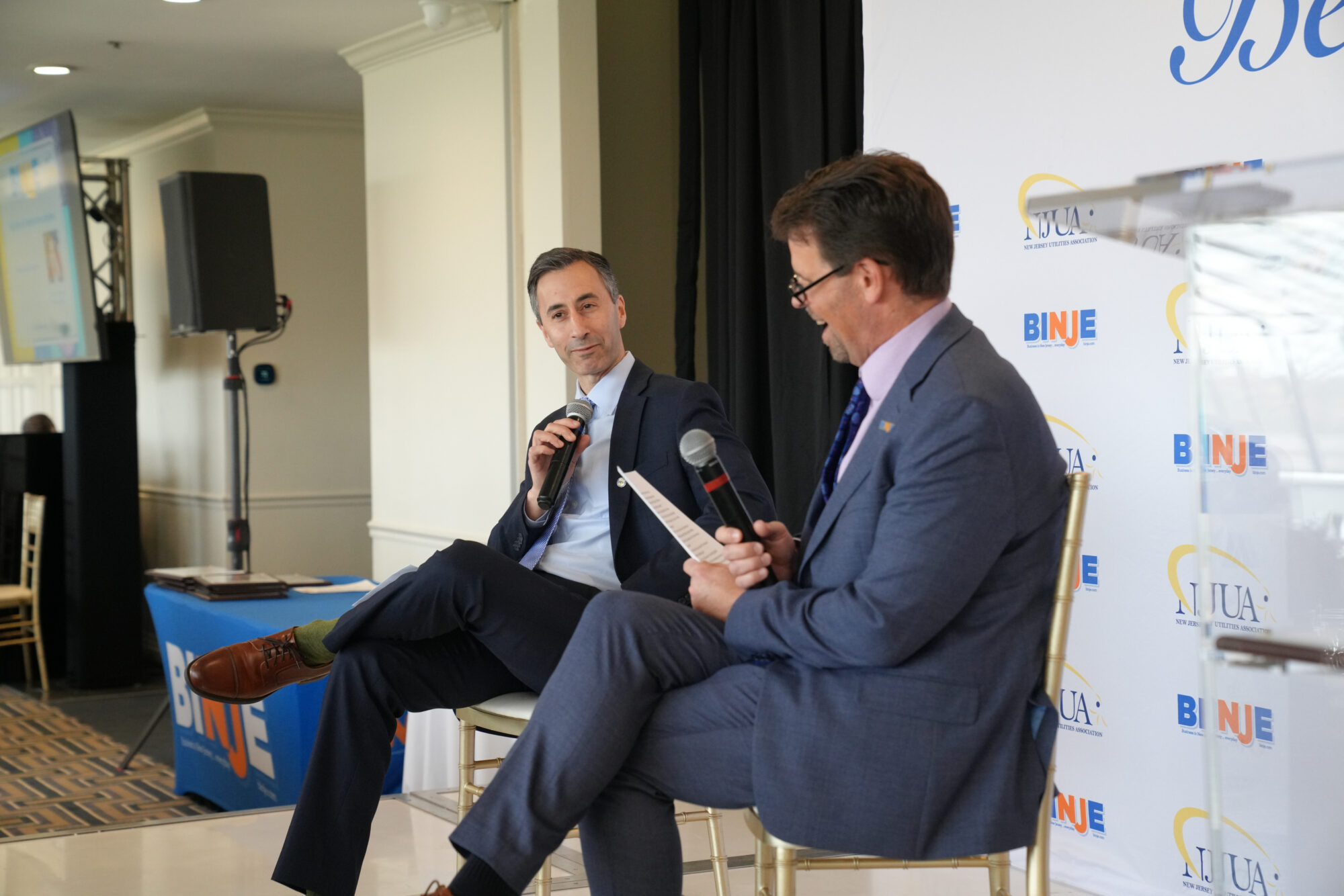
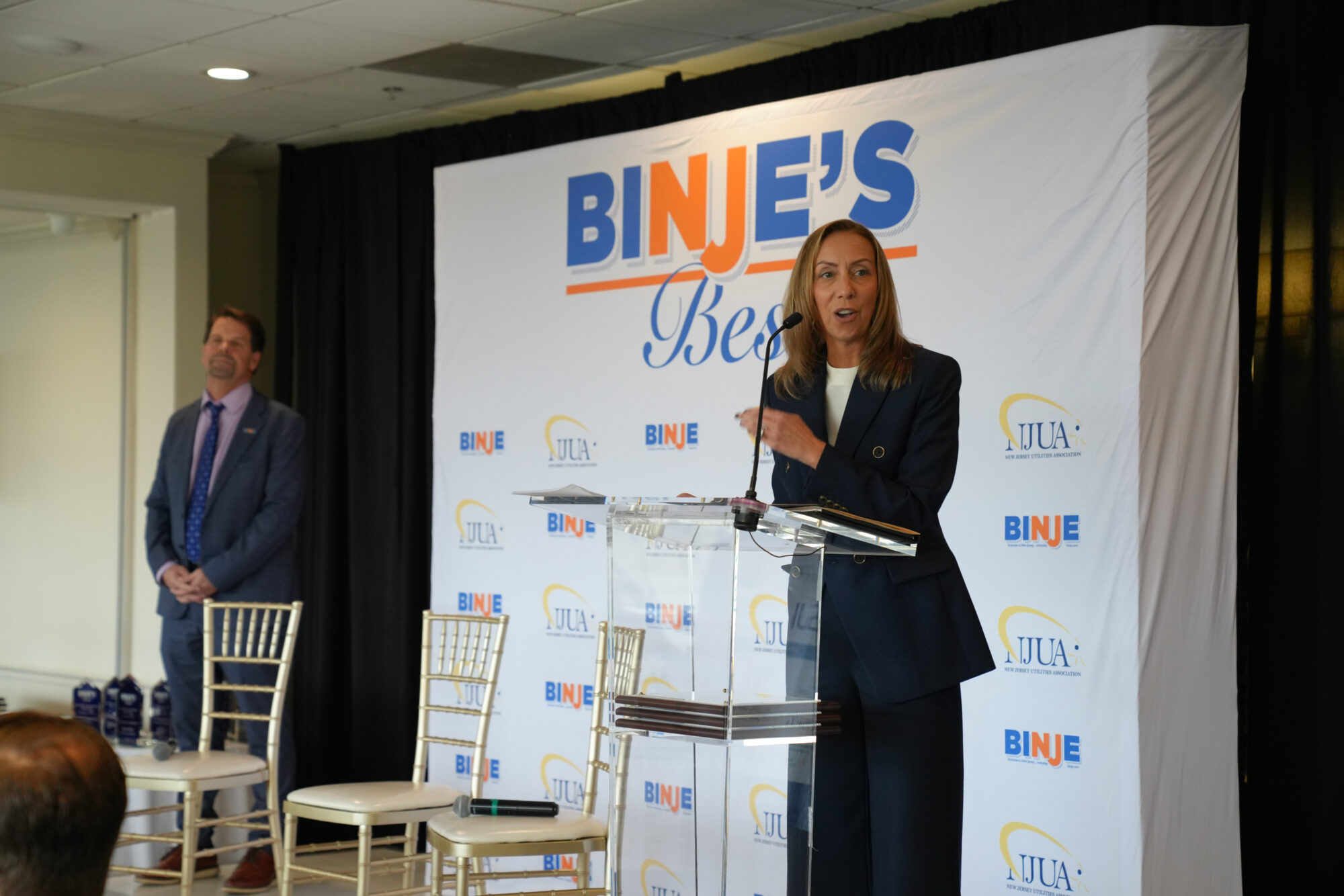
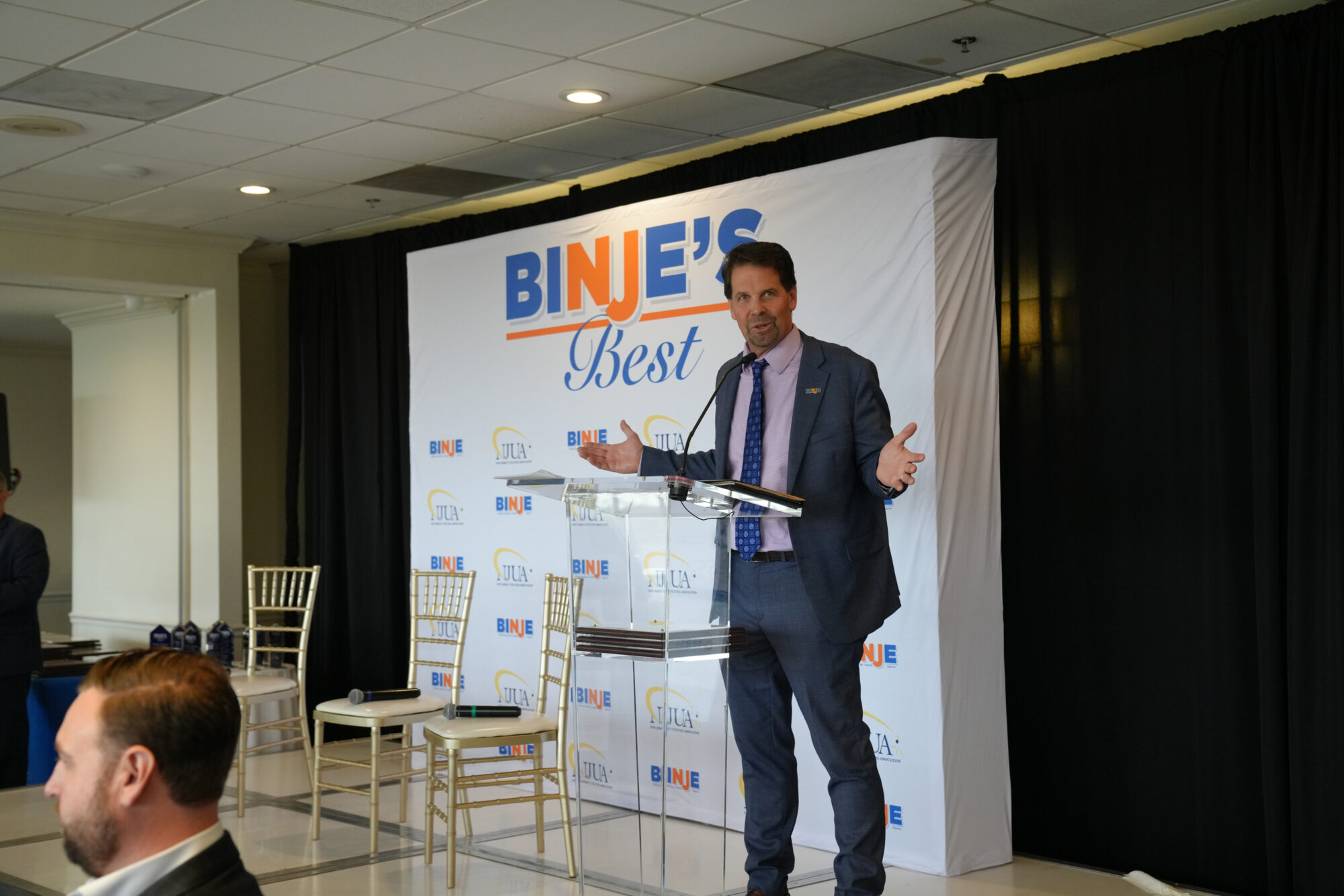

Voters took their frustration over costs to the polls last week, and incumbents paid the price. Greg Lalevee, Business Manager of IUOE Local 825, said utilities are feeling the same heat. And he’s not sure it’s fair.
“The affordability thing is real,” he said. “(People are) looking for somebody to take it out on. On Tuesday, they had a target. Unfortunately, many people in this room turn out to be the targets, the utility companies, as they get angry about it.”
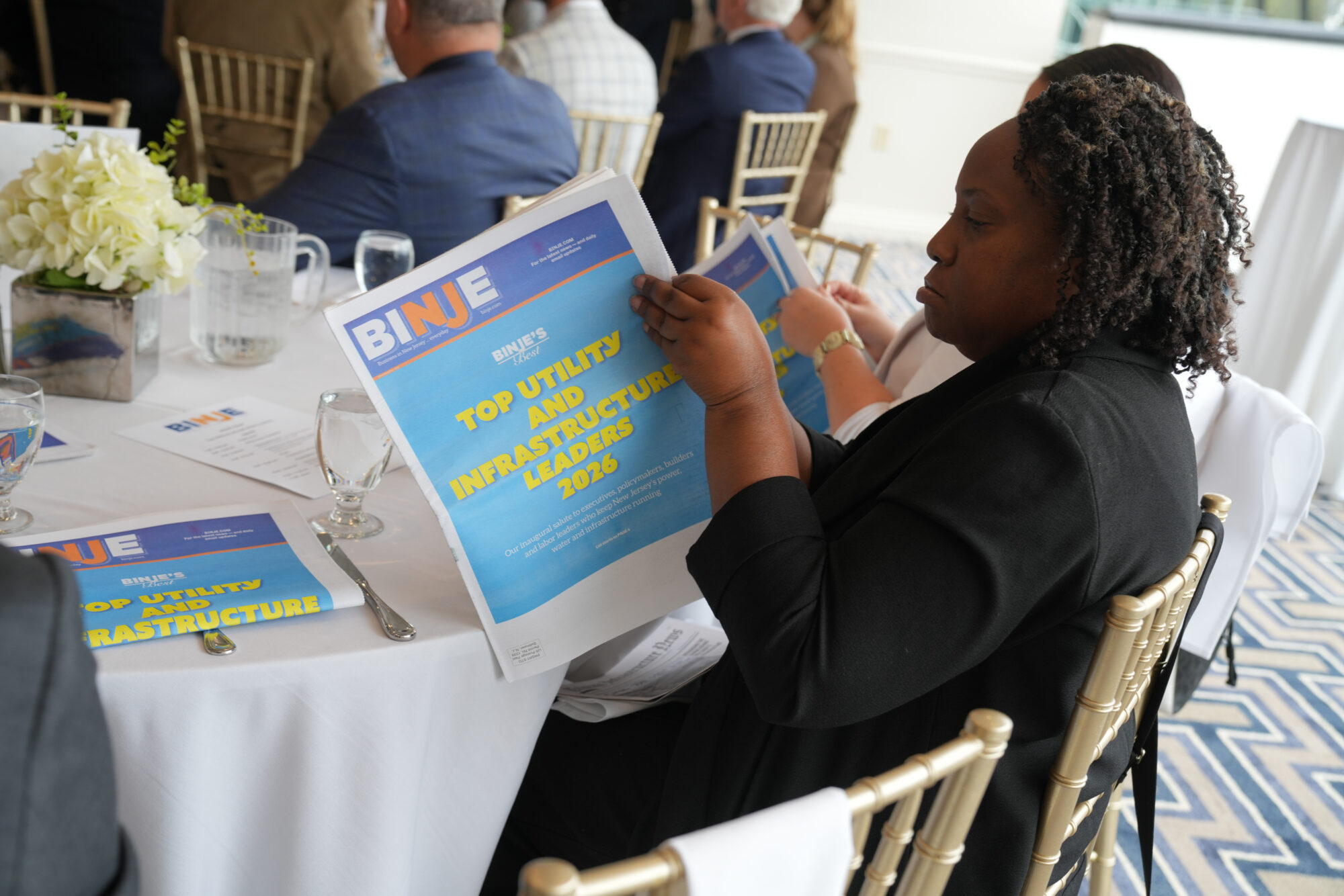
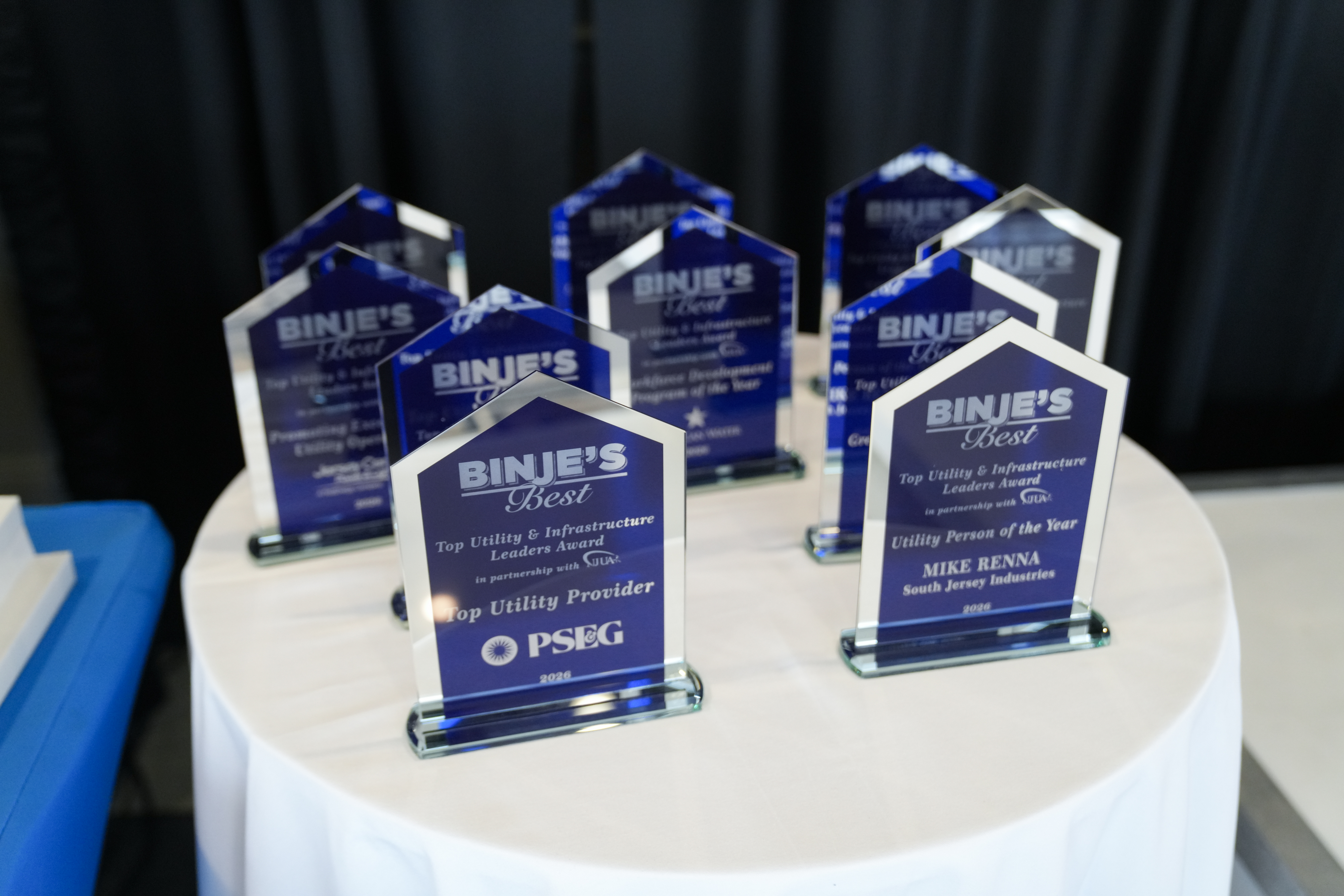
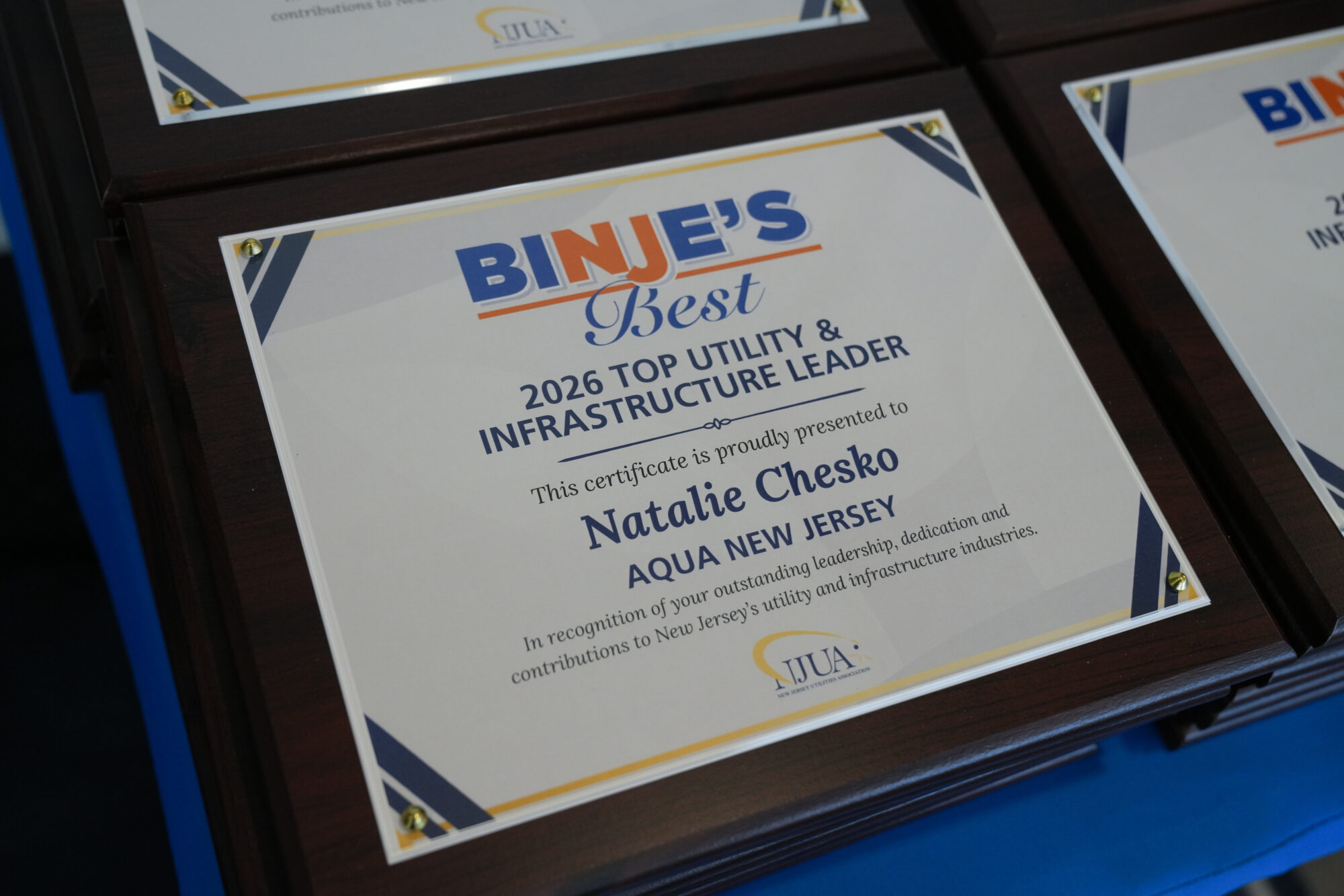
Lalevee spoke Thursday on a panel at BINJE’s Best: Top Utility and Infrastructure Leaders, held in partnership with the New Jersey Utilities Association at Jumping Brook Country Club in Neptune. He was joined by Doug Mokoid, President of JCP&L, and Pat Migliaccio, Chief Operating Officer of New Jersey Natural Gas.
Part of the problem, Mokoid said, is that customers don’t know what they’re paying for. JCP&L’s distribution charges make up only about 30% of the average electric bill.
“The bulk of the remaining 70% is supply charges from generators,” he said. “But our customers don’t care. They see a bill, and we have to be there for them.”
Mokoid said that means two jobs.
“We have to make sure on the first 30% of that bill that we are investing on behalf of them wisely, and we’re showing results,” he said. “And on the 70%, we have to be advocating for policies that ultimately help our customers and reduce energy costs.”
Gas works the other way around. NJNG gets much of its gas from the Marcellus Shale in Pennsylvania, then moves it through thousands of miles of pipe, so delivery is the bigger part of the bill.
“The gas supply is actually cheaper than distribution,” he said.
There is potential relief. Migliaccio said a family of four making up to $160,000 can potentially qualify for some level of energy assistance, on both the electric and gas side.
“You’d be surprised, frankly, at the income levels at which you can receive help.”
Here are nine other things we heard:
- JCP&L’s reliability is way up, but Mokoid won’t brag about it
North Jersey is tough territory. Mokoid said JCP&L has identified 22,000 dead and diseased ash trees there that it is removing now. Migliaccio, whose father was a tree man, said the emerald ash borer is largely to blame and called the work “a Herculean challenge.”
Mokoid said the numbers are improving anyway.
“From ’24 into ’25, our overall reliability improved by 15 percent, and year-to-date this year, we’ve improved another 25 percent,” he said. “They’re real numbers. However, I don’t talk about it a lot because we’re not satisfied.”
JCP&L has also set up an interconnection team to bring new generation onto the grid. And it hired Paul Richardson, from Con Edison, as Director of Engineering. Mokoid said Richardson’s team has generally designed the work for 2027 and is closing in on 2028.
- NJNG is a leader in carbon capture
Migliaccio said NJNG’s corporate headquarters has the first operational carbon capture system on the East Coast. It scrubs carbon out of boiler flue gas, capturing about 20% to 25%, and recycles the waste heat.
“It is not only an energy efficiency measure, but it’s an environmental measure, and it’s all part of our commitment to doing things more sustainably and affordably.”
He said the technology could eventually work in big buildings and warehouses across the state, though it’s “still a little nascent.” NJNG has worked with the manufacturer to help it scale up production, and boiler maker Patterson-Kelley is working with the firm to improve capture rates and heat recycling.
- Local 825 is training for jobs old and new
Lalevee said the trades take training seriously.
“We all have first-class training centers, all of the different construction trades, and it’s incumbent upon us,” he said.
For operating engineers, Lalevee said, the change has been dramatic.
“It’s really profound because we’re getting more and more technology onto the machinery in terms of GPS and computer systems,” he said “So, we have to just do this all the time.”
Years ago, Local 825 made its training school a technical college.
“Whether it’s doing the work of the existing systems, which we all know are in desperate need of upgrade and modernization, or meeting the new technologies … we have to understand them, how they work, how to install them, so that our members and our contractors are prepared to meet the moment of doing these rehabilitations and expansions that are going to make our state continue to grow.”
- JCP&L’s biggest plan yet is coming
Mokoid said JCP&L will soon announce the largest five-year capital plan in its history, topping the record it set just last year.
“Sneak peek: the one that we’ll announce here shortly will be the new largest five-year plan in the company’s history, and it’s really aimed at investments in our great state to improve reliability while maintaining our affordability position,” he said.
- Don’t count out offshore wind
A few years ago, New Jersey expected a wave of offshore wind farms, and with it a need for workers who could do jobs like welding underwater. That boom stalled. But Local 825 is still ready for it.
The union’s training center along the New Jersey Turnpike covers 61 acres, four of them water.
“When you talk about teaching things on the water, in the water, we’re equipped to do that, including the offshore winds, because the conversation might be dead today, I’m not sure it’s dead forever,” he said.
- Saving energy is economic growth
Migliaccio said efficiency does more than cut bills.
“Every electron saved, every molecule that we don’t use is one that we can repurpose for economic growth and development.”
He said the biggest opportunity may be with businesses.
“Our service territory is 93% residential, 7% commercial. But when you think about the inverse, probably about 20 to 30% of the gas is consumed by those commercial and industrial customers.”
Bringing efficiency programs to less traditional users, such as an asphalt plant, could squeeze more out of the market, he said.
- Data centers have to pay their way
Mokoid said new load is good for New Jersey.
“Large loads are generally a positive for the state,” he said. “New load is generally positive. It brings investment, it brings jobs, it brings opportunity.”
But it has to work for everyone else, too.
“What we are laser focused on at JCP&L is ensuring that any of those large loads are at worst net neutral for customers, but really should be net positive,” he said.
He pointed to a data center developer he visited recently in Frederick, Md., that has won over the county and nearby towns by paying its fair share and helping hold down local taxes.
- Education is the way out
Lalevee said the answer to the public’s anger is teaching people how the system works. That’s why his team created the Tri-State Infrastructure News Network and the Emmy-nominated “Our Infrastructure Matters” program, which explain how the electric, gas, water and road systems work and how they get paid for.
“I think that’s a big piece of what’s missing today, is just the education and the public awareness of what happens behind the veil.”
He said the public conversation has turned on itself.
“We all want the lights to turn on when the switch goes on. We can demagogue data centers as we all pick up our phones and use ChatGPT to develop the speech I’m about to give in front of the town to demagogue the data center. It’s this very toxic loop that we’re in, but I think education is the path out of it.”
- What they want a year from now
Mokoid wants a milder year. JCP&L’s territory took a once-in-25-years blizzard in February, one of its most damaging storms on July 3 and more in the days after. He also credited his workers, telling of the manager of JCP&L’s Central Jersey substations. When he asked how she got through the summer’s challenges, he said, her answer was simple: “I owe it to our customers.”
Migliaccio hopes the energy efficiency filing now before the state is settled. He also sees distributed energy resources finally coming of age, after years in which utilities invested in microturbine and fuel cell companies that didn’t pan out. With a resource adequacy problem and long lead times on new power plants, he said, the timing is right.
“I think this is probably the first time where it feels real.”
Lalevee wants permitting reform, which he said has support in Washington and Trenton.
“Just a pathway to get these projects from the drawing board out into the street faster and more efficiently would be the best present that we could get a year from now.”


