


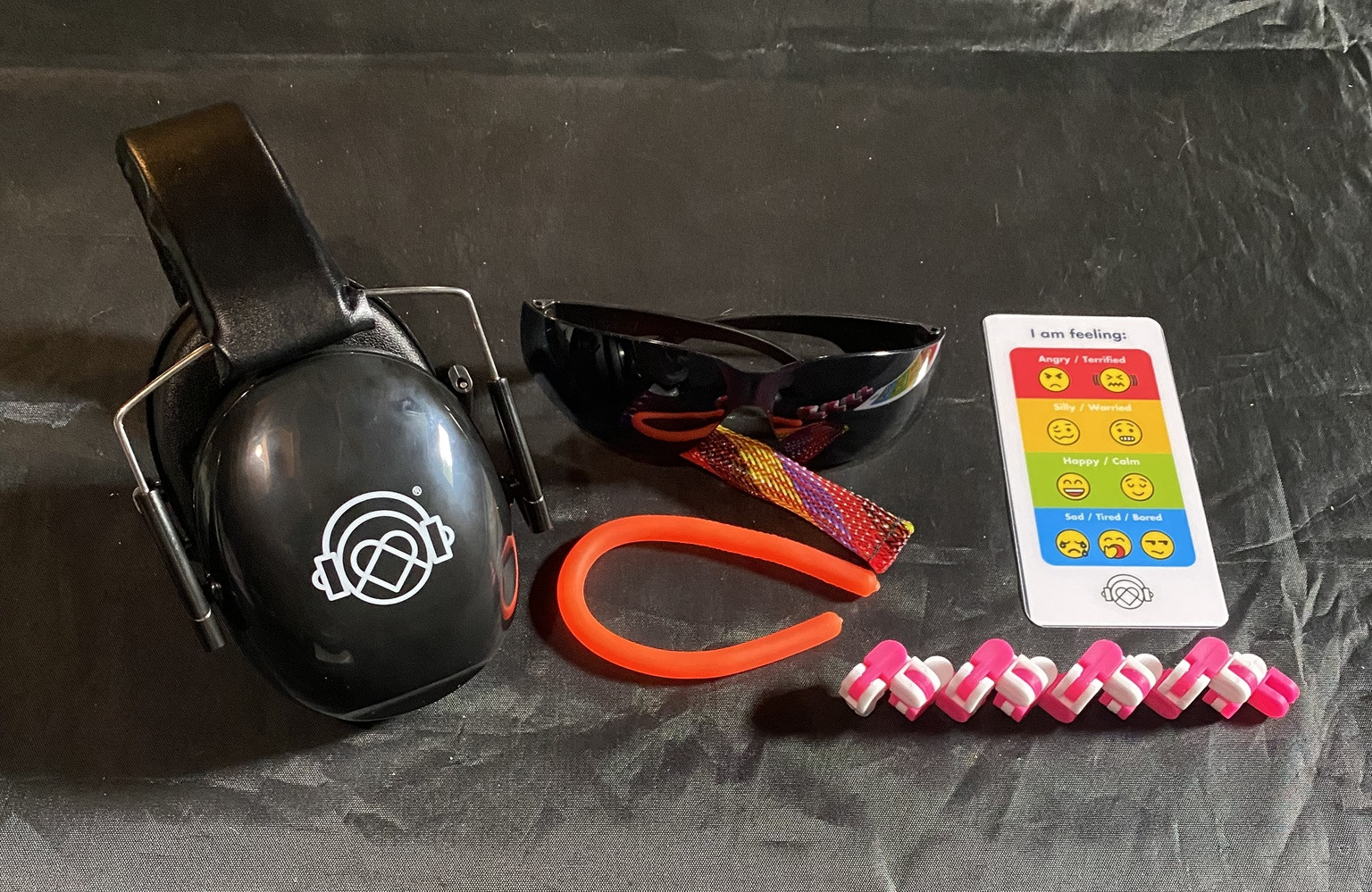
Every fan at MetLife Stadium’s World Cup matches has had access to a free sensory bag, courtesy of KultureCity and paid for by FIFA. No diagnosis or explanation required — fans can request one at Fan Info points simply by asking.
The point, said Sean Colkin, KultureCity‘s training manager, isn’t to label anyone or decide what they need.
“We’re not telling people who they are, not telling people what they need,” he said. “We’re providing the tools so that people can put together what they need to enjoy everything today at the World Cup.”
The bags are designed for anyone with what KultureCity calls invisible disabilities — a category that includes autism, ADHD, PTSD, traumatic brain injury and conditions like Down syndrome, not just people on the autism spectrum.
Here’s what’s inside:
Noise-reducing headphones: Not noise-canceling — Colkin is careful about the distinction. They cut down on stadium noise without blocking out the game entirely, so fans can still follow the action and talk to people next to them without raising their voices.
Fidget tools: Not toys, Colkin is quick to note — “I call them fidget tools, not fidget toys, because all ages.” Three different types are available, designed for fans of any age looking for a way to stay grounded during sensory overload.
Strobe-resistant glasses: Aimed at fans sensitive to bright, flashing lights — including people with epilepsy.
Communication cards: A “feeling thermometer” sits on the front, helping fans indicate how they’re doing. The back has simple icon cues: fidget, headphones, glasses, move, exit — a quick way to signal what’s needed without having to explain it to a stranger.
Beyond the bag, KultureCity operates a sensory room at the edge of FanFest, just outside MetLife Stadium, at every World Cup match — including Sunday’s final. It’s air-conditioned, dimly lit, and includes beanbag seating and varied wall textures, with full wheelchair access. (See full story here)


