


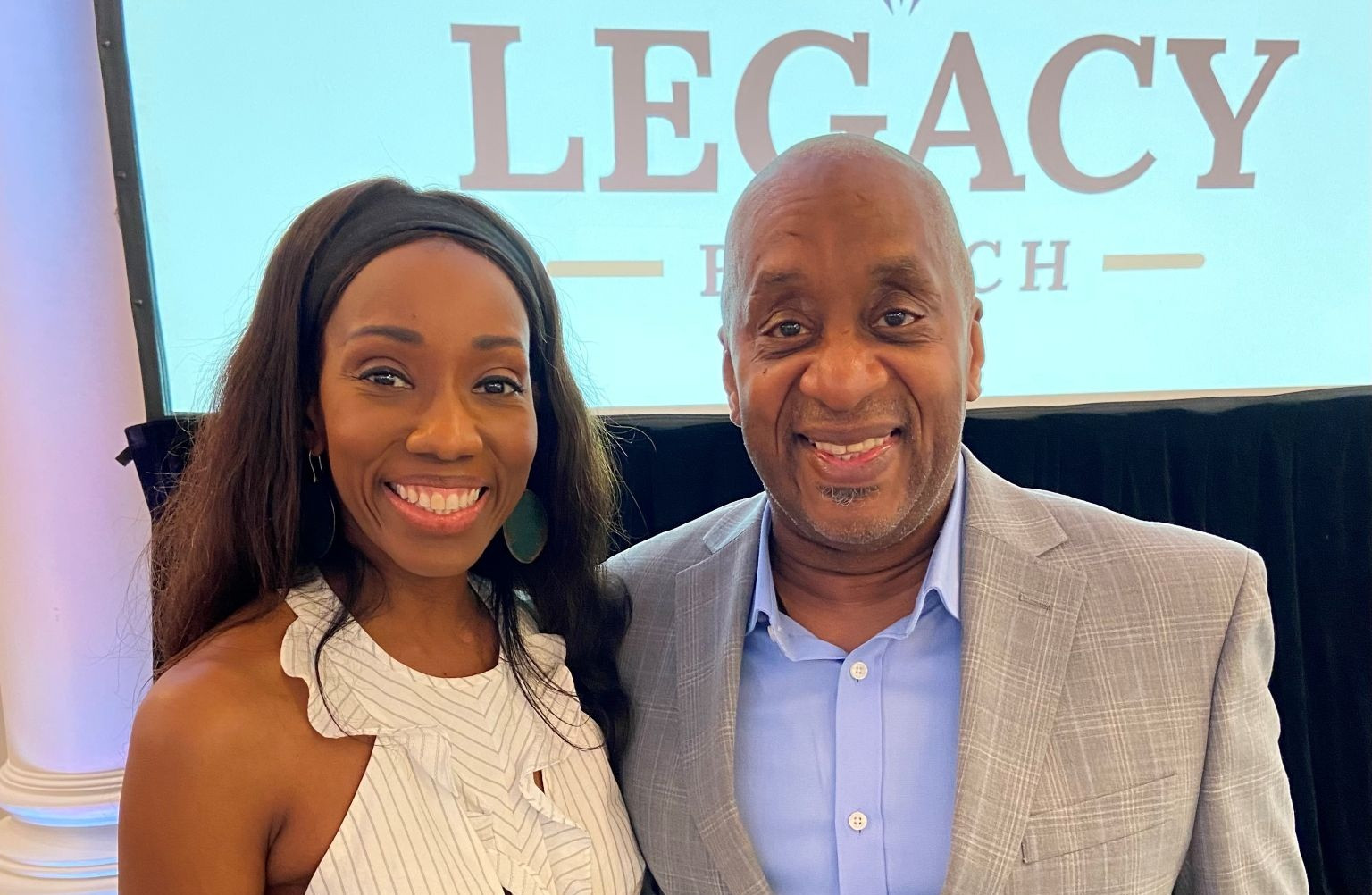
WBGO has been associated with Newark and the state’s historically strong jazz scene for decades. When modern technology allowed its broadcasts to reach a larger audience, it was hardly a surprise that the station began attracting listeners from around the country.
How to help
Those looking to support WBGO — and jazz as a genre that connects communities in a time when we need it more than ever — can contribute here.
But when WBGO ran its most recent fund drive, the single largest source of revenue that helps keep the station going, the largest share of contributions didn’t come from New Jersey or even New York City.
They came from Australia.
Tara Dowdell, who took over as chair of the organization on Oct. 1, was surprised — but only a little.
To Dowdell, the numbers are proof of something that’s bigger than just one fund drive: jazz doesn’t recognize borders, and it doesn’t need to be experienced the same way twice to land with the same force.
“Jazz has an incredible reach,” she said.
The numbers also point to something else. Appreciation of jazz — or classical music or any aspect of the arts — often is greater overseas.
“I think jazz is unfortunately more supported in Europe and outside the U.S.,” she said. “In many countries, especially in Europe, tax dollars go toward supporting and promoting jazz as well as classical music.”
A noted world traveler, Dowell said he’s seen it firsthand on trips around the globe. When she was in Kyoto, Japan, she said nearly every coffee shop she walked into was playing jazz. In
Córdoba, Spain, she came across a street musician playing jazz on the city’s famous Roman bridge — the same one featured in “Game of Thrones.”
“Jazz is just much more culturally embedded outside the U.S.,” Dowdell said. “That’s why WBGO is so important — we need to continue to preserve it.”
That’s the paradox sitting underneath WBGO’s business model.
A station rooted entirely in Newark — one whose hosts remind listeners where they’re broadcasting from on practically every show — pulls real money from a country on the other side of the planet.
Dowdell knows why. She says the power of jazz is palpable. She thinks a jazz club can move someone who walks in with zero interest in jazz.
“No one ever regrets going into a jazz club,” she said. “It’s an incredible experience.”
Making sure that activation can continue is the challenge. Dowdell knows relying on global goodwill only goes so far, especially now.
The Corporation for Public Broadcasting, defunded by the federal government this year, once supplied roughly 20% of WBGO’s funding — a hole that donations from Australia and elsewhere can help patch but can’t fully close on their own. Dowdell said the station currently has some corporate and foundation backing, including Prudential and the Fund for New Jersey, but she’s making it a priority of her chairmanship to bring in more, from corporations, foundations and high-net-worth individuals closer to home.
“Support is very important,” she said. “That is my biggest role as chair.”
The station’s upcoming move into NJPAC’s new development gives her a fresh pitch to make that case. A station that’s spent decades broadcasting from an aging, low-visibility building will soon have a literal storefront in the middle of Newark’s arts district — a much easier sell to a local sponsor than an appeal built entirely on a distant, if devoted, global fan base.
“This is arts and culture,” Dowdell said. “It promotes the state of New Jersey, it promotes the U.S. abroad, and it brings people together at a time when we need that.”


