


The school buses were supposed to be a final option, a way to ensure fans could at
least get to matches when there were not enough available coach buses — the ones
with the comfy seats and the AC.
Who knew they would become the coveted ride.
Alex Lasry, the CEO of the NY/NJ Host Committee, noticed the trend last weekend at
Columbus Circle in New York City. British fans heading to MetLife Stadium for the
England-Panama match weren’t boarding the available buses. They were waiting.
Specifically, deliberately waiting — for the yellow school buses.
Not because the school buses were faster. Not because they were more comfortable.
Because they were iconic. Because riding a yellow American school bus to a World Cup
match was part of the experience they had come thousands of miles for.
“The Brits weren’t even boarding,” Lasry said. “They wanted to wait till the school buses
arrived.”
That moment — small, unremarkable to anyone not paying attention — is exactly the
kind of thing Lasry has been noticing all tournament long. The NY/NJ Host Committee
has run five group stage sellouts at MetLife Stadium, moved 97 percent of ticket holders
through the gates before kickoff and cleared the property in under two and a half hours
after every match.
The numbers are impressive. But Lasry will tell you the numbers aren’t the point — the
fan experience is.
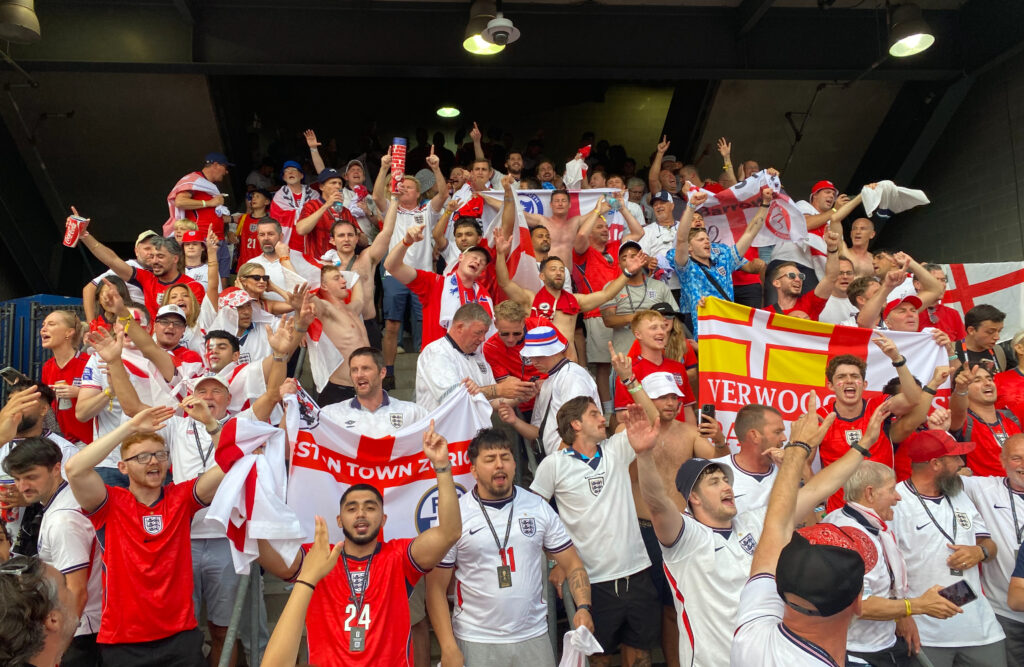
That’s why he talks about the thrill of those who were supposed to be sitting in the
upper deck getting upgraded to a suite. The fan who grabbed a free water in the parking
lot — and couldn’t believe it was free. Or the groups of adults who waited to take a
yellow school bus to the biggest sporting event in the world so they could feel like a kid
again, even for just a few minutes.
“At the end of the day, the only thing that matters is that the fans have a good time,”
Lasry said. “That’s what this is all about.”
BINJE chatted with Lasry after the Group Stage wrapped and before Tuesday’s
knockout-round match between France and Sweden, to get his take on the tournament
so far.
Here are more of his thoughts, edited slightly for space, clarity and flow.
BINJE: You’ve directed your staff to talk to at least 20 fans per match. Why was that?
LASRY: Because that’s how you’re going to make this better and better for everybody.
At the end of the day, the only thing that matters is that the fans have a good time. If
that happens, then the experience is great, the game is going to be better, and
everyone’s going to be happier.
BINJE: What is the feedback?
LASRY: That things are going great. Everyone’s loving the buses. The fan village has
been a hit. The biggest thing is what we’re not hearing. We’ve gotten 97 percent of
ticketholders scanned in before kickoff for every match. We’ve been able to get
everyone off property in under two and a half hours — under two hours in two of the
matches. That’s key to the experience.
BINJE: You had two matches in four days (Brazil-Morocco on June 13; France-Senegal
on June 16). How much did you learn from those two matches?
LASRY: We learned a lot about fan behavior — things you can project but can’t fully
know until you actually have fans there. That’s why, after the first couple of matches, we
added more directional signage, repositioned volunteers and adjusted bus routes. On
egress, we added speakers and TV screens to the bus queuing area so fans waiting for
their bus can watch the next match. We added a liquor license to the fan village so
people can stay and enjoy themselves after the final whistle.
It’s all about how do you keep the energy up and make the experience better from the
moment someone arrives to the moment they get home.
BINJE: The free water in the parking lot surprised a lot of people. FIFA isn’t known for
giving things away. How did that come about?
LASRY: We learned that at the Club World Cup last year. We knew there was going to
be walking — from buses, from rideshare — and we wanted to make sure people
stayed hydrated and comfortable. It’s all part of the same thing: how do you make the
fan journey better at every single point? The free water was an easy call.
More on World Cup experience:
- Suite moment: At World Cup, random fan upgrades are the norm
- Volunteer hours: The good, the bad and the boring at the World Cup
- For Irvington florist, it’s about playing the long game, one World Cup match at a time
- Q&A: Lasry is loving World Cup fan experience — and challenge of making it better
- Why the best place (outside of Mexico City) to watch Mexico-Ecuador is in Carlstadt
- American Dream proving to be big hit with international fans
- So good, so good: How Sweet Caroline became unofficial anthem of England
- On transit costs, merch and branding: World Cup fans offers simple fixes
BINJE: Talk about the suite upgrades. That’s cool. How did that start?
LASRY: What could be better for a fan than that? That’s why I’ve been going into the
fan village, finding people sitting in the 300 level, and telling them they’ve been
upgraded. There are only two rules — you’ve got to cheer loud and no fighting.
Everyone agrees. It’s been really cool.
The governor came and visited one of the suites last match. Those are the moments
you remember. That’s a fan who came to New Jersey for a World Cup match and ended
up in a suite next to the governor of New Jersey. That’s what this is supposed to be.
BINJE: The group stage has featured some remarkable matches — England in the rain,
Ecuador beating Germany, Senegal scoring in extra time against France. How much
does a good match help your operation?
LASRY: The one thing I know from a lot of years working in sports is that a good game
makes your fan experience that much better. I’m very proud of the work we’ve done, but
having good matches makes people happier when they’re leaving.
Even if you’ve lost, if it was a fun and exciting match, you have a better time on egress.
It’s just human behavior. We’ve been really lucky. Ecuador really showed up against
Germany. Erling Haaland scoring two goals in the rain was electric. Those are the
memories people are going to have forever.
BINJE: Having those big names do well is cool, too.
LASRY: Absolutely. The biggest stars have shined on the biggest stage. We’ve had
Haaland score, Harry Kane score, (Kylian) Mbappé score. Vini Jr. score. They showed
up. And the fan bases have shown up with them. The Norwegians have been incredible.
The Ecuador fans against Germany — you would think going against a powerhouse
you’d have a fortress, but Ecuador was in the house. The energy has just been
remarkable throughout.
BINJE: That atmosphere has been felt all day and night, not just during the time the
teams are on the pitch. You’ve talked about the success of the fan village — talk about
American Dream, which has been a huge hit with fans.
LASRY: They’re an official partner, and it’s turned out to be a really great partnership. It
gives fans another place to be pre and postgame — which helps ingress and egress
and makes the whole experience better. The little secret I’ve been telling fans is: make it your whole day. Go to American Dream, hang out, watch the game there, come to the
fan village, go to the match, then go back to American Dream and watch the next game.
You don’t have to stress about getting the first bus or the first train. Just make it a World
Cup day.
BINJE: Now comes the knockout round. France-Sweden this afternoon. How is that
different from what you’ve been doing?
LASRY: It’s a whole new tournament. The intensity is higher, more eyes are on it; the
stakes are completely different. But I think we’ve found a really good rhythm and I’m
confident in the plan. France-Sweden is going to be electric. And whatever we get on
July 5 is going to be incredible.
BINJE: But it will be nothing like the final on July 19, an event that is expected to bring a
global audience of 3 billion viewers. You’ll go two weeks between matches — will that
help?
LASRY: The final is its own animal. It doesn’t matter what we’ve done in the first seven
matches — what matters is what happens on July 19. The security concerns alone are
a completely different level. It’s going to be a mini United Nations. The President is
going to be there. A huge amount of celebrities. From July 5 to July 19, it’s not really a
sit-back period — it’s every single day making sure we’re doing exactly what we need to
do to ensure everything goes smoothly on the biggest day.
BINJE: I’ll give you the final word. How would you describe the Group Stage?
LASRY: Five sellouts. Getting 97 percent of people in before kickoff. Getting everyone
off property in under two and a half hours. All that’s incredible. But honestly, the thing
I’m most proud of is that we put together a plan, trusted it, made the adjustments where
we needed to. It worked. That’s what you want. You want to leave the group stage
saying — the plan worked. Now let’s go win the final.


