


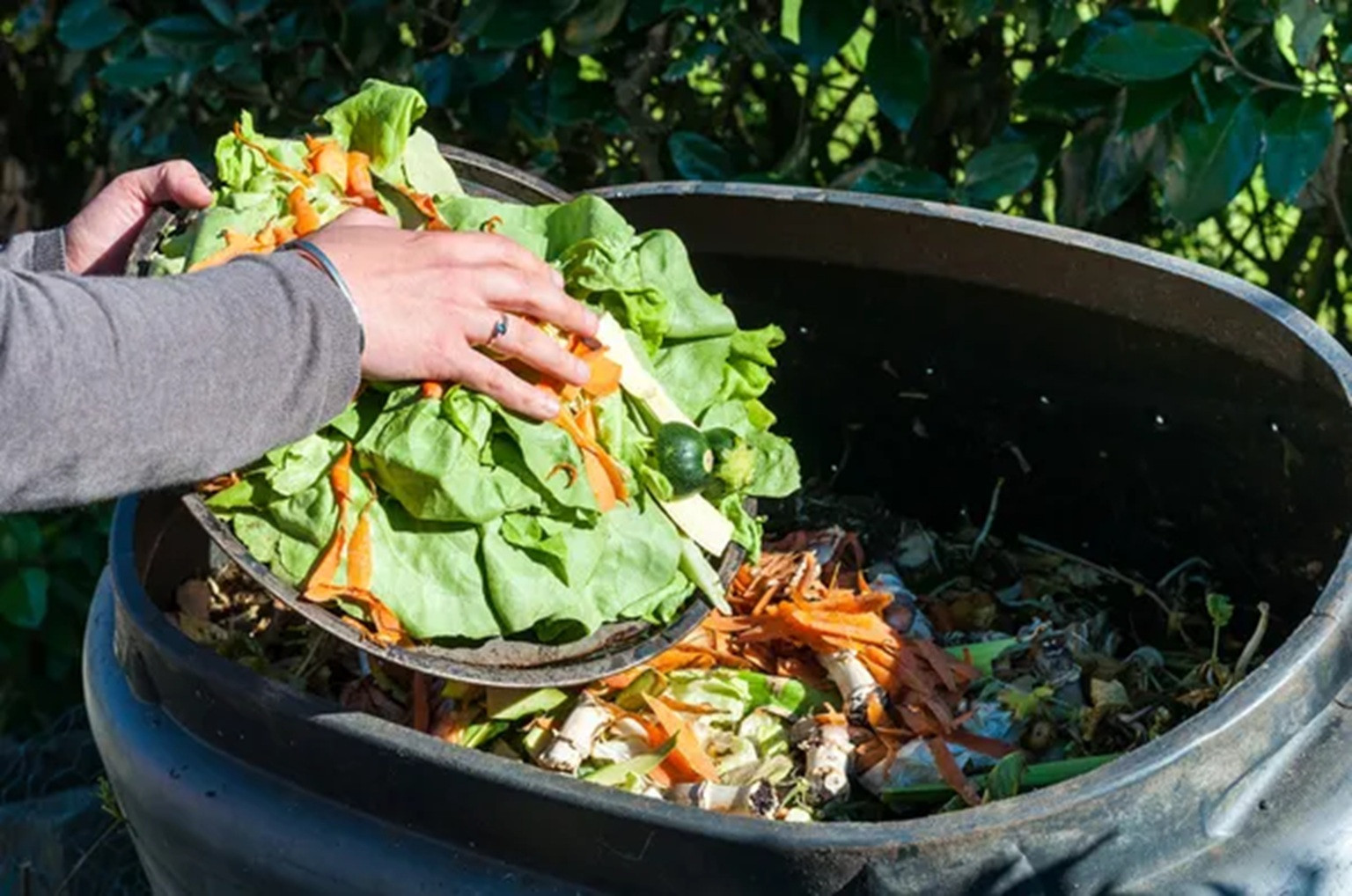
A hospital kitchen worker watches 200 untouched meals get bagged for the trash. A family chooses between rent and groceries. We see these contradictions play out across our workplaces and communities every day. They don’t have to.
In New Jersey alone, hundreds of thousands of freshly prepared, high-quality meals are discarded daily. Not because they are unsafe or unwanted, but because our food system was never designed to capture and redirect them. At the same time, families across the state are making impossible choices between necessities.
Over the past two years, our organizations have joined the New Jersey Meal Recovery Coalition because we recognized that this contradiction is not inevitable. It is a systems problem, and systems problems require coordinated, cross-sector solutions. Bringing together businesses, nonprofits, food-service providers, academic partners, and public agencies to address this is no small feat. It took a statewide initiative led by Share My Meals to begin normalizing the recovery and redistribution of surplus prepared meals and to build the infrastructure needed to ensure that safe, nutritious food reaches people rather than landfills.
By ReFED’s estimate, New Jersey generated about 1.17 million tons of food waste in 2024. When those discarded meals are recovered and redistributed instead, they become something else entirely: a public health asset, an environmental solution, and a practical, cost-effective way to feed families facing food insecurity, which is one of the most consequential social determinants of health.
Prepared meal recovery sits at the intersection of food access, community health, and sustainability. It does not replace food banks or grocery-based assistance. Instead, it fills a critical gap by providing ready-to-eat meals for people who may not have the time, equipment, or stability to cook, including patients leaving hospitals, families living in temporary housing, seniors, and essential workers.
Only two years in, the Meal Recovery Coalition has already supported the recovery of more than 1 million meals across New Jersey, while preventing the greenhouse gas emissions that would have resulted had those meals been discarded. That is a genuine achievement, but it represents roughly 10 percent of what is discarded annually. The MRC’s goal is to recover all 5 million surplus prepared meals discarded in New Jersey each year. The infrastructure exists. We are scaling.
For many of us, this work is about more than charity. It is about shared responsibility: recognizing that businesses, nonprofits, and government agencies each have a role to play in reducing waste and supporting community health. Institutional kitchens, including hospitals and corporate cafeterias, already produce nutritious meals at scale. With the right partnerships, protocols, and clarity, those excess meals can become an asset rather than a burden, supporting neighbors in need while advancing environmental and operational goals.
One of the Coalition’s most important contributions has been bringing consistency to a space that was previously fragmented. Through a collaboration facilitated by Rutgers Cooperative Extension, partners developed and published the New Jersey Food Donation Guidelines, which offer clear, practical direction on how to safely donate, recover, and redistribute food in compliance with applicable food safety standards. These guidelines reduce uncertainty for donors, protect recipients, and unlock broader participation across sectors.
For businesses, that clarity matters. It turns good intentions into repeatable action.
What is happening in New Jersey is not just a local success. It is a model worth studying. The Meal Recovery Coalition is the first statewide, business-engaged initiative of its kind in the country, demonstrating that cross-sector collaboration can transform excess into access. The model rests on several key foundations: shared safety standards aligned with applicable food safety regulations, a technology platform that coordinates pickup and tracks impact in real time, and a membership structure that distributes both cost and responsibility across sectors. While the specific legal framework varies by state, the core principles of coordination, transparency, and good-faith participation are broadly applicable. Every state has institutional kitchens producing meals at scale. Every state has families who are food insecure. What most states lack is the connective tissue, the standards, the partnerships, the shared infrastructure, to turn that existing capacity into a functioning system. New Jersey is building that connective tissue. With growing participation from corporations, nonprofits, food-service providers, and public agencies, the goal of recovering every surplus meal in the state is within reach.
This type of scalable model is still uncommon in the U.S., though its success points to what may be possible elsewhere.
It is clear that no single organization can solve food waste or hunger alone. But together, we can rethink how our systems operate and make better use of what already exists. New Jersey has demonstrated that scaling is possible. If your state or city is interested in learning more about replicating this model, the New Jersey Meal Recovery Coalition welcomes inquiries from organizations, nonprofits, and government agencies.
No good meal should be thrown away when so many of our neighbors are in need.
The authors:
Susan Anderson is Director of Philanthropy & Community Impact at Bayer;
Kate Barrett is President of The Campbell’s Foundation;
Binta Beard is Head of U.S. Social Impact at Novartis;
Oliver Bogillot is Head of General Medicines, North America at Sanofi;
Robin Boggs is Managing Director for Corporate Citizenship – Americas at Accenture;
Jasmine Greenamyer is Vice President of Global Purpose & Patient Experience at Bristol Myers Squibb;
Chris Guiton is Head of Home State Initiatives at Johnson & Johnson;
Warren Leeds is Chief Executive Officer of Dartcor;
Chris Pernie is Associate Vice President of U.S. Public Affairs at Novo Nordisk;
Eric Schwartz is Vice President of Community Health & Transformation at Capital Health.


