


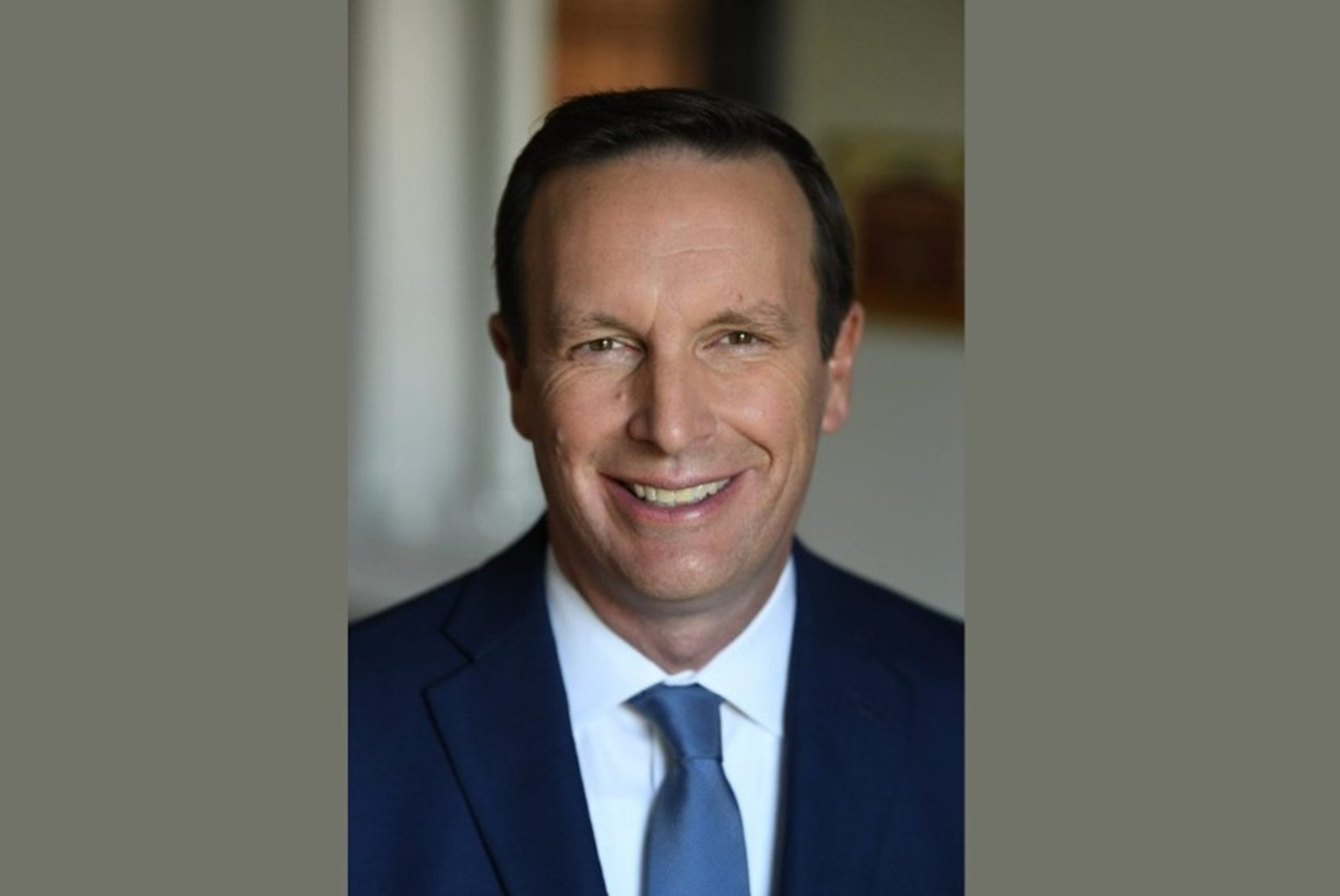
By now, you’ve likely heard that Connecticut Sen. Chris Murphy had a stroke Saturday. His arm went numb at his son’s hockey game, and he was taken to a local hospital, then transferred to Johns Hopkins. His office says he is awake, alert and responding well to treatment.
Here’s what you may not know: This wasn’t uncommon for someone his age.
That’s the message from the stroke specialists at Hackensack Meridian Health, which has three certified Comprehensive Stroke Centers and nine Primary Stroke Centers across New Jersey.
Dr. Shadi Yaghi, Chair of the Department of Neurology at Hackensack Meridian Neuroscience Institute at Jersey Shore University Medical Center, said Murphy’s case should change how people think about who has strokes.
“While many people associate strokes with advanced age, a stroke in your early 50s — like the one Senator Murphy recently experienced — underscores a critical reality: strokes can happen to anyone, at any age,” he said.
The numbers back him up.
A study published Sept. 23 in Neurology found the stroke rate among adults ages 20-54 rose from 33.9 cases per 100,000 people in 1993-94 to 62.2 per 100,000 in 2020 — nearly double. Over the same stretch, stroke rates among older adults went down. The study tracked the Cincinnati/Northern Kentucky area, which researchers picked because it broadly reflects the U.S. population.
The CDC sees the same thing. Comparing 2011-13 with 2020-22, overall stroke prevalence rose 8%. For people ages 45-64, it rose 15.7%. For ages 18-44, 14.6%.
That puts a lot of CEOs, managing partners and business owners squarely in the zone — and when a stroke hits, there’s no time to lose.
Dr. Colum Amory, Stroke Director at the Hackensack Meridian Neuroscience Institute at Hackensack University Medical Center, put the stakes in numbers.
“When a stroke occurs, the clock is ticking on your brain health. We estimate that nearly two million brain cells die every single minute that blood flow is interrupted,” he said.
That’s why Dr. Nancy Gadallah, a vascular neurologist at the Stroke & Neurovascular Center at JFK University Medical Center, stressed a stroke is no time to be humble or a hero.
If you’re at a conferences, gala or networking event, don’t drive yourself home or to the hospital. Call an ambulance, Gadallah said.
“A stroke can happen anywhere, and public events can be chaotic and distracting,” she said. “The absolute worst thing you can do if you experience sudden numbness, weakness, or slurred speech is to try to drive yourself home.
“Recognize the critical nature of your symptoms and advocate for yourself: grab the nearest person, tell them you think you are having a stroke, and have them call 911 immediately. In a stroke emergency, an ambulance is always your safest and fastest route to recovery.”
Yaghi, Amory and Gadallah shared their insights with BINJE. Here are seven other things execs should know about stroke:
7. The risk factors look like a typical executive physical
Among younger stroke patients in the Cincinnati study, high blood pressure, diabetes and atrial fibrillation all became more common over the years. None of those are rare in a boardroom. All of them are things a doctor can check — if you show up for the appointment.
6. The marijuana number is hard to ignore
Substance use among younger stroke patients in the study went from about 5% in 1993 to about 40% in 2020, mostly marijuana. The study wasn’t designed to say whether marijuana caused the strokes, and the researchers don’t claim it did. But in a state with a legal cannabis market, it’s a number worth knowing.
5. Younger people don’t think “stroke”
Because stroke is less common in younger adults, HMH says, symptoms often get written off as a migraine or a pinched nerve. That’s how a 45-year-old talks himself out of going to the hospital.
4. A numb arm counts. So does a symptom that goes away.
Murphy’s stroke didn’t start with a collapse. It started with numbness in one arm. HMH says symptoms that are mild — or that come and go, like a transient ischemic attack, or “mini-stroke” — can come before a larger, disabling stroke. Feeling better isn’t the same as being fine.
3. Get team coverage
Another advantage to calling an ambulance to take you to treatment? The paramedics will alert the hospital before arrival and take patients to the right stroke center.
At a time when every second counts, that call that a patient is coming is huge.
2. Skip the aspirin
It’s a common reflex, borrowed from heart attacks. It can be a deadly one.
Amory explained why.
“In the wake of Senator Murphy’s stroke, we want the public to understand that acting immediately is the only option,” he said. “Critically, do not try to treat yourself while waiting for help. People often think they should take an aspirin, as they might for a heart attack. But if your stroke is hemorrhagic—meaning it is caused by a ruptured blood vessel rather than a clot—taking aspirin will thin the blood, make the bleeding worse, and can be fatal. Call 911 and let the paramedics take over.”
1. BE FAST
HMH says clot-busting medication can be given within a window of up to four and a half hours, and its stroke teams are available 24/7. The warning signs fit in one word — BE FAST: Balance, Eyes, Face, Arm, Speech, Time to call 911.
Yaghi spelled out what to watch for.
“It is vital for the public to know the signs. If you or a loved one experience sudden onset of numbness or weakness in an arm or leg, an uneven smile, difficulty speaking or comprehending, loss of balance, vision loss, or double vision, you must act fast,” he said. “These are acute medical emergencies. Calling 911 and getting to a hospital as soon as possible can be the difference between a full recovery and permanent disability. Remember, time is brain.”


