


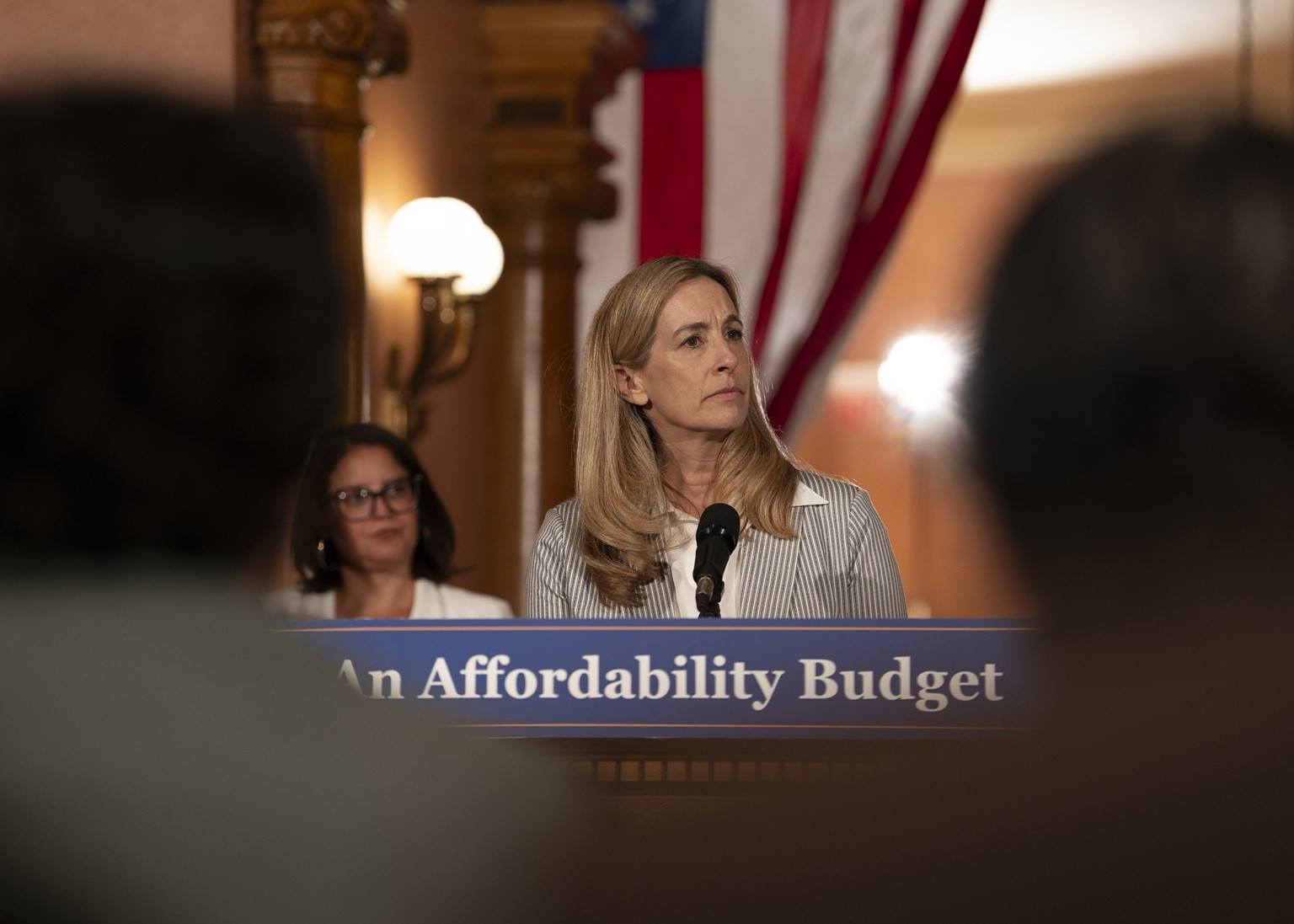
Gov. Mikie Sherrill and key leaders of the Legislature praised themselves for the $60.7 billion budget they produced yesterday, saying it delivered on Sherrill’s goal to make New Jersey more affordable, protect children and families, and increase accountability and transparency in state government.
And give them full credit, the size of the budget did not change from the budget address to the budget resolution — a positive move everyone can agree on.
The budget’s impact on the business community — better said, the willingness to add more taxes to companies and corporations — is worthy of debate.
Michele Siekerka, the CEO of the N.J. Business & Industry Association, praised the shelving the Climate Superfund Act — which she called on the “worst business policies” in state history — but noted all of the revenue-raisers in this budget (that’s code word for new taxes) are on “the backs of business, despite having one of the worst business tax climates in the nation.”
The good: “We worked to mitigate the temporary Net Operating Loss limit and the Alternative Business Calculation Deduction,” she said. “And while compromises were made on the per-employee fee on businesses with more than 50 employees using Medicaid, many of our job creators will be penalized for something which they have little to no control over. And, yes, workers on Medicaid will still be impacted.”
The OK: “With the Fair Price Protection Act, the Legislature had an opportunity to expressly state its intent to protect consumers from price increases but instead pushed forward a bill that compromises the very cost-saving programs that consumers rely on,” she said.
Christina Renna, the CEO of the Chamber of Commerce of Southern New Jersey, did the same dance.
She praised the budget for its allocations to certain South Jersey needs, including funding for Rowan University’s Shreiber School of Veterinary Medicine, which will strengthen South Jersey’s growing life sciences sector; continued support for NJ TRANSIT, which will help sustain initiatives like SJ Connects and future transit expansion; and investments in shared services through the Local Efficiency Achievement Program, which benefits South Jersey municipalities that have been leaders in regional collaboration.
But …
“At the same time, employers aren’t reacting to a single tax increase or one new regulation. They’re responding to all of it at once: higher taxes, new employer assessments, more compliance requirements, and rising legal and operating costs,” she said. “That cumulative effect matters. It’s particularly true in South Jersey, where many of our members are small and family-owned businesses competing directly with lower-cost neighbors in Pennsylvania and Delaware for talent and investment. Every additional cost widens that gap.
“That is the lens through which we view the broader package of legislation advancing alongside this budget, including the proposed Employer Healthcare Assistance Contribution, business tax increases, and additional regulatory requirements.”
Tom Bracken, the CEO of the N.J. Chamber of Commerce, simply said business was not a priority in the process.
“Supporting economic growth and the business community was not a central focus of this budget,” he said. “New Jersey’s employers — those who create jobs, drive investment, and fuel our state’s economy — were given minimal support.
“In fact, funding dedicated to supporting small businesses was significantly reduced, and the budget includes measures that make it more costly for employers to do business in New Jersey. These policies send the wrong message at a time when New Jersey should be working to attract and retain businesses, not making it more costly and cumbersome to operate here.
“The negative financial and reputational consequences of these policies will make it more difficult for New Jersey to be competitive — and competitiveness is essential if the state economy is going to grow.”
Bracken tried to spin it forward.
“With the budget now signed, it is time to turn the page,” he said. “We encourage the administration and Legislature to work together on a pro-growth, pro-business agenda that supports entrepreneurs, helps existing employers grow, attracts new investment, and strengthens New Jersey’s reputation as a destination for business.
“It’s now time to look ahead and begin to focus on the state’s most pressing need: strengthening our economy. Attention should turn to advancing policies that encourage investment, promote growth and improve New Jersey’s long-term competitiveness, all of which have been virtually ignored for way too long.
Siekerka echoed those thoughts.
“Rather than continuing to add the costs and burdens of our job creators, both small and large, we instead encourage our policymakers to finally embrace real reforms in New Jersey,” she said. “We say it every year, but without those reforms, our affordability will continue to decline, and our large employer will continue to move, grow or invest elsewhere.”


