



If you’ve been doomscrolling lately, it’s easy to think artificial intelligence is about five minutes away from taking your job — and everything else.
Here’s some good news: Yann LeCun, one of the actual “Godfathers of AI,” says we are nowhere close to that happening.
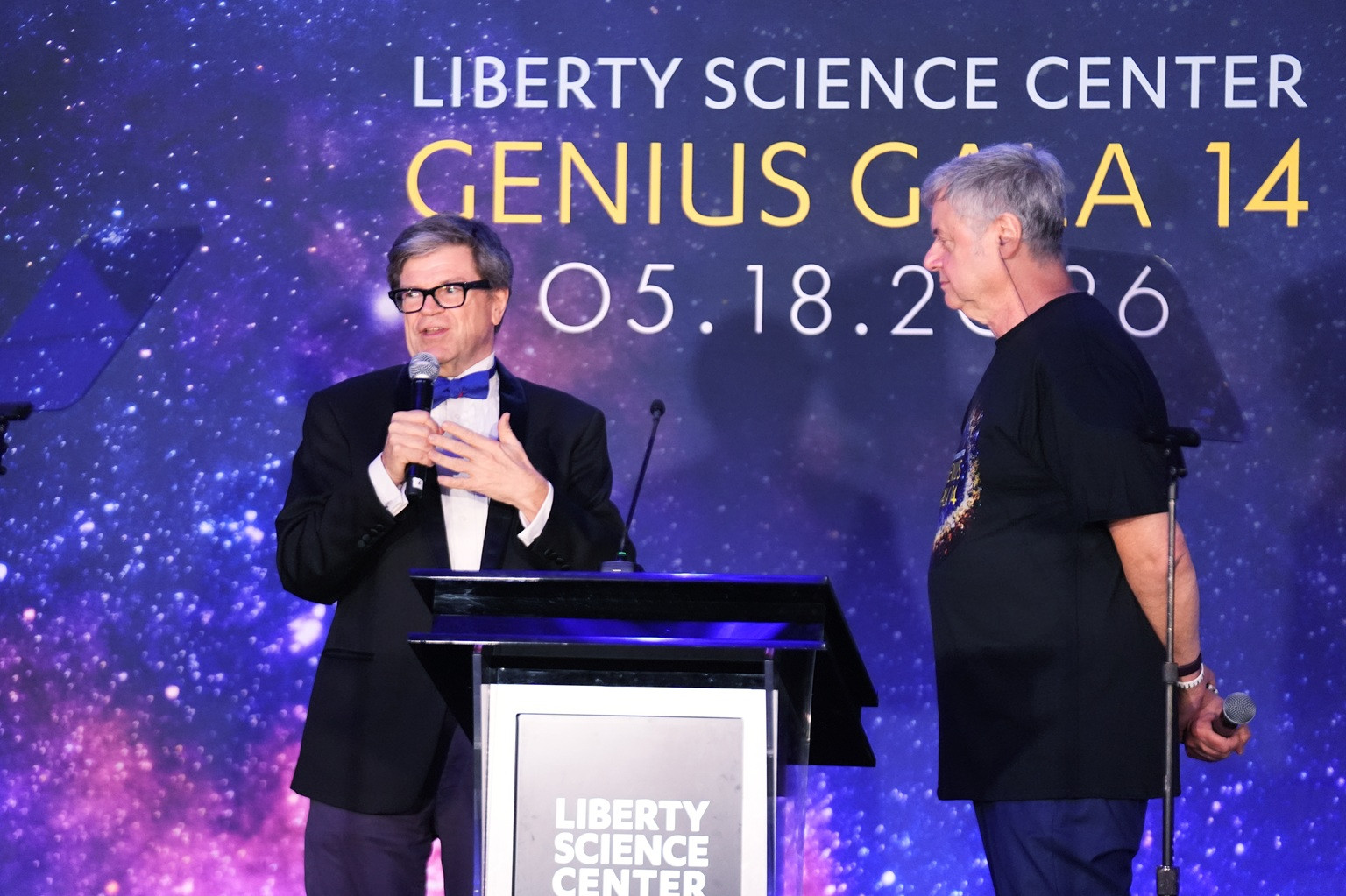
LeCun, a Turing Award winner (think Nobel Prize of computing), former chief AI scientist at Meta, co-founder of AMI Labs and — as of earlier this month — an honoree at the Genius Gala at the Liberty Science Center, gave comfort to that idea at the event.
“We’re nowhere close” to the doomsday prophecies, he told the crowd.
LeCun went a step further.
“There’s more intelligence in your house cat than there is in the most intelligent system that we have today,” he said.
Really? Yes.
***
LeCun obviously understands AI capabilities better than almost anyone. He told the crowd the biggest reason he isn’t concerned: AI was not built correctly.
Yes, you heard that right.
LeCun said the systems he helped build are very good at working with words — something that feels very human — but that’s not the same as understanding the world, he said.
“We have systems that can deal with sequences of discrete symbols, like language, but that turns out to be simple,” he said. “The real world is messy, and that’s much more complicated.”
To make the point, LeCun relayed a joke circulating in AI circles — a prompt to a system built on principles of large language models:
“I want to wash my car, and the car wash is 100 yards from my house. Should I walk?” he said to the crowd.
“The thing says, yeah, you should walk. There’s no common sense, right?”
It’s not that these systems know nothing, he said. It’s that they’ve ingested an incomprehensible amount of text, but they still don’t have common-sense.
It’s the reason drivers can be asked to drive through a lake to get to their location.
Instead of comparing AI to adults, LeCun said it makes more sense to compare them to infants, who also are trying to learn their place in the world.
LeCun said a 4-year-old has spent roughly 15–16,000 hours watching the world go by — about the same data volume as all that public text – but it’s been gathered through experience, not by simple reading. (Think back to that classic scene in the park in Good Will Hunting.)
This is why LeCun is pushing “world models” — AI systems trained on video and sensory data, not just words.
“What do you train yourself on? What do you train a child on? What does your cat train on the first two days and weeks of life?” he asked the crowd then answered.
“Watching the real world go by.”
***
All of this begs an obvious question: Will this new version of AI take my job?
LeCun again says, ‘No.’
“It’s going to transform society, but it’s not going to create mass unemployment or anything like this,” he said.
The biggest reason: AI systems don’t want to, LeCun said.
“No, they’re not going to turn on us, because there is no real correlation between intelligence and the desire to dominate or to gain power,” he said.
Common sense — and lived experience — also tells us that, LeCun told the crowd.
“I’m sure there’s a lot of scientists in the room, and there’s a lot of people in the room who know scientists,” he said. “Most scientists’ biggest desire is to be left alone, no desire to dominate or anything.”
The line drew a lot of laughs.
Then LeCun delivered a more sobering thought.
He suggested the people most obsessed with power are often not the brightest bulbs in the lab.
“Arguably, the people who have the biggest incentive to want to influence others through power are people who are not that smart,” he said. “They need others to survive, essentially, and so they have to be able to replace their lack of intelligence by influence, and we have multiple examples of this every day on the international geopolitical scene.”
That concept is foreign to AI, LeCun said.
“We certainly are not going to build this into our machines,” he said. “Our machines are just going to do our bidding.”
Not takeover.
The godfather said so.


