


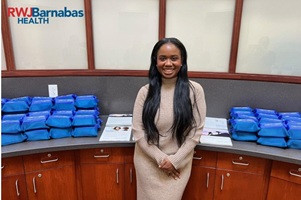
In a major expansion of its public health safety net, RWJBarnabas Health (RWJBH) announced today that its Institute for Prevention and Recovery (IFPR) is scaling up a hospital-based naloxone distribution initiative across New Jersey.
The aggressive harm-reduction campaign aims to put more than 15,000 naloxone kits and holistic wellness bags into the hands of residents, healthcare providers, and local community organizations. Naloxone is a medication designed to rapidly reverse an opioid overdose.
“The goal is simple but urgent. We want to make sure anyone has access to naloxone and knows how to use it,” Shalanda Tudor, manager of community-based Recovery Support Services at the IFPR said. “The more people who have it, the more lives we can save.”
The initiative deliberately pairs immediate overdose intervention with broader health resources. Each distributed kit is packaged as a comprehensive wellness bag containing:
- Naloxone doses for emergency opioid reversal.
- Xylazine test strips to detect the presence of dangerous non-opioid sedatives.
- Target harm reduction supplies and personal care items.
- Educational resources outlining paths to long-term addiction recovery.
The distribution project acts as a direct extension of the IFPR’s long-standing Peer Recovery Program. This network deploys certified Recovery Specialists and Patient Navigators to provide round-the-clock, 24/7 support for individuals struggling with substance use disorders within hospital emergency rooms and community settings.
The health system’s behavioral branch, alongside Rutgers University Behavioral Health Care, treats over half a million individuals annually across New Jersey, servicing more than 300 schools and providing mental health resources to all state correctional facilities.
The initiative has already proven its framework in early localized testing. During Phase 1, the IFPR conducted a rapid needs assessment across Hudson County and the regional STAR Program network, identifying 29 local agencies eager to receive supplies. To date, the institute has successfully funneled more than 2,400 kits through its first 10 community partners.
Organizers report that the physical distribution of the bags has yielded an immediate spike in inbound calls to local addiction community support helplines.
Phase 2, which is currently underway, will transform RWJBarnabas Health’s physical hospital campuses into centralized pickup and distribution hubs for community partners. This shift is intended to maximize geographic reach while instantly bridging the gap between emergency overdose survival and peer-led medical treatment.
“Every kit represents an opportunity to save a life and connect someone to care,” Tudor emphasized, noting that the ultimate goal is to reinforce localized support networks, combat social stigma, and curb New Jersey’s ongoing overdose crisis.


