


There is no single, dramatic moment when New Jersey loses a company. There is no press conference; no headline that reads: “State Policy Drives Away Another Employer.”
It happens one deal at a time, in a conversation between a developer and a corporate client who runs the numbers and discovers those numbers no longer work here.
That is the economic development crisis this state is not talking about.
It’s time to start.
The cost no one puts in the brochure
When a company approaches a developer about building a new facility, the conversation begins with a budget. Call it X. The developer’s job is to deliver the project at X, or close to it. But in New Jersey, that conversation increasingly ends with a number that looks more like X+12. The difference has nothing to do with profit. It ties to compliance.
Start with the state’s revised Stormwater Management Rules and Flood Hazard Area regulations. These rules have been substantially tightened in ways that, whatever their environmental intent, impose staggering financial burdens on development. The additional sitework costs to comply now routinely exceed $500,000 per acre, before a single beam is set. Those costs do not appear in any state economic development brochure, but they appear on every project budget.
Then there are the time costs. Securing access permits from the NJDOT for highway connections can take months beyond any reasonable timeline. NJDEP permitting for Flood Hazard Area approvals and wetlands delineations stretches projects further, adding carrying costs and delaying occupancy. Even the approval process at the municipal level creates exposure: the current framework of the Municipal Land Use Law makes it cheap and easy for a Township to deny an application or a third party to challenge it.
The fees that follow
Putting aside these “invisible” surcharges on building here, the explicit fees are the ones that make a business owner stop and ask whether New Jersey understands how markets work.
The state imposes a non-residential development fee of 2.5% of the equalized assessed value of new non-residential construction. The intended purpose is to fund affordable housing, a legitimate policy goal by any measure. But the mechanism places that burden on the act of building itself. A developer constructing a $20 million facility owes the state $500,000 before the building is even occupied.
And when that developer eventually sells the building? New Jersey collects a realty transfer fee that, at the upper end of assessed values, effectively reaches 3.5% of the sale price. On that same $20 million asset, $700,000 is paid to the state, simply for the privilege of completing a transaction.
The math that moves companies
Here is how the conversation ends. The company that needs a new facility cannot pay X+12; it can only pay X. And so it looks elsewhere. In isolation, each departure looks like a business decision: a quirk of the market, one company that found a better deal in the Carolinas. But if this happens three to five times a year — a conservative estimate considering New Jersey’s size and commercial density — over 15 years, the state has lost 40 to 75 companies.
These companies employ people who pay income taxes, spend money at local businesses, send children to local schools, and support the tax base that funds programs that justify New Jersey’s premium cost of living. The revenues those jobs generate do not vanish. They flow to the states that welcome them. A 2025 analysis by FocusNJ Center for Economic Research and Workforce Solutions, examined just eight companies that recently downsized or relocated outside New Jersey: Bristol Myers Squibb, Eos Energy, Hertz, Honeywell, Johnson & Johnson, Samsung, Verizon, and Walmart. Those eight decisions alone cost New Jersey an estimated 7,220 jobs and nearly $676 million in annual payroll.
The downstream fiscal damage is equally striking: roughly $27.3 million in lost annual income tax, more than $6.7 million in forfeited sales tax collections, and over $20.9 million in potential property tax revenue tied to facilities that were built in other states instead. FocusNJ is explicit about the limits of its own data: these eight cases represent only a fraction of the total outmigration occurring year after year.
A slow leak
The danger of this kind of policy failure is precisely that it is not dramatic. It is, instead, like a slow leak in a tire. The car still moves. But the ride gets rougher, the handling less responsive, and one morning the vehicle can no longer go.
New Jersey has extraordinary assets: world-class universities, a highly educated workforce, proximity to two of the largest metropolitan markets in the world, and a quality of life that has historically commanded a premium. Those assets are funded by a tax base that depends on economic growth.
The schools that rank among the nation’s best are funded by property taxes tied to commercial and residential ratables that need to grow to keep pace with costs. The hospitals that anchor regional healthcare systems depend on an insured population with jobs. The infrastructure that enables commerce requires ongoing public investment.
A different conversation
None of this is an argument against environmental regulation, or affordable housing policy, or the legitimate role of government in shaping development. It calls for honesty about costs, for a policy framework that accounts for the consequences of cumulative burden. When compliance costs, permitting delays and development fees make a New Jersey project materially more expensive than a comparable project in a competing state, New Jersey is making itself harder to choose.
The companies that leave do not send a letter explaining why. They just go. The jobs and tax revenues that accompanied them go, too. Eventually, so does the rationale for paying New Jersey prices for New Jersey living — because the economic engine that justifies those prices has been steadily losing compression for years.
Failed economic policy is not a blowout, but a slow leak. And the time to address it is before the car stops moving.
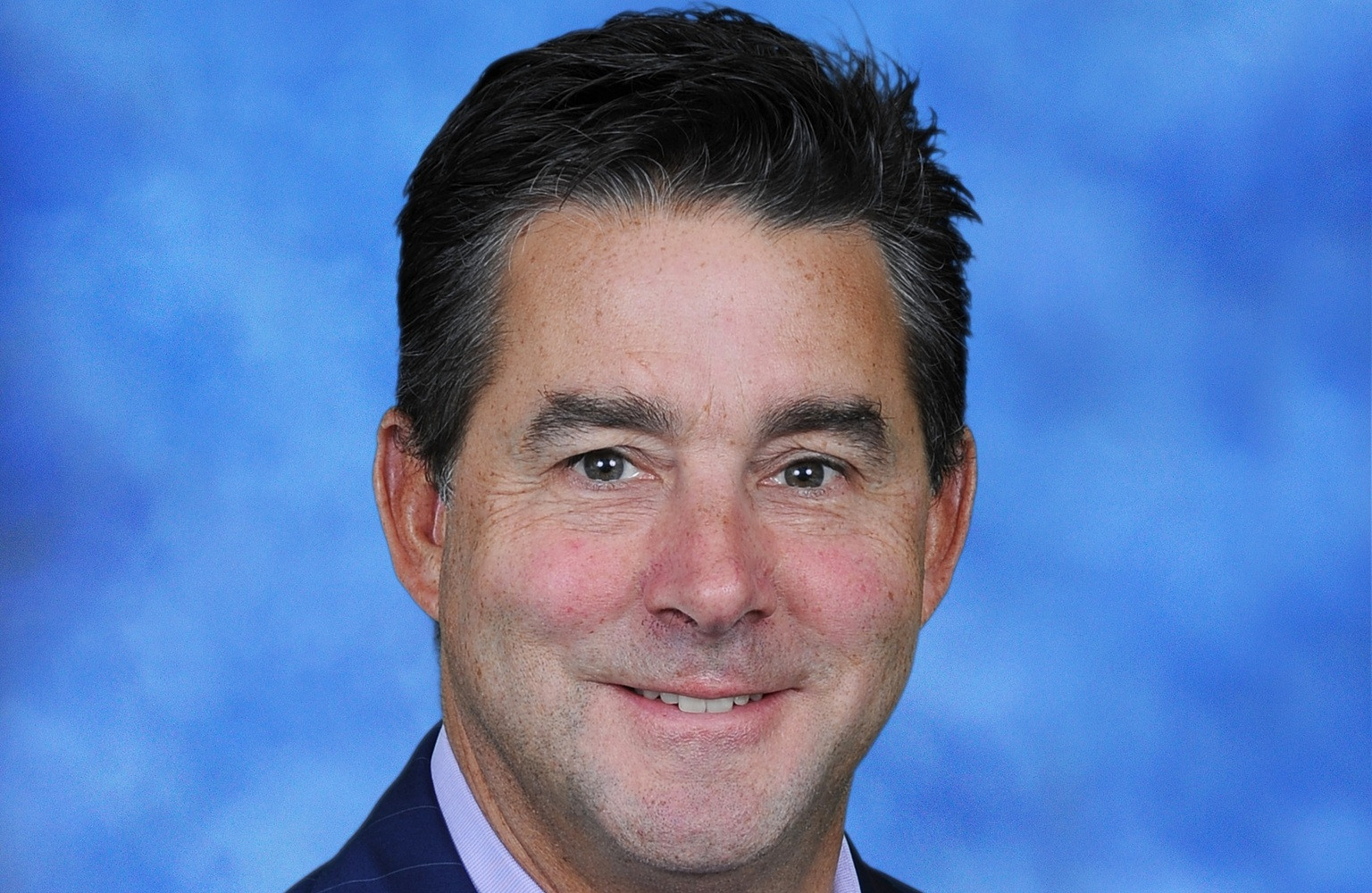
Gene Diaz is the highly regarded principal at Prism Capital Partners. Among other projects, he is well known as the lead of the ON3 project in Clifton/Nutley.


