


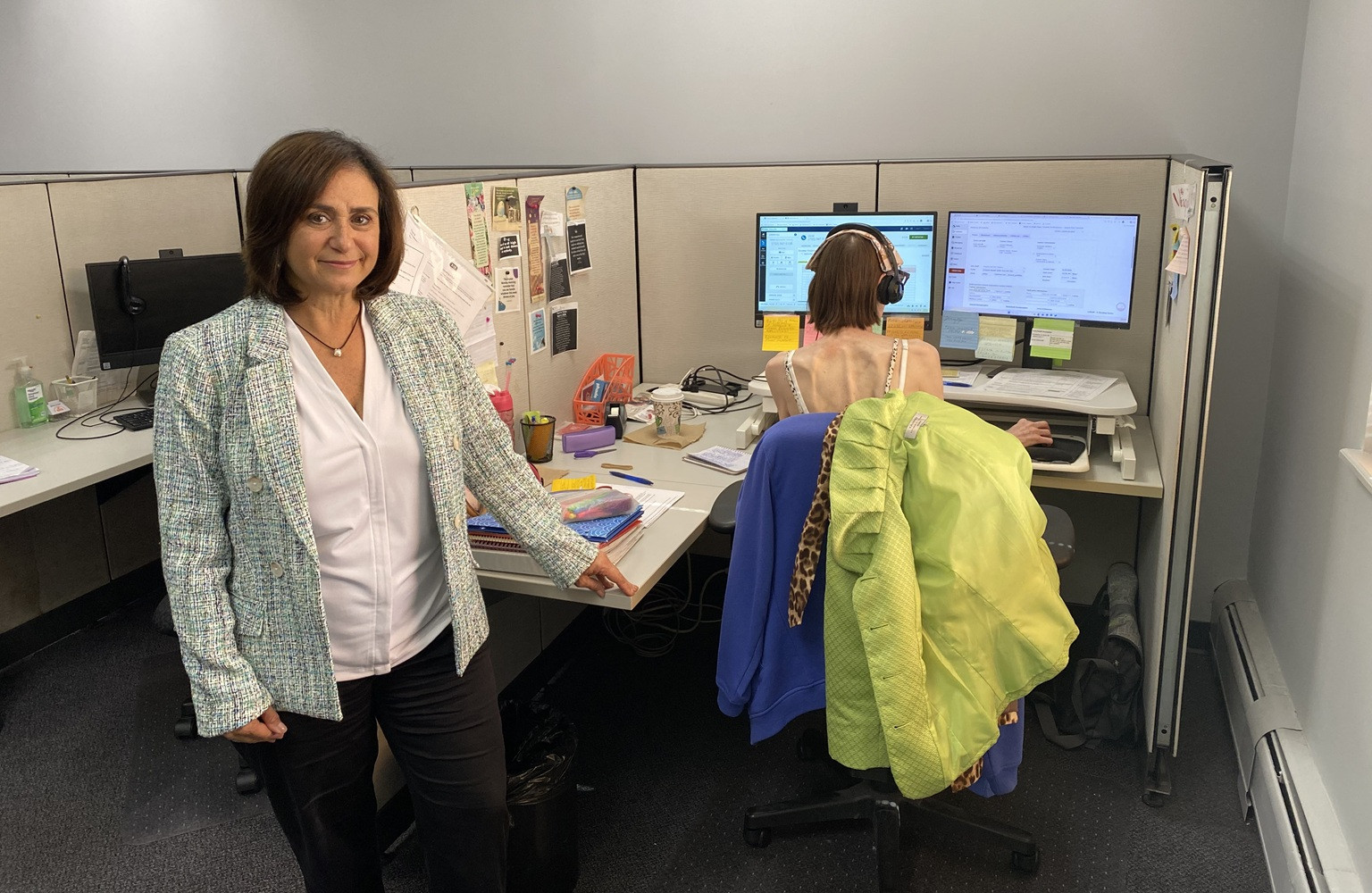
Here are a few things you almost surely don’t know about NJ 211, the three-digit or dialing code anyone can call to get connected to numerous vital social services:
- It helps those in danger of having their utilities shut off find programs that prevent it;
- It’s a trusted voice for those on the verge of homelessness;
- It’s the place to turn for information during weather related emergencies;
- It operates a 24-7-365 contact center;
- Its annual call volume (337,000 in 2025) has jumped 82% since the pandemic;
- It’s a nonprofit, not a government agency, but one that depends heavily on state funding — more than 90% of it, across all of its programs combined.
And then there’s this: The nonprofit faces a significant budget deficit for the upcoming fiscal year.
To fully fund the organization’s core 211 service line, a budget resolution was submitted in the amount of $800,000. NJ 211 was appropriated $400,000, which will be applied to a larger $2.3 million budget for the 211 service itself, separate from the organization’s two other major programs. That’s half of what was needed to maintain current service levels.
Melissa Acree, the CEO of NJ 211 since May 2017, said she remains grateful.
“I realize social service providers and safety net programs across the state are facing unprecedented challenges and I’m thankful we got $400,00,” she said.
But …
“The fact is, I will now have to make some difficult decisions,” she said. “It’s basic math. The resources don’t match the demand for our services.”
Acree means it literally. Every performance target the organization hits — how many calls get answered, how fast, how thoroughly — depends on having enough people on the phones. Cut the funding, and something on that list must give.
“Do you let the quality of the call suffer?” she said. “Do you reduce hours of operation?”
This is not a hypothetical.
Acree said other 211 services around the country already have cut hours because of funding shortfalls. She said the nonprofit that runs the 211 service in Arizona is winding down live phone assistance entirely by this summer due to a reduction in the state budget.
There may be a longer-term fix on the horizon.
A state senator has introduced legislation that would shift 211 toward a “closed referral” model — one that builds in follow-up between agencies rather than simply pointing callers in the right direction — and, if it passes, would include a dedicated appropriation. That could end the year-to-year funding scramble for good. It’s not close to law yet, Acree said, but it’s a path worth watching.
In the meantime, Acree is hoping to use BINJE to appeal to corporate philanthropy groups and community foundations to fill that funding gap, as well as to spread the word about how NJ 211 can connect people to critical resources. Whether a company wants to educate employees or share information with customers, NJ 211 has educational materials and programs available.
More than anything, Acree understands her biggest challenge may be education: New Jersey 211 can’t expect to continue to get funds if folks don’t fully understand what it does and who it serves.
In an effort to correct this, she offers these 10 details:
A real person answers the phone: Above all else, NJ 211 is about human connection. Specially trained operators lead with compassion to meet people where they are, listen without judgement and ask the right questions to find appropriate resources tailored to the individual caller.
Timing is everything: NJ 211’s internal goal is to answer 80% of calls in under three minutes. Currently, the average caller reaches a live person in about a minute and 50 seconds. “That’s what happens when you’re fully funded,” Acree said. “People aren’t waiting to get what they need.”
The contact center is only as good as its resource directory: Comprised of over 7,000 programs and services, the NJ 211 Resource Directory is continually being updated and vetted to ensure accuracy.
Energy assistance is the biggest single driver: The Home Energy Assistance Program, which screens residents for programs like LIHEAP and the Universal Service Fund, handles about 160,000 calls a year on its own — nearly half of all contacts the organization fields.
Homelessness doesn’t keep business hours: For the past six years, NJ 211 has run the state’s Homeless Hotline, a service that becomes most critical after other social service agencies close for the night.
It offers statewide service: NJ 211 operates out of a single Morris County office in Cedar Knolls but provides its service to every county, every city. No matter where you call from in the state, you can be connected to resources right in your local community.
Technology improves service: A web-based telephony system allows nearly all call-center staff to work remotely. The organization makes use of multiple technologies, such as an Interactive Voice Response system, texting services, and advanced AI searching capability to streamline the process of getting people the help they need.
More than a helpline: NJ 211 is a trusted statewide extension of public service capacity. It helps state and county agencies, faith-based organizations and service providers connect the right people to the right programs, which helps to manage demand and improve follow-through.
Its small outreach team connects with many: With roughly four people, NJ 211’s outreach team attended 71 community events last year — health fairs, conferences and municipal gatherings — trying to get the word out.
It’s here during emergencies of all kinds: From Superstorm Sandy to COVID 19, from life-threatening blizzards this winter to dangerous heatwave and storm conditions over the weekend, NJ 211 is the organization the public is referred to get timely and accurate information.
“I love the mission, I love the organization,” Acree said. “Most of all, I love what we do for people. Behind every contact is a human being with a story, a struggle, and the courage to ask for help. Being able to answer that call with compassion and help is an incredible privilege.”


