


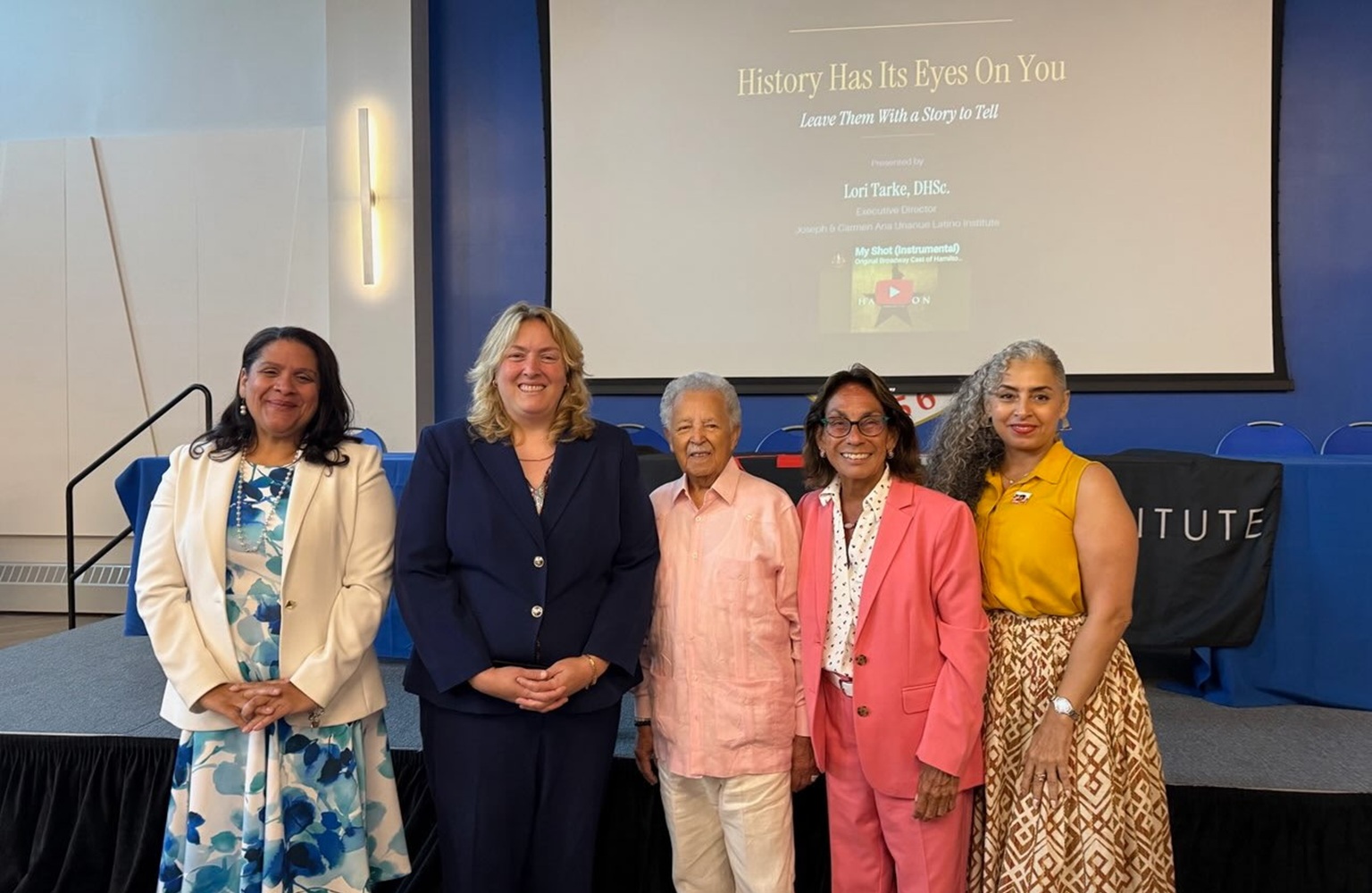
Something unusual happened Saturday morning after four Hispanic role models ended an hour-long panel discussion during the “History Has Its Eyes on You” program at Seton Hall University.
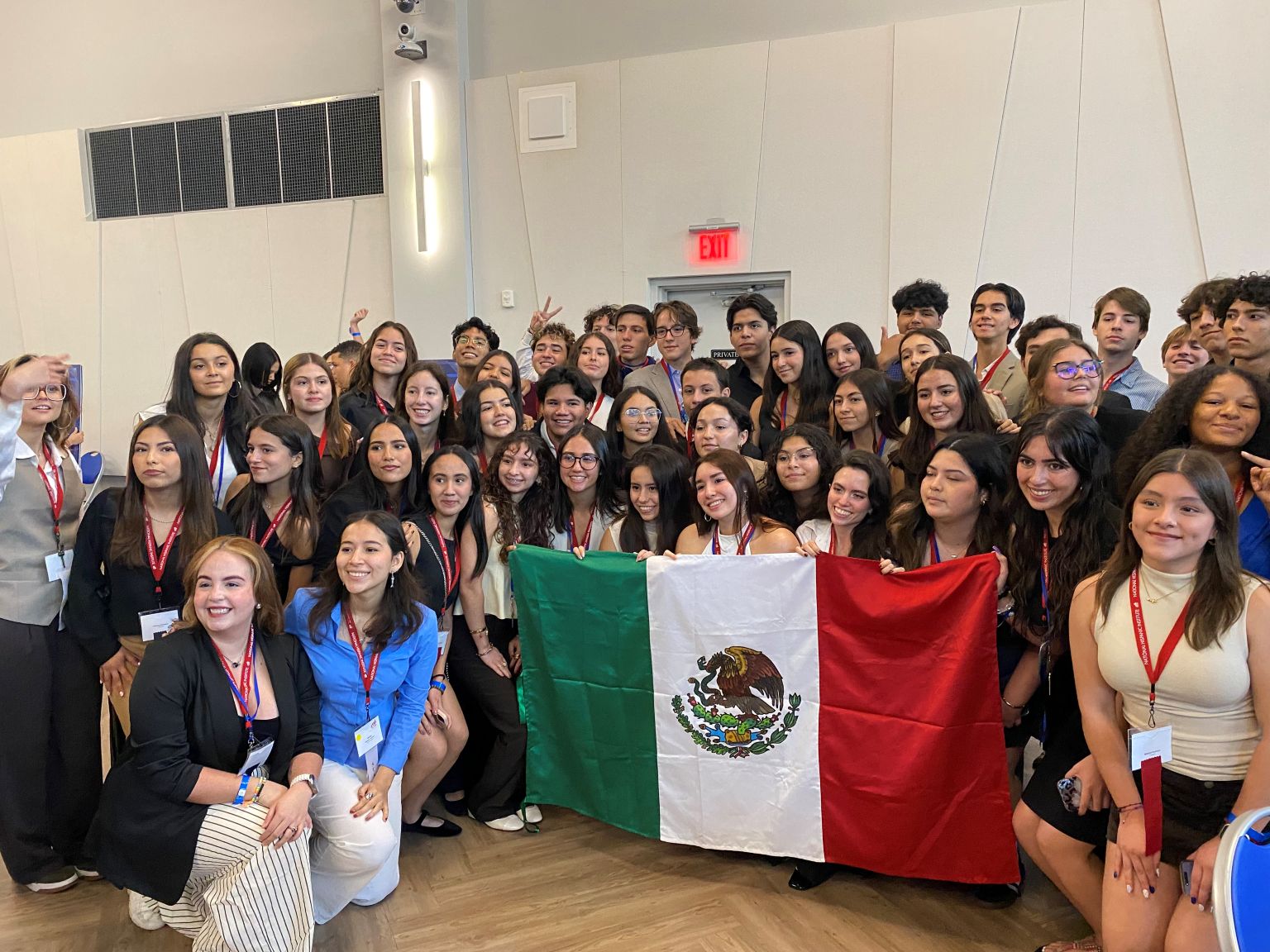
The audience — roughly 150 of the best and brightest high school students from New Jersey, 20 other states, Puerto Rico, Mexico, Guatemala and the Dominican Republic — didn’t just applaud. They engaged.
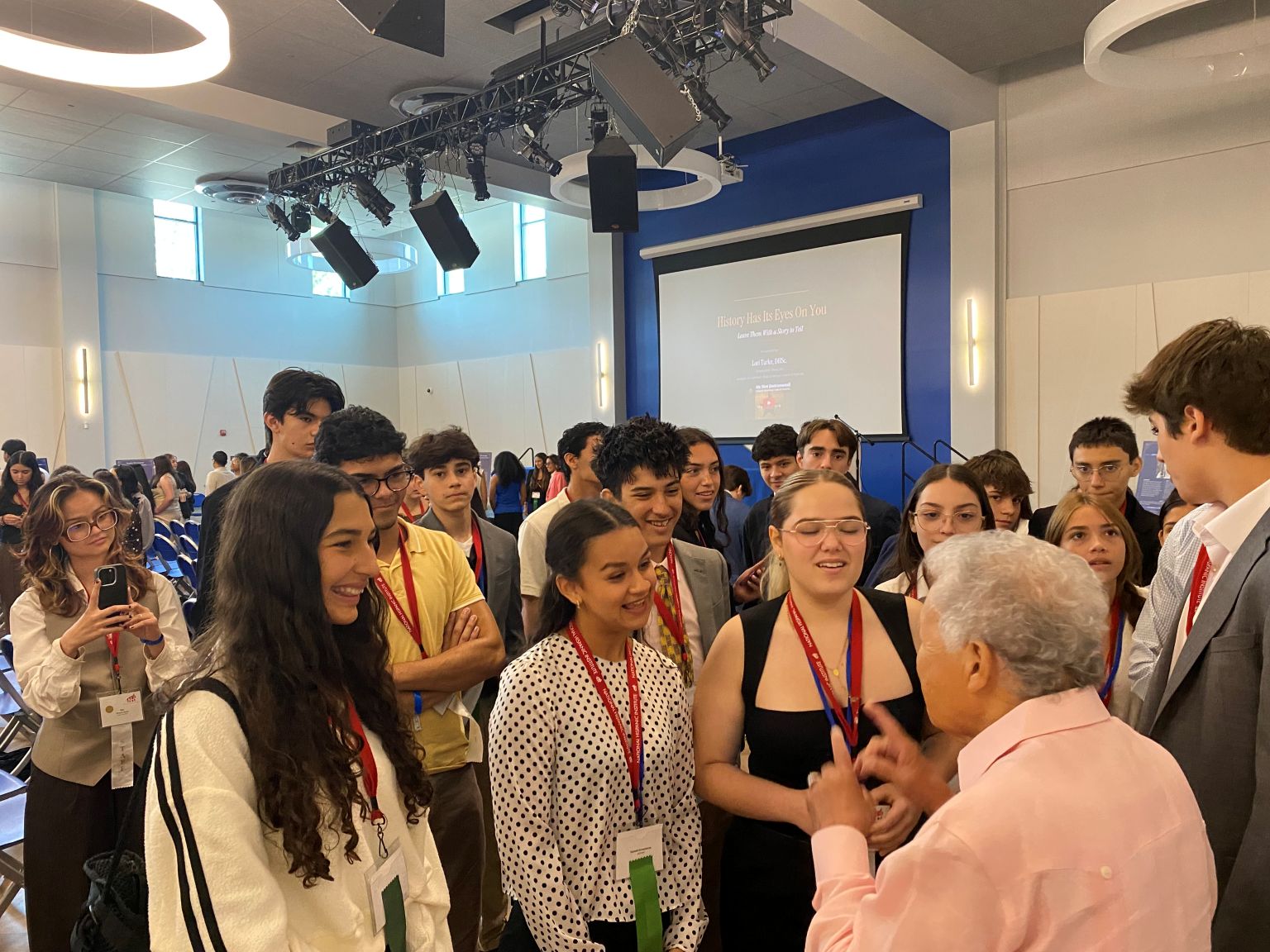
Each of the panelists — Camelia Valdes (the longtime Passaic County prosecutor); Deb Visconi (CEO of Bergen New Bridge Medical Center); Miguel Rodriguez (a legendary figure in Newark politics) and JacQueline Mestre (of the Hispanic-American Chamber) — went to different corners of the room and immediately found themselves surrounded by students looking to take pictures and ask questions.
“It was amazing,” Valdes said, jokingly admitting that she’s done enough panels where she can tell the audience has tuned her out from the start.
“They’re so interested, they’re so curious,” she said. “Part of them is trying to balance the doubt that they have — there’s a lot of shy students out there – but I think once they felt seen and heard, and that you’re interested in them, it just sparks action.”
The program, sponsored by the National Hispanic Institute, is more than a summer camp. It’s one of roughly a dozen such gatherings held on college campuses each summer, aimed at identifying and developing the next generation of Latino leaders.
Lori Tarke, the Executive Director of Seton Hall’s Joseph A. Unanue Latino Institute and the moderator of the event, said she wanted the event to be eye-opening.
“The purpose of this experience is to help students understand that history is not finished,” she said. “Every generation inherits the work of those who came before them. The question is not whether history is watching — it is whether they will answer the call to become part of it.”
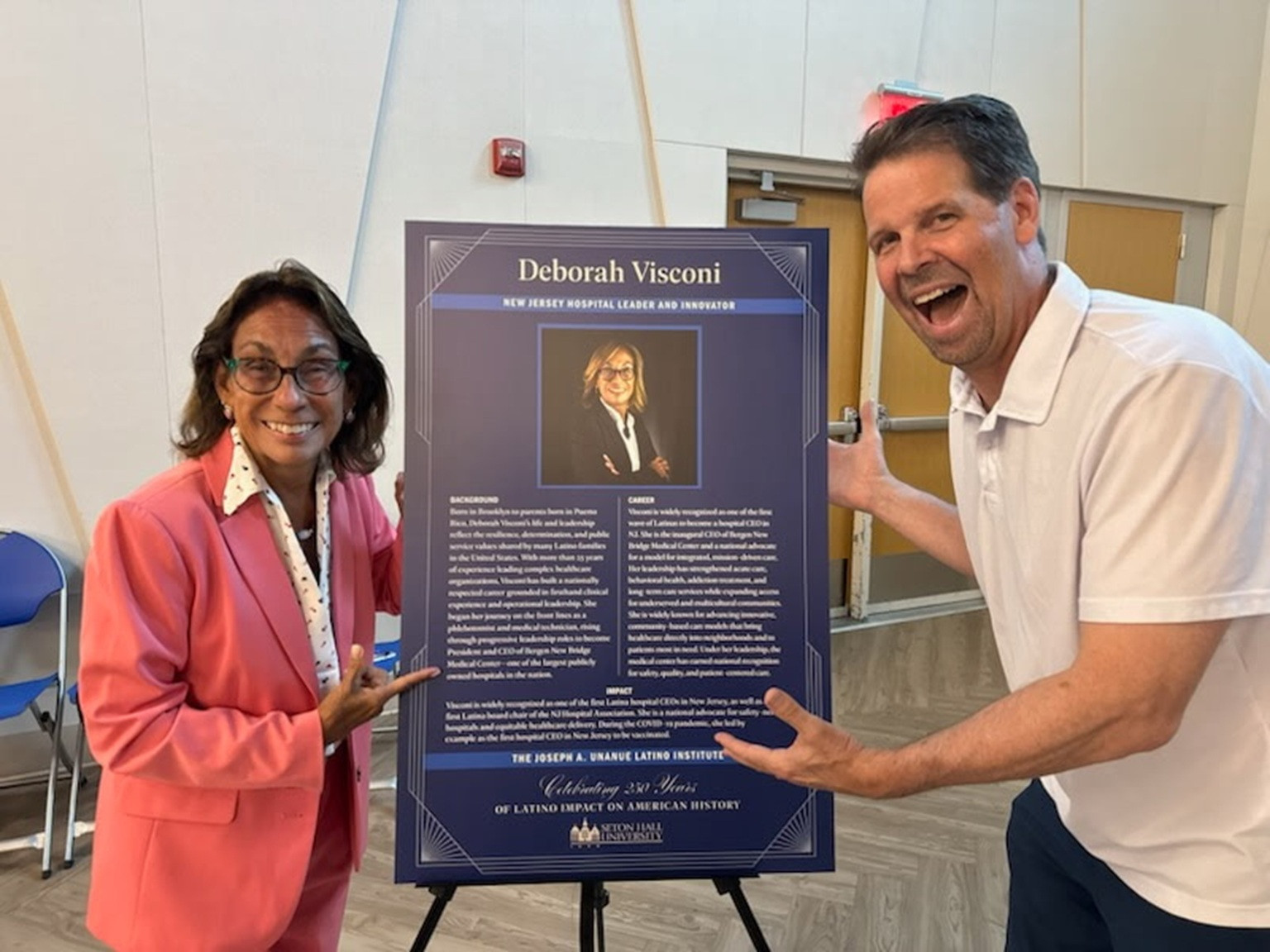
The Saturday morning discussion capped a week-long program built around Seton Hall’s exhibit “Celebrating 250 Years of Latino Impact on America” — a wall of portraits and biographies tracing Latino contributions to the country across government, science, medicine, business, the arts and the military, from the earliest days of the republic through today.
Gaby Morales, the group’s Education Director, said the week was about creating actionable activities.
The students ran their own legislative session — nominating themselves, campaigning, voting each other into office, then debating and passing proposals grounded not in abstract policy but in what they could realistically start doing in their own communities “the next day.”
“Everything is a system. Everything is politics,” Morales said. “You need to know how to network, how to get your ideas out there.”
You need to know it won’t always be easy.
Mestre made that clear during the panel discussion.
“Every morning is not always easy — you might not feel that fire, that passion, that drive,” she said. “You’re at a time when you’re figuring your lives out. You might feel even lost at this particular moment, because you see all these people with purpose and passion, and you say, ‘Where is mine? What am I supposed to do? Where do I fit in?'”
Mestre cautioned that’s OK.
“You still have some time to figure it out,” she said.
Trying to figure it out was what the week was about.
Morales said part of what makes the program valuable is the network the students built with each other. Students leave with relationships that stretch across North and Central America, people they can call on for years to come.
“The connections that they’re making here, they’re worldwide connections,” Morales said. “So, they’re going to be some of the best connected high school students, and they’re barely going into college.”
The students aren’t leaving empty-handed either.
During the legislative sessions, each was required to write a proposal grounded not in abstract policy, but in something they could act on the moment they got home.
“We want to make sure that the proposals that they’re writing is something that they can work on starting like the next day,” Morales said. “So not when they graduate, not when they have a doctoral degree, not when they get millions in funds — what can you start doing today?”
Tarke said the exhibit itself isn’t confined to Seton Hall’s campus.
The full display — a set of posters sized for two-by-three-foot foam boards — is downloadable and can be printed and displayed anywhere. Schools in Summit, Jefferson, Hamilton, Elizabeth, Belleville and Newark have already requested it.
Tarke said she’ll also tailor and deliver the accompanying presentation in person to any group that asks, from kindergartners through octogenarians.
“We want to educate everyone,” she said.
That this event took place during a time in this country when anything suggesting inequality — especially for those who are Black or Brown — has become newly fraught was not lost on the panelists. Tarke addressed it head-on.
“Everybody’s welcome to be part of the familia,” she said, comparing the program to any other cultural celebration. “Just like I go to St. Patrick’s Day parades, everybody’s welcome here.”
The only difference: this event seemed to carry the potential for far longer-lasting impact.
Visconi certainly hopes that will be the case.
“Life offers you these singular moments,” she said. “You don’t necessarily realize them at the time, but you look back later and you say, ‘Yes,’ that changed the trajectory of my life.”


