


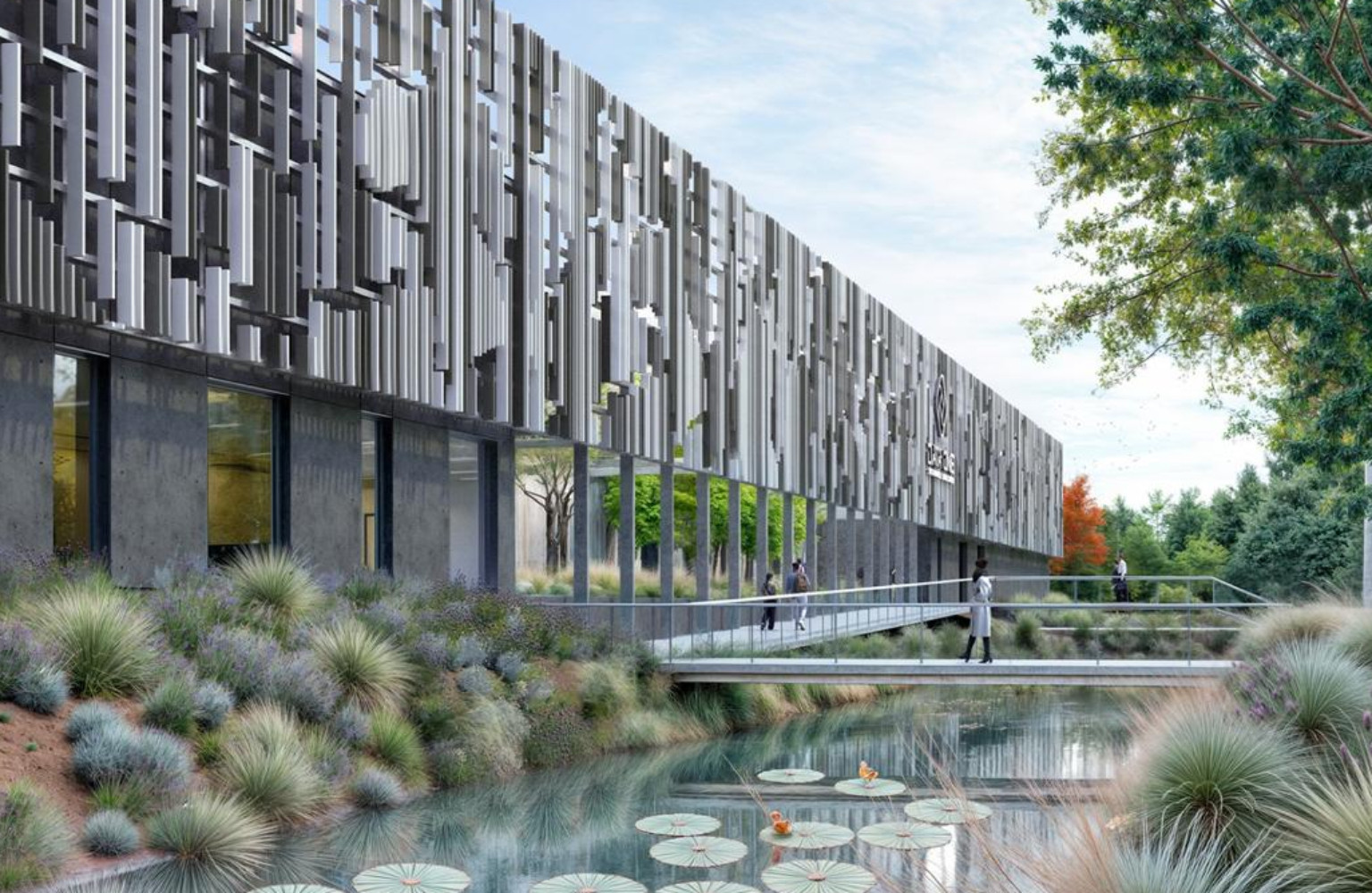
Data center developers have been facing pushback from municipalities across New Jersey, some of which are changing ordinances to try to keep the facilities out. Whether an outright ban would hold up legally is still being tested in the courts, but this much is clear: there is a lot of confusion — and misinformation — around how data centers actually work.
John Sutter, vice president of U.S. Public Affairs at Nebius, is confronting that confusion head-on as the company builds a 300-megawatt “AI factory” in Vineland.
The project is under construction and still needs a site plan change approved by the city’s planning board, with a hearing scheduled for Wednesday — a decision that could shape how quickly the project moves forward.
Sutter recently spoke with BINJE about the project, and he was upfront that he isn’t expecting residents to simply take Nebius at its word.
“Our expectation is not for people to immediately trust us when we come in,” he said. “We know that trust has to be earned, but what we want people to do is to judge us based on the facts of our site, not what they saw on TikTok, or what they read on Facebook.”
That, Sutter said, is part of why he wanted to sit down for the interview in the first place — so residents could weigh the Vineland project on its specifics rather than on assumptions about data centers in general.
“When you look at the facts of the site, this is the type of facility, the type of building, the type of AI factory that we should want in New Jersey,” he said.
Here are 10 other facts Sutter wants residents of Vineland — and everyone concerned about data centers around the state — to know.
- There are actually three different companies involved — here’s who’s who
Sutter said the Vineland project is structured differently than some of Nebius’ other sites.
Nebius is the AI cloud company that will operate the inside of the building and for which the facility is specifically designed. DataOne is a separate company that owns the facility, and its name will be the one on the building. Northeast Precast, whose owner originally held the site, is part of the construction team.
Sutter said that’s a different structure than Nebius’ site in Independence, Missouri, where the company serves as developer, owner, builder and operator all at once.
- The facility generates its own power, on site
This is a huge one. The site is “fully behind the meter,” meaning all power is generated on site through Bloom fuel cells rather than drawn from the grid. Sutter said that means no impact on ratepayers because the facility isn’t competing for grid power.
“We don’t believe that ratepayers or households should bear our power costs,” he said. “We don’t think that’s fair.”
- The power source produces virtually no emissions
Unlike a combustion engine, Bloom fuel cells convert natural gas to electricity through an electrochemical process without burning it, Sutter said, which he described as making the process “virtually emission-free.”
He said switching to Bloom over an on-site combustion engine was also influenced by Gov. Mikie Sherrill’s push for AI companies to bring their own power, calling it “a positive change for this community.”
- Water use is minimal
The facility uses a closed-loop water system that recycles water through the site to cool equipment, according to Sutter, addressing one of the two biggest environmental concerns typically raised about data centers.
Combined with the on-site power generation, Sutter said those two factors are usually the biggest environmental and economic objections raised about data centers, and he argues Vineland’s design answers both.
- Noise will stay below state limits
New Jersey has some of the toughest noise ordinances in the country, Sutter said, and a sound study conducted for the project shows the completed facility will be below daytime and nighttime noise limits.
This aim is helped further by the switch to quieter Bloom fuel cells, Sutter said. That switch constitutes an amendment to a previously approved site plan, which the planning board will review. Sutter described this as a positive procedural change since it lowers both noise and emissions beyond the original plan.
- The project means jobs — now and later
Sutter said more than 1,000 construction workers, including electricians, HVAC technicians and operating engineers, are currently working the site. Once operational, Nebius and its partner, DataOne, expect to employ roughly 200 people full time, many from Vineland and Cumberland County.
Microsoft, a customer at the site, is also expected to have some staff on-site, and Sutter said he hopes the project can help spur further AI infrastructure work in New Jersey once the current construction workforce finishes the build.
- It comes with a tax agreement for the city
Sutter said a tax agreement between DataOne and the city of Vineland is expected to generate millions of dollars for the city’s budget. He said the tax revenue is only part of the picture, and that being “a good neighbor and a good partner” to Vineland matters just as much to the company as the direct financial benefit.
- Nebius is investing in local education, not just writing a check
The company has announced a partnership with Rowan University on workforce development and plans to work with Vineland and Cumberland County schools on K-12 STEM programming, including robotics and maker-space programs and AI-literacy training for teachers, through its in-house Nebius Academy division.
Sutter said the goal of the teacher training is to let instructors spend more time with students and less time on lesson planning. He pointed to similar efforts underway at Nebius site in Birmingham, Alabama, as a model for what could come to Vineland.
- Local elected officials are backing the project
Sutter named state Sen. Michael Testa, Vineland Mayor Anthony Fanucci and the City Council, and the South Jersey Chamber of Commerce as supporters, saying they see the project as an economic driver for Cumberland County.
He also pointed to Sherrill’s framework for AI infrastructure development in the state as aligning with how Nebius already builds its sites, saying it was a factor in the company’s decision to switch to Bloom fuel cells for on-site power.
- This is the model Nebius wants people in New Jersey to picture when they hear “data center”
Sutter said the company’s approach — bringing its own power, minimizing water use, limiting noise and investing in the community — is meant to be “responsible by design” as it looks to build similar sites elsewhere in the country.
“When you look at Vineland, you have to say this is the type of site that we should want,” he said. “This is the type of facility, the type of building, the type of AI factory that we should want in New Jersey.”


