


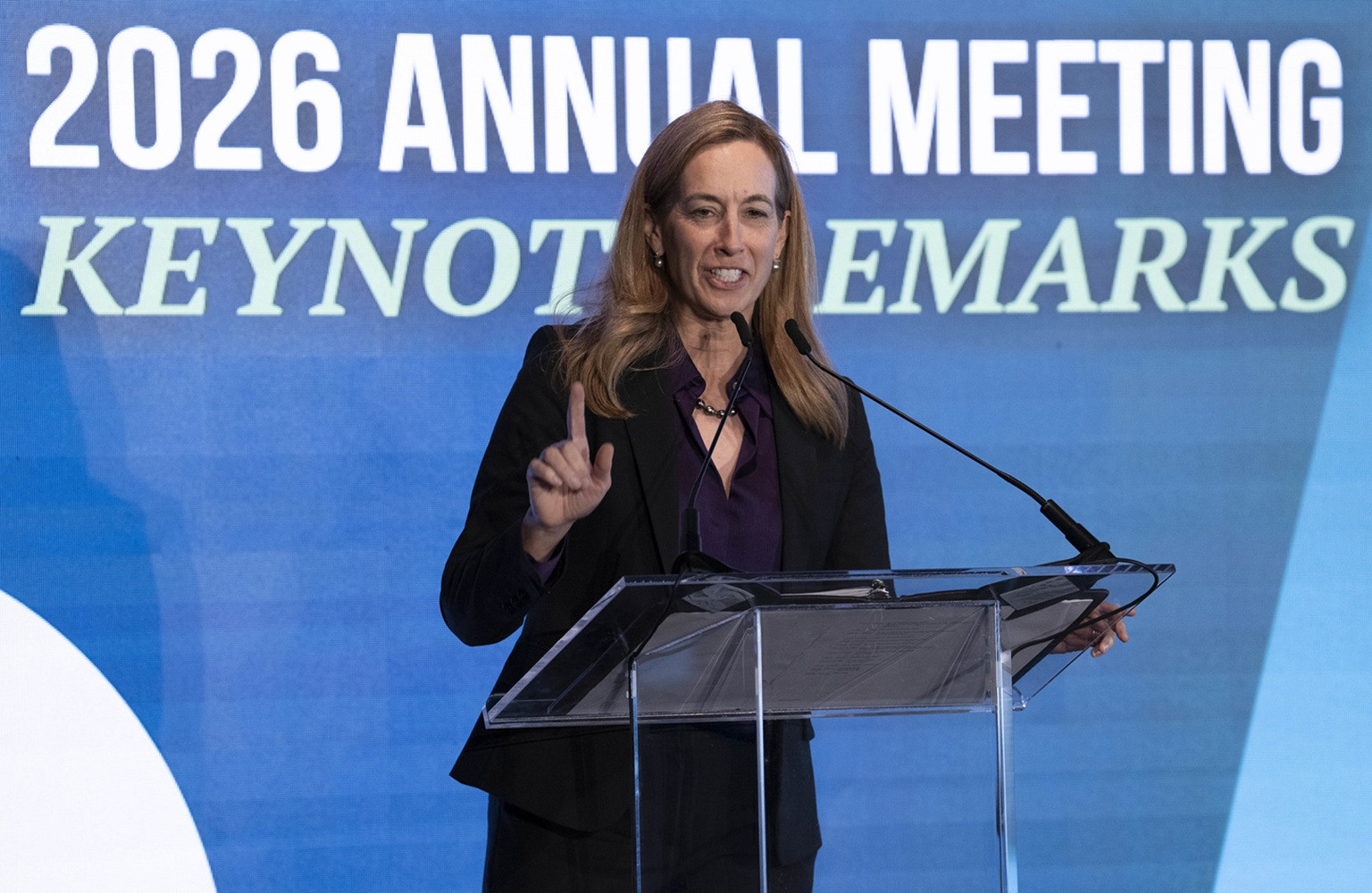
New Jersey voters are less certain about Governor Mikie Sherrill’s job performance than they were earlier in the year, according to a new FDU Poll.
Sherrill’s approval fell to 48% from 58% in March, but her disapproval rating is unchanged. The percentage unsure about her job performance jumped to 20% from 8%.
“Normally, you’d expect attitudes towards the governor to become more, rather than less, certain over time,” said Dan Cassino, a professor of government and politics at Fairleigh Dickinson University and the poll’s executive director. “For whatever reason, Democrats are not as happy with the governor as they were when she took over.”
Sherrill, a first-term Democrat, took office in January. In March, 88% of Democrats said they approved of Sherrill’s job performance, with only 5% saying they didn’t know, weren’t sure, or declining to answer the question. In the most recent poll, her approval fell to 71%, with a small increase in disapproval. The big increase is in “don’t know” responses, which went from 5% to 17%.
Sherrill’s approval among women dropped by 16 points since March, while approval among men was little changed.
“It’s not clear what Sherrill has done to cause voters who should be among her most loyal supporters to distance themselves,” said Cassino. “But whatever it is, this is a blinking yellow light for the administration.”
More voters now identify as Democrats than in previous polling, so the change in ambivalence could reflect the inclusion of voters who were previously independents, or even Republicans, Cassino said.
“Governor Sherrill’s relentless focus on affordability and rejecting politics as usual in 2025 gave Democrats a playbook to win this cycle,” said Steve Sigmund, a spokesperson for Sherrill. “New Jerseyans strong approval of her job leading the state shows that they recognize she is delivering on these commitments.”
New Jersey voters had stronger feelings about President Donald Trump. Only 5% said they were unsure about Trump, with 66% disapproving and 29% approving.
All surveys are subject to sampling error, which is the expected probable difference between interviewing everyone in a population versus a scientific sampling. In this poll, the simple sampling error for 807 registered voters is plus or minus 3.4 percentage points.


