



Hackensack Meridian Health recently completed a 10-story medical office building at the Metropark train station in Woodbridge. With a price tag of more than $100 million, it certainly was a complicated project.
Its planning board approval hearing took 25 minutes.
Before you can say, ‘No way,’ know this: Even Woodbridge Township Mayor John McCormac was surprised.
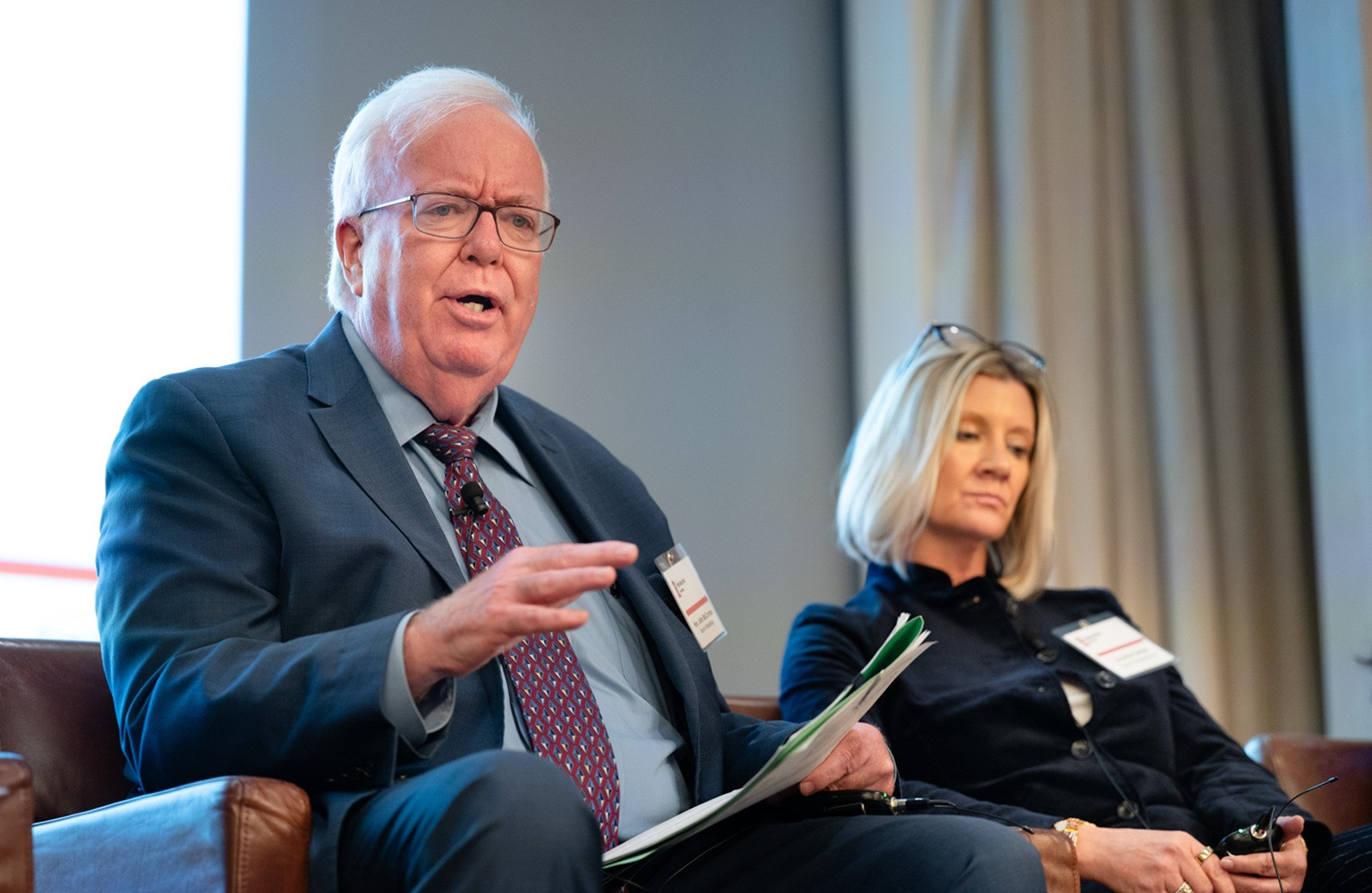
McCormac, telling the story Tuesday at the Rutgers Center for Real Estate symposium at The Heldrich in New Brunswick, explained how it went down.
On that night, he was across the street at a restaurant. When the developer walked in around the start of the meeting, McCormac assumed something had gone wrong — maybe the board didn’t have a quorum?
It did. The hearing was over. The project was approved.
Moderator Ron Ladell, Senior Vice President at Vivmark (formerly AvalonBay) and someone who has made a career out of too-many-to-count approval hearings, also was stunned.
He asked McCormac the obvious follow-up question: Can what works in Woodbridge (a town of more than 100,000) work in a town of 10,000 with part-time engineers?
McCormac didn’t hesitate. The model works at any size, he said.
***
McCormac was speaking on a panel about speeding up approvals in a state where developers say that rarely happens. (See some fireworks here).
McCormac said Woodbridge has mastered the moment. Here’s how, he said:
- Make economic development somebody’s job
McCormac gave the portfolio to his Chief of Staff, Caroline Ehrlich. Many mayors, he said, treat that post as a political job.
“We didn’t do that,” he said.
2. Show developers where to look
Within about six months of taking office, McCormac said the township relaunched the Woodbridge Economic Development Corp. and held a forum for about 500 developers, attorneys, accountants, builders and planners.
Beforehand, the township photographed the sites it wanted developed and listed the addresses.
3. Be honest
McCormac admits he wasn’t always diplomatic in describing sites. One of the township’s redevelopment attorneys, sitting in the front row at the forum, cringed each time he called a site “a piece of crap” that had to go.
“But that worked,” he said.
4. Give the tour yourself
McCormac said he and Ehrlich have done about 200 tours with developers.
5. Settle the small stuff early
Woodbridge uses a technical review committee, which brings township staff and the developer’s team into one room before a project goes to the board.
“You know where the dumpster goes. You know what the wattage of the light is,” he said. “You settle all those stupid issues in advance, and you go to the planning board, and it’s easy.”
6. Set the tone
McCormac said he has never talked to a planning board or zoning board member about a project.
“They know because they see the emails and they see the advertisements and they know economic development is important,” he said.
When one consultant “didn’t get the memo,” McCormac said, and kept saying no to development, he was let go.
“You got to set it up from the top,” he said.
***
Developer Gene Diaz, principal at Prism Capital Partners, who has built in Woodbridge, said the process is only part of it.
He said Woodbridge respects the risk a developer takes by investing in the township, rather than asking: “Why do you want to build here? What are you going to ruin?”
“That’s a model that just needs to be pushed out to every other municipality,” he said.
Perhaps even statewide.
McCormac, a former state treasurer, said the Sherrill administration has made a strong start. He said a company that recently visited Woodbridge about a potential energy project told him it has had six meetings with the state, two of them with the governor.
But he has an idea for Trenton, too.
When a big project comes to the state, he said, put everyone in a room at the start: the company, its lawyers and accountants, and someone senior enough at DEP, DOT, EDA, DCA, the BPU and NJ Transit to make things happen. Meet once a month if needed. No agency gets to blame another.
He knows who should run it.
“Forget the secretary of state,” he said. “Put the lieutenant governor in charge of economic development, and then everybody knows that when the number two person in the state calls and sets that meeting up, you better be there.”
Which raises a thought: Why not McCormac?
Ladell said he would refrain from asking McCormac. He answered anyway.
“I have a job,” he said.


