


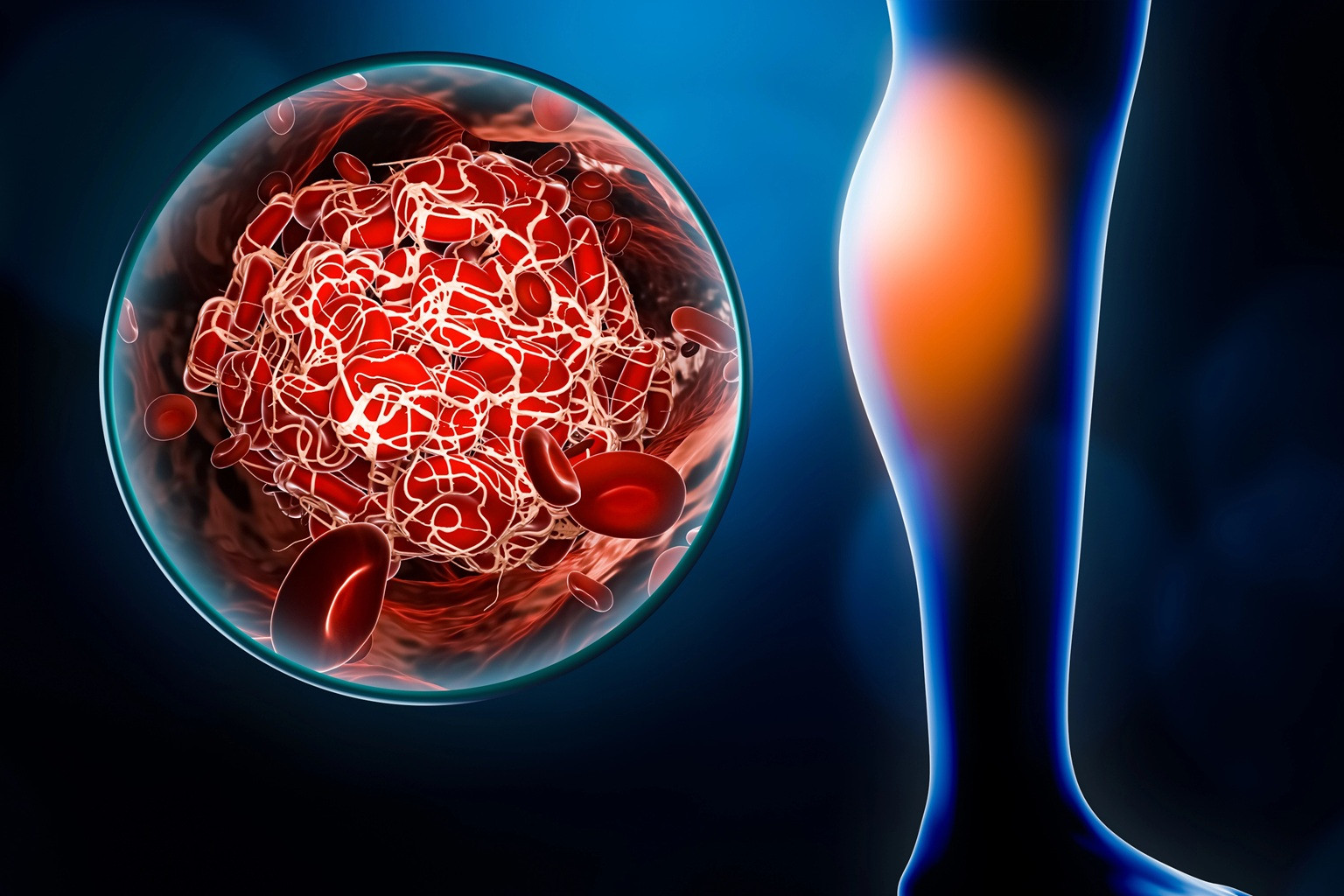
Blood clots can happen to anyone. Last month was a reminder of that.
On Oct. 19, the Philadelphia Eagles announced that quarterback Jalen Hurts will miss the rest of the 2026 season after being diagnosed with deep vein thrombosis and bilateral pulmonary emboli.
Hurts, now on blood thinners, is expected to make a full recovery. He’s lucky. Not simply because a care plan is in place, but since he is surrounded by a team of physicians in his workplace, they were able to recognize the signs of clotting.
But what if you don’t have such medical care around you 24/7?
BINJE recently spoke with Dr. Andre Cole, a vascular surgeon at Inspira Health, about blood clots, the signs and risks, and how treatment is evolving.
BINJE: What are some signs or symptoms of clotting?
COLE: Blood clots can present differently depending on where they develop. Deep vein thrombosis (DVT) most commonly occurs in the legs and can cause swelling, pain, tenderness, warmth, or redness. However, some patients may have very few symptoms. If a clot travels to the lungs, known as a pulmonary embolism, patients may experience sudden shortness of breath, chest pain, rapid heartbeat, or even fainting. These symptoms require immediate medical attention.
BINJE: How can the risk for blood clots be reduced?
COLE: Prevention starts with maintaining an active lifestyle, exercising regularly, staying mobile and maintaining a healthy weight. During prolonged travel or periods of inactivity, I encourage patients to walk periodically and perform simple leg exercises. Patients undergoing major surgery or hospitalization may benefit from compression devices or preventive blood-thinning medications. Most importantly, identifying individual risk factors allows us to develop personalized prevention strategies.
BINJE: What conditions increase the risk of blood clotting?
COLE: Several conditions increase the risk of developing blood clots, including cancer, obesity, inherited clotting disorders, pregnancy and a history of previous blood clots. Recent surgery, hospitalization, prolonged immobility, and certain hormonal medications can also increase risk. As vascular surgeons, we pay particular attention to patients with multiple risk factors because their likelihood of developing a clot can be significantly higher.
BINJE: Explain what deep vein thrombosis and bilateral pulmonary emboli are?
COLE: Deep vein thrombosis, or DVT, occurs when a blood clot forms within a deep vein, most commonly in the legs. A pulmonary embolism occurs when part of that clot breaks loose, travels through the bloodstream, and becomes lodged in the arteries of the lungs. Bilateral pulmonary emboli simply means that blood clots are present in the pulmonary arteries supplying both lungs. Depending on the severity, pulmonary emboli can interfere with oxygen exchange, strain the heart, and become life-threatening.
BINJE: Is there any specific treatment or research that you would highlight?
COLE: One of the most significant developments in vascular medicine is our ability to treat certain blood clots using minimally invasive, catheter-based procedures. Traditionally, treatment relied primarily on anticoagulation, which prevents clots from growing while the body gradually breaks them down. Today, selected patients with extensive DVT or serious pulmonary embolism may benefit from mechanical thrombectomy, allowing us to physically remove clots and restore blood flow more rapidly. These procedures have expanded our treatment options, particularly for patients with severe symptoms or higher-risk presentations.
BINJE: Have any recent advancements been made to prevent clotting? What developments have been made in the last five years of heart research?
COLE: Over the past five years, we’ve seen exciting advancements in both the prevention and treatment of blood clots. Direct oral anticoagulants have simplified long-term clot prevention for many patients, while ongoing research continues to improve how we individualize treatment based on each patient’s risk. One of the most exciting advances has been the development of newer mechanical thrombectomy technologies. These devices allow us to remove significant clot burden through small incisions, often without the need for clot-dissolving medications. For appropriately selected patients, this can provide faster symptom relief, improved blood flow, and potentially fewer long-term complications. Research is continuing to determine which patients benefit most from these interventions.
BINJE: What does the average person need to know?
COLE: The most important message I want patients to understand is that blood clots are both preventable and treatable, particularly when recognized early. Persistent leg swelling or pain should never be ignored, and sudden shortness of breath or chest pain requires immediate evaluation. As a vascular surgeon at Inspira Health, I’m encouraged by how far minimally invasive vascular treatments have advanced. Our goal is not simply to treat blood clots but to improve patients’ quality of life, prevent serious complications, and help them return to their normal activities as safely and quickly as possible.


