


The tourist-traps near Dollywood and the Great Smoky Mountains in Pigeon Forge, Tennessee, are filled with all the traditional attractions you’d find anywhere: A Ripley’s Believe it or Not!, a Hollywood wax museum, a Margaritaville and some places with a bit more local flair, including the Hatfield & McCoy Dinner Feud theatre, the world’s largest knife store and a store with a sign that simply reads, ‘Golf and Guns.’
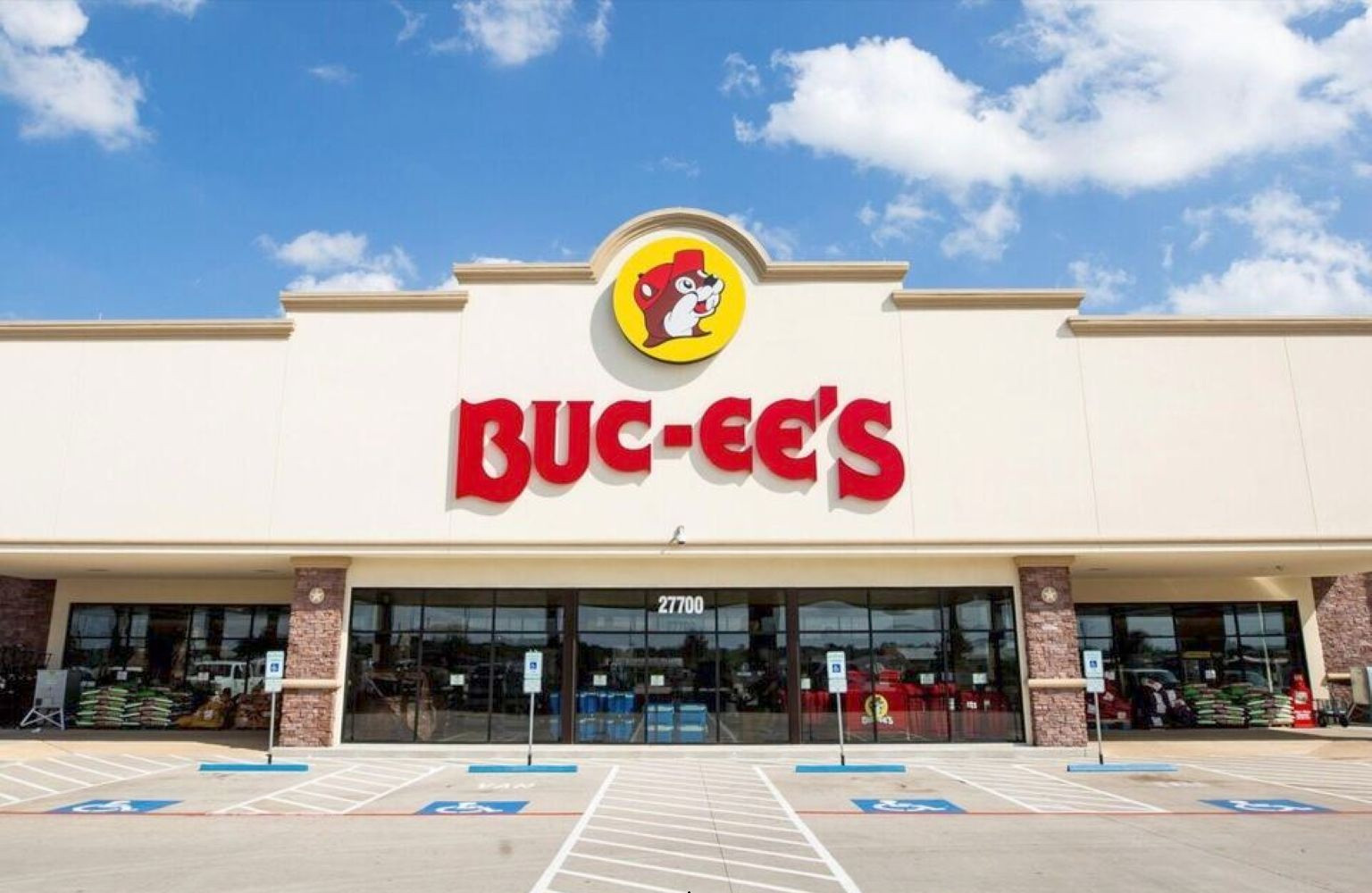
But the biggest attraction just off Interstate 40 near the border of Tennessee and North Carolina, is a dozen or so miles away in Sevierville, home to one of the latest locations for Buc-ee’s, a massive 74,000-square-foot travel center you have to experience to believe.
For those not familiar with Buc-ee’s — or only know it by the billboard on the northbound side of Turnpike — think of it as a WaWa or Sheetz on an exponentially larger scale.
These mega travel centers feature over 100 well-lit gas pumps and what appears to be the same number of bathroom stalls and urinals — and they’re always clean. There’s never a line for any of this.
Then there’s what you find inside a building that could comfortably hold a few football fields: Food (much of it freshly prepared), drink, clothing and travel-type items (think everything from toothpaste to charcoal) and enough Buc-ee’s-themed merchandise to make Walt Disney blush.
 This Buc-ee’s location has been overflowing with visitors since it opened in June of 2023, according to Amanda Marr, the marketing director of the Sevierville Chamber of Commerce.
“People plan their vacations around coming to Buc-ee’s,” she said.
The Sevierville Chamber is glad they do. Buc-ee’s has had a multi-million-dollar economic impact in the area, starting with hundreds of employees who earn hourly wages that can triple the area’s $7.25 minimum wage.
It’s why Buc-ee’s is quickly expanding in the South, where municipalities are eager to have them.
While a location in South Jersey would appear to be a logical destination for the Texas-based company – South Jersey has the available land near the Turnpike and Parkway and millions of cars that drive through it – one big issue prevents it from making a first step in this direction: New Jersey remains the only state than bans pumping your own gas.
***
Don’t call Buc-ee’s a truck stop. In fact, 18 wheelers are expressly prohibited.
And don’t call Buc-ee’s a big corporation that aims to overwhelm all other local businesses with their size – and comes in demanding corporate subsidies.
Casey Armstrong, the business administrator of Rockingham County, Virginia, the location of the newest Buc-ee’s, calls the chain a great corporate neighbor.
Sign-up for free newsletters
BINJE.com offers the best business stories in the state in two daily email blasts. And they are free to get. Sign up here.
And a huge economic boon to the area after opening on June 30 on the Northbound side of I-81 in Mt. Crawford, a handful of miles from Harrisonburg and the home of James Madison University.
Armstrong said the impact of Buc-ee’s has been better than anticipated.
For starters, he said, Buc-ee’s has asked for little and contributed a lot.
Anticipating a crush of traffic on I-81, Buc-ee’s insisted a bigger offramp, with a dedicated lane into the facility, needed to be built. And they insisted on paying for it, too.
“It was at least a $15 million project, and they picked up the cost,” Armstrong said.
He said the only request the company made from the county was to cut the tax it charged on prepared foods in half for the next 10 years.
The county did the math – and realized that, even with the discount, Buc-ee’s would provide more revenue from prepared foods taxes than every other retailer in the county combined.
And that’s just one tax, Armstrong said. It doesn’t include revenue the country will receive from sales and property taxes.
 Armstrong also noted the strong wages Buc-ee’s pay: At least $20 an hour (plus $2-4 extra on weekends) in a state where the minimum wage is $12.41.
“They want their employees to have careers,” he said.
Now, if you’re thinking Buc-ee’s is merely taking business from others, Armstrong said you should think again.
The 7-Eleven located next to the Buc-ee’s actually has seen an increase in revenue, he said. The same goes for a nearby McDonalds. And just over the interstate there’s a new Sheetz, which looked to move in after Buc-ee’s was approved.
“I think they knew that Buc-ee’s would mean extra business,” he said.
***
It’s hard to explain a Buc-ee’s until you’ve been in one. And when you get there, expect to spend some time inside.
 Buc-ee’s has everything you would expect at a travel center: auto care items, toiletries, paper products, canned food, condiments, snacks, soda, water and plenty of varieties of beer and wine.
Stores also carry basic camping and hunting supplies, including everything for a cookout.
Then there’s the Buc-ee’s swag — clothing, shirts, pants, a variety of hats and even clothing for pets. It doesn’t stop there: Stuffed animals, children’s books and games, party supplies, travel mugs and coffee cups are also available. Even scented candles. Have a favorite scent? You’ll find Beaver Nuggets, Roasted Pecans, House Blend Coffee and Signature Scent, whatever that may be.
Still, nothing compares to freshly prepared food.
 The lines for freshly prepared meats and bakery products may be the only ones you stand in.
“Brisket on the Board,” is called out every few minutes — the start of a process that ends with a variety of homemade barbeque-type sandwiches and fries.
Yes, there’s a breakfast menu, too. And yes, you can take home meat by the pound.
Of course, if you want something for the road, Buc-ee’s wall of ‘World Famous Jerky’ figures to have a flavor that works for you.
***
So, what’s this got to do with New Jersey?
Be patient. You have to understand the history, first.
Buc-ee’s began in 1982 in Lake Jackson, Texas, when founder Arch ‘Beaver’ Aplin III opened a 3,000 square-foot convenience store. The brand slowly expanded in Texas over the next two decades before it opened its first mega-sized location in Luling, Texas, in 2003.
 More than a decade later, it began building mega centers in the South. It now has more than a dozen locations outside of Texas, including ones in Mississippi, Alabama, Florida, Georgia, Kentucky, Tennessee, South Carolina and Virginia.
Along the way, Buc-ee’s developed a cult following.
The Sevierville, Tennessee location — the largest in the chain went it opened — would attract customers just for that fact, Marr said.
“People said they wanted to come to the biggest one,” she said. “We’re actually sad because I think we’re going to lose that distinction soon.”
Buc-ee’s soon will be in Louisiana as well as North Carolina. It’s moving west, too, as there is a location planned for Arizona.
It has teased about a location in Pennsylvania.
So, why not Jersey?
Tim Sullivan, the CEO of the N.J. Economic Development Authority (and a fan of Buc-ee’s from family trips to Georgia) said the state would welcome the franchise under the right conditions.
“Why wouldn’t we?” he asked.
He noted Buc-ee’s may not be eligible for incentives, but he also noted the company doesn’t appear to have a history of seeking them.
 Of course, Buc-ee’s couldn’t sit on a Turnpike rest stop. Those locations are contracted out.
No problem, said Diane Gutierrez-Scaccetti, the former chief of staff to Gov. Phil Murphy, a nationally recognized expert on transportation and a big fan of Buc-ee’s, which she sees often in her recent move to Tennessee.
Gutierrez-Scaccetti, the former executive director of the turnpikes in N.J. and Florida, noted Buc-ee’s could exist off a Turnpike exit (trust us, people would get off to go there) or on I-295, which does not have rest areas.
“They know how to build them and where to build them,” she said. “That’s not what is stopping them from coming to New Jersey.”
***
A spokesperson for Buc-ee’s declined to comment on questions from BINJE regarding the brand coming to New Jersey, but it seemingly would go without saying that not allowing self-serve would be a formidable obstacle to overcome.
New Jersey is the only state that doesn’t allow self-serve gas, now that Oregon repealed its ban two years ago. And it’s not due to a lack of urging by the industry (associations supporting gas stations actually are in favor of it) or a lack of effort from some legislators.
The latest effort, the Motorist Fueling Choice and Convenience Act, a bipartisan bill introduced by State Sen. Jon Bramnick earlier this year, went nowhere – even though the bill would force stations to offer self- and full-serve.
Christina Renna, the CEO of the Southern New Jersey Chamber of Commerce and a Buc-ee’s customer when she makes trips to South Carolina, said the region would welcome a Buc-ee’s. Maybe.
 “Buc-ee’s has proven to be an economic boon in every state where it operates, driving growth through new jobs, tax revenue and tourism,” she said. “South Jersey would be a perfect fit with ample land, a need for job creation and a steady stream of travelers heading to and from the Shore.”
But …
Renna said she has concerns about potential lost jobs — and the loss of the state’s identity.
“The only potential challenge may be New Jersey’s long-standing full-service gas culture,” she said.
Gov. Phil Murphy is a hard, ‘No.’ After all, he wouldn’t allow self-service of any type during the pandemic, a time in which nearly all human interaction was severely curtailed.
Of course, Murphy won’t be in office much longer.
***
Republican gubernatorial candidate Jack Ciattarelli has touted himself as being a business-first candidate – repeatedly backing that up with his campaign promises and proposals.
Except when it comes to changing a law that would allow a massive economic entity to enter the state.
“I favor keeping New Jersey a full-service state,” he told BINJE. “While I know the gasoline retailers favor a change, and I respect their point of view, there simply isn’t any appetite among New Jerseyans to switch. Statewide polling has shown nearly three-quarters of New Jerseyans prefer full service over self-service. That sentiment has been reflected in the legislature where bills proposing a chance died without any action taken.”
Democratic gubernatorial candidate Mikie Sherrill wasn’t as definitive, saying New Jerseyans should be able to access full-service gas.
 Asked whether state laws could be amended – perhaps allowing for a self-serve option if a location had a certain number of pumps (perhaps 100), Sherrill said she would want more information before deciding.
“While I am in favor of new business coming into the state, I would have to thoroughly assess the potential impact this would have on current local businesses,” she told BINJE.
Ciattarelli didn’t budge on the potential work around, either.
“I don’t believe changing the law to attract a single business makes sense, and I generally do not favor special legislation that picks winners and losers,” he said.
Of course, that means New Jersey likely will be losing out.
That’s the way Armstrong sees it down in Virginia.
“We weren’t their first choice,” he said. “I think two other spots along I-81 passed on it. We’re sure glad they did.”
Note: This story includes reporting from visits to Buc-ee’s locations in Virginia (Mt. Crawford), Tennessee (Sevierville) and Alabama (Leeds).
Read more from BINJE:
- Amtrak chair details how Gateway Tunnel will transform train travel in N.J.
- Does South Jersey offer the best potential for business in state?
- Just Jersey: Store selling uniquely New Jersey items continues to soar
- One thing N.J. gubernatorial candidates agree on: Pennsylvania does business better
- Why NIL is still a tough sell in New Jersey?


