




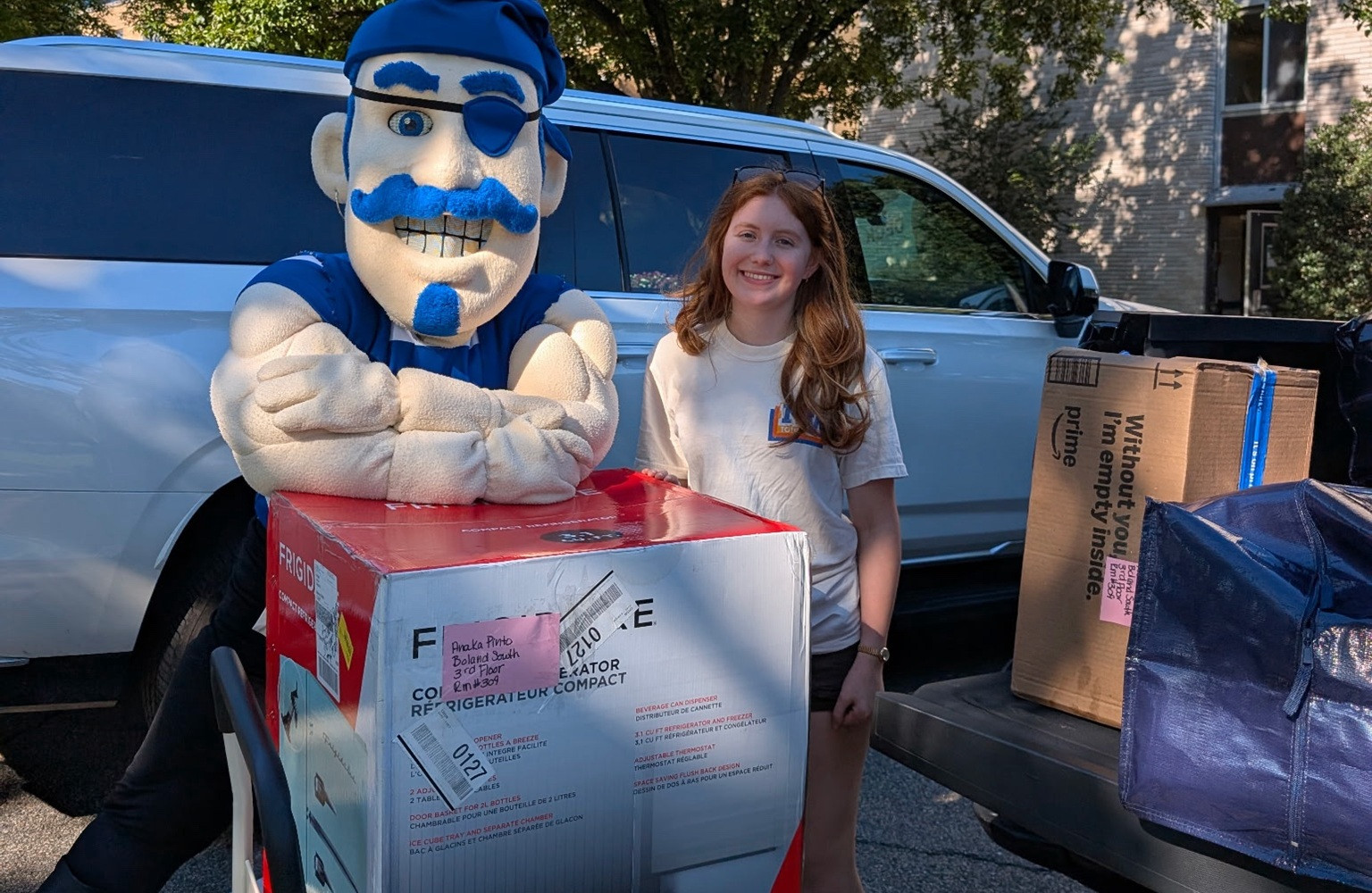

When Seton Hall University officials welcomed approximately 1,560 first-year students to campus last week, they celebrated the fact that they represented 42 states and 17 countries.
But that’s not all. The class represents rising selectivity at the school.
The Class of 2030 was selected from a pool of 28,070 applicants, roughly 2,300 more than the year before. The university’s admission rate has fallen from 79% in 2023 to 67.5% in 2026, a decline of nearly 12 percentage points in three years, even as the academic profile of incoming students has continued a decade-long upward trend.
And among the 33% of incoming students who submitted standardized test scores, the average SAT score was 1323, and the average ACT score was 29. The average high school GPA for the incoming class is 3.68, up from 3.55 in 2016.
Katie McCarthy, the school’s vice president for enrollment management, lauded the numbers.
“Seton Hall is proud to welcome the Class of 2030, an accomplished and diverse group of students who bring tremendous talent, ambition and greater purpose to our community,” she said. “We look forward to seeing all they will accomplish in the years ahead.”
Founded in 1856, Seton Hall remains grounded in its Catholic mission, welcoming students of all faiths into a community centered on intellectual growth and service.
It’s why the school was proud to announce that more than 40% of incoming freshmen are the first in their families to attend college, and 41% are Pell Grant-eligible. In addition, 62% of incoming students identify as students of color, and 61% identify as female.


