


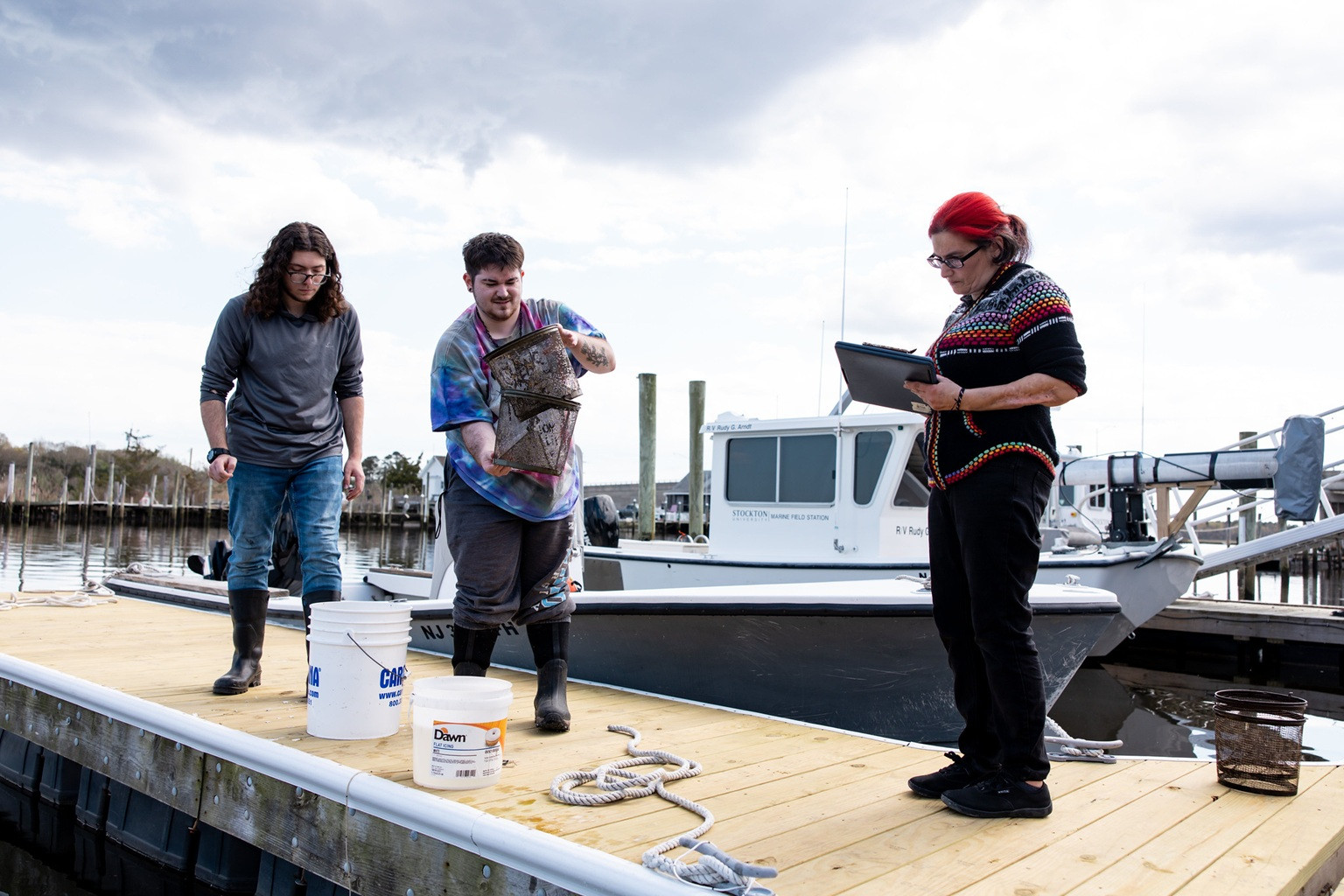
Stockton University has secured a $2,440,760 grant from the Pro-NJ Trust to fund critical infrastructure upgrades at its Marine Field Station and Coastal Research Center along Nacote Creek.
The major investment will enhance research capabilities, expand educational programming, improve climate resiliency, and significantly increase accessibility for individuals with disabilities.
The funding targets the facility’s marina area, which currently deals with shoreline erosion, a degraded lagoon, and an unusable boat ramp. Key components of the improvement project include:
-
Living shoreline restoration: Reclaiming the degraded lagoon using dredged materials and reducing bulkhead coverage along Nacote Creek by over 60% (from 300 feet down to 100 feet).
-
Enhanced dockage and access: Installing a new boat ramp, additional dockage, and a specialized accessible science pier.
-
Resiliency improvements: Decreasing nuisance flooding and mitigating potential storm damage while boosting long-term environmental monitoring.
“This project will create a strategically located working waterfront to support coastal science in Atlantic and Ocean counties by providing improved and accessible facilities for use by Stockton University and its many state, federal and educational partners,” Steve Evert, director of the Marine Field Station, said.
Serving over 200 undergraduate and graduate students annually—alongside K-12 groups and external researchers—the station acts as a central hub for marine science, environmental science, geology, biology, chemistry and coastal zone management programs.
A standout feature of the upgrades is the expansion of the Dockside Science Program, which introduces high school and college students to coastal research without requiring them to board a vessel. The new science pier will incorporate long-term monitoring equipment to track water quality, tides and climate metrics.
“In addition to the needed site improvements and increased capacity to welcome regional partners, I am particularly excited that this project will increase access to our Dockside Science Program for students with disabilities by building an accessible science pier,” Evert noted.
Beyond academic research, the upgraded facilities will bolster local emergency and regulatory services. The site hosts a meteorological station for the Jacques Cousteau National Estuarine Research Reserve and has historically collaborated with New Jersey’s Bureau of Marine Water Monitoring. Additionally, the Galloway Township Office of Emergency Management relies on the station as a strategic emergency-response location for the surrounding Mullica River waterways.
Design and permitting for the project are expected to take place over the next 6 to 18 months, with construction slated to begin following regulatory approval.


