


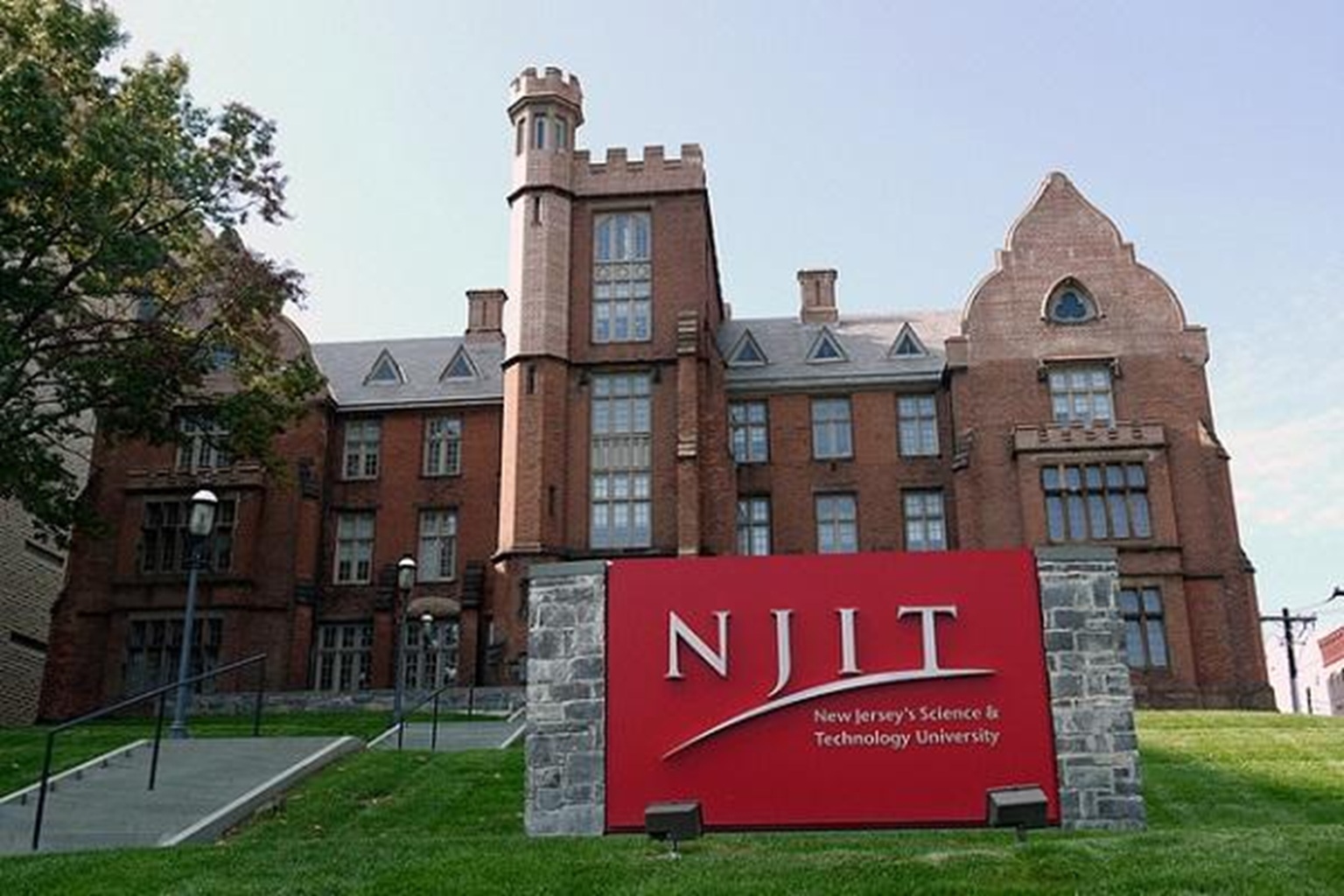
Most universities chasing enrollment growth use the same syllabus: more dorms and upgraded olds ones and more options and activities that create a greater “college experience” create more reasons for students to move to campus rather than commute to it.
NJIT Interim President John Pelesko isn’t interested in that playbook.
“I wouldn’t want us to get to 80% or 90% on campus,” he said. “I just don’t think that’s what our mission is. I don’t think that’s the right approach.”
Roughly a third of NJIT’s student population currently lives on campus, with the rest commuting — a mix Pelesko said reflects who NJIT actually serves, not a limitation the university is trying to engineer its way out of.
NJIT has added dormitory space over the years — it now has over 2,500 students living in dorm rooms — and Pelesko said there’s real value in growing that further. A stronger on-campus population helps build “a great sense of belonging,” he said.
But Pelesko is explicit that expanding housing isn’t about shifting NJIT toward a more traditional residential-university model.
The reasoning traces directly back to who NJIT was built to serve: a student body with a large share of first-generation and lower-socioeconomic-status students, many of whom rely on the ability to live at home while attending school.
“The commuter aspect works,” Pelesko said. “I wouldn’t want to lose that. I wouldn’t want to lose those students who come here because they can live with their parents and commute and work and do that type of thing.”
***
The commuter-heavy model isn’t just a mission statement. Pelesko sees it as a competitive advantage at a moment when many New Jersey universities are struggling to fill their incoming classes.
While NJIT’s international graduate enrollment has collapsed and demographic pressures are squeezing colleges nationally, undergraduate applications have moved in the opposite direction: from roughly 7,000 to 18,000 in recent years, according to Pelesko. He said NJIT expects to match or exceed last year’s incoming class — its largest ever — when final numbers are confirmed.
Part of that resilience, Pelesko argued, comes from NJIT’s return-on-investment pitch landing with families who are increasingly skeptical that any given college degree is worth its cost. He pointed to recent national polling — he cited Pew Research — showing that the share of college graduates who view their degree as having been worth it is now roughly equal to the share of non-graduates who view college as valuable in the first place, with both figures hovering around a third.
“You’re seeing kids and parents who are making much more” deliberate calculations, Pelesko said, essentially arguing that families increasingly want clear evidence a degree will pay off — not just a pleasant campus experience — before committing to the cost.
NJIT’s ability to keep tuition well below many private and out-of-state peers, combined with strong alumni salary outcomes, has helped make that case, Pelesko said.
Roughly 92% of NJIT’s undergraduates come from New Jersey. Pelesko said that’s a reflection of the university’s core mission.
“Our mission is to train New Jersey students for the New Jersey workforce, in a tech way,” he said. “We can never let go of that.”
***
None of this means NJIT’s campus footprint is frozen.
Pelesko acknowledged the university is geographically constrained compared with sprawling suburban campuses, and that adding significant additional housing — the kind of large-scale expansion some universities pursue — isn’t realistic given NJIT’s footprint in Newark.
But even with more room to build, he said, dramatically shifting the campus’s residential-to-commuter ratio isn’t the goal.
“Should it maybe be a little bit more on campus? Hopefully,” Pelesko said. “It’s good — it creates a great experience, creates a great sense of belonging. But when you think about what we’re trying to do and who we’re trying to serve, the commuter aspect works.”
It’s a case Pelesko makes with some personal authority.
Long before he was NJIT’s interim president — or its provost, or a dean at Delaware — he was a commuter student himself, living at home with his parents while he worked toward the same degree many of NJIT’s students are chasing today.
“I commuted when I was a student, years ago,” he said. “I lived with my parents.”


