



Two women with metastatic cervical cancer each received a single infusion of specialized immune cells.
A decade later, both are still in complete remission.
Imaging and circulating tumor DNA tests show no evidence of disease, according to 10-year follow-up research led by Dr. Christian Hinrichs of Rutgers Cancer Institute and RWJBarnabas Health. The patients were treated at the National Cancer Institute.
When the results were presented last November, Hinrichs didn’t shy away from the word most cancer researchers avoid.
“The decade-long complete responses to TIL therapy give hope that these patients may be cured,” he said.
***
The treatment is called tumor-infiltrating lymphocyte, or TIL, therapy. Doctors collect immune cells directly from a patient’s tumor, expand them in a lab and infuse them back into the patient.
It’s part of a growing field of immunotherapy that, rather than attacking cancer directly with chemotherapy or radiation, helps the body’s own immune system recognize and attack tumors.
Cellular therapies such as CAR T-cell therapy have worked against certain blood cancers, and other cell therapies have shown success in melanoma and some sarcomas. But many solid tumors, particularly epithelial cancers, which arise from cells that line organs and ducts, have proven much harder to treat.
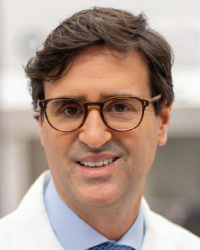
That’s the frontier Hinrichs is working on. He is co-director of the Duncan and Nancy MacMillan Cancer Immunology and Metabolism Center of Excellence at Rutgers Cancer Institute and chief of its Section of Cancer Immunotherapy, and his research focuses on cancers caused by human papillomavirus.
HPV can cause cervical, head and neck, anal and other cancers.
***
In a separate Phase II trial, Hinrichs and his team tested genetically engineered T cells designed to recognize HPV16 E7, a protein tied to cancer development. The trial included 10 patients with advanced cancers of the head and neck, cervix, anus or esophagus who had few treatment options left.
Six of the 10 saw substantial tumor shrinkage. Two had complete responses that were still ongoing at 11 and 12 months when the findings were presented.
“We found that E7-directed T cells can induce meaningful, and sometimes complete, responses in patients with limited options,” Hinrichs said at the time.
One of those patients, Maria of Philadelphia, said the change came fast.
“Within a month, the nodules were gone, and for the first time in years, I felt free,” she said.
The cells for that trial were made on site. Rutgers Cancer Institute runs its own Good Manufacturing Practices facility, a controlled environment where researchers manufacture viral vectors and genetically modified T cells for clinical trials. It treated its first patient with T cells made in the facility in July 2023.
***
Dr. Steven Libutti, the William N. Hait Director of Rutgers Cancer Institute and senior vice president of oncology services at RWJBarnabas Health, said the results show why the institute’s model matters.
“Findings like these highlight the importance of conducting research at an NCI-designated Comprehensive Cancer Center such as Rutgers Cancer Institute,” he said.
Rutgers Cancer Institute is New Jersey’s only one, and Libutti said that combination of science and patient care under one roof is what moves a discovery to the bedside.
“Centers like ours, the only one in New Jersey, bring together the scientific expertise, clinical resources and collaborative environment needed to translate new discoveries from the laboratory into clinical trials, and ultimately into meaningful treatments for patients,” he said.
***
Advancing these therapies also takes money, and they are expensive.
Because most cellular therapies are built from a patient’s own immune cells, manufacturing is complex, slow and costly. That’s a major barrier to reaching more patients.
Hinrichs is working on a way around it. In April, he received a four-year, $800,000 translational research grant from the V Foundation for Cancer Research to develop T cell receptor-based T cell engagers, or TCR-TCEs. The new class of immunotherapy is designed to redirect a patient’s existing immune cells to attack HPV-associated cancers.
The key difference: TCR-TCEs could be available as off-the-shelf treatments rather than custom-built for each patient, potentially expanding access and reducing costs.
The grant adds to a sizable research portfolio. Hinrichs has four active grants with total multiyear funding of $8.54 million, and two recently completed grants totaling $4.69 million, according to RWJBarnabas Health.
***
Researchers are now exploring whether similar approaches can help immune cells attack other common solid tumors, including cancers of the lung, breast and stomach. Part of the work is figuring out why some patients respond and others don’t.
The work is still early. Many cellular therapies for solid tumors are being evaluated in clinical trials, and researchers need to keep studying their safety, effectiveness and long-term outcomes before they can be widely available.
But for two women treated a decade ago, the results are already in.
“I never imagined the treatment would work for me, but just two months after receiving my TIL infusion, my cancer was undetectable on the scans,” one of them, a patient identified only as Sue, said when the findings were presented.
For information about RWJBarnabas Health, go to rwjbh.org.
For information about Rutgers Cancer Institute, go to cinj.org.


