


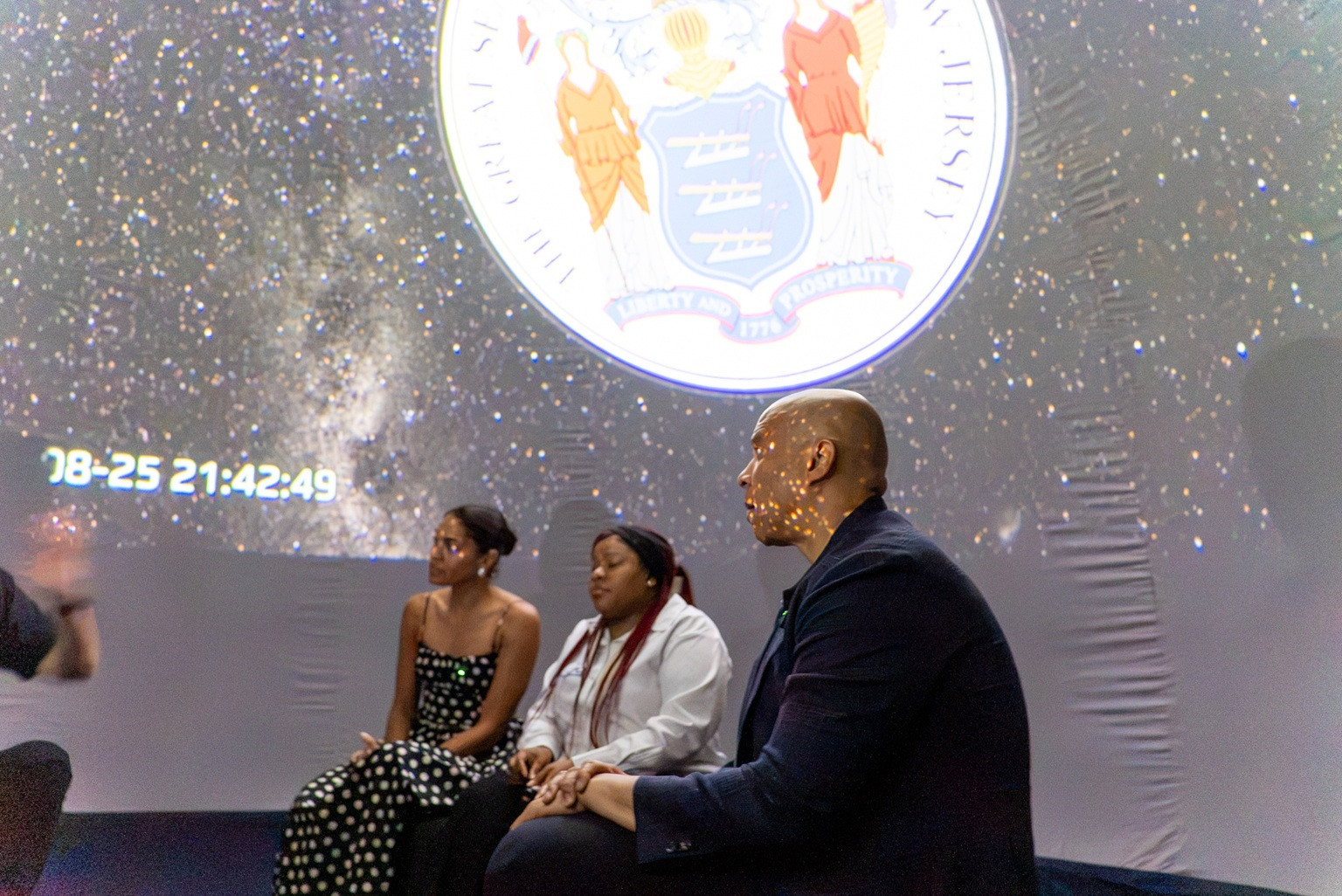
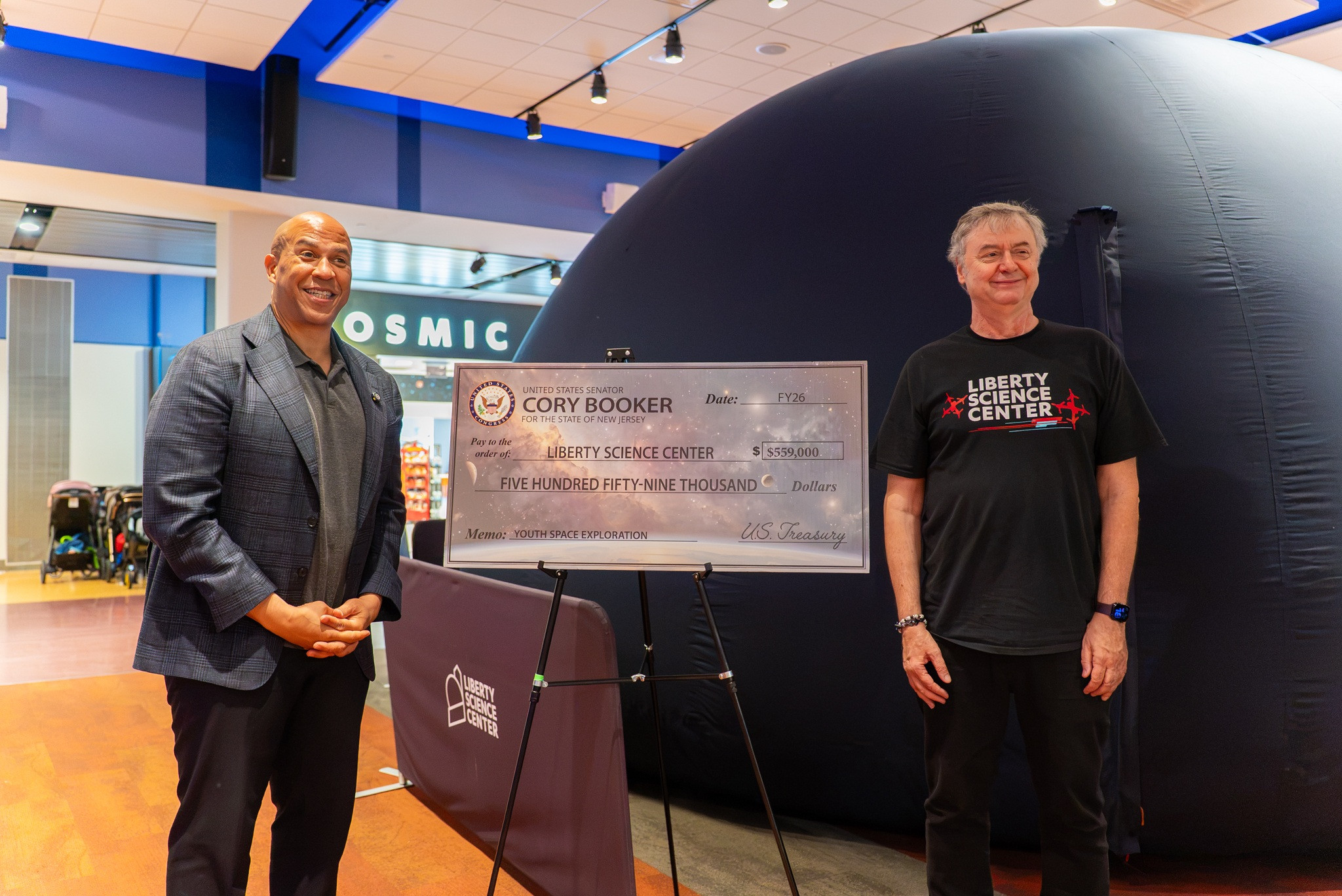
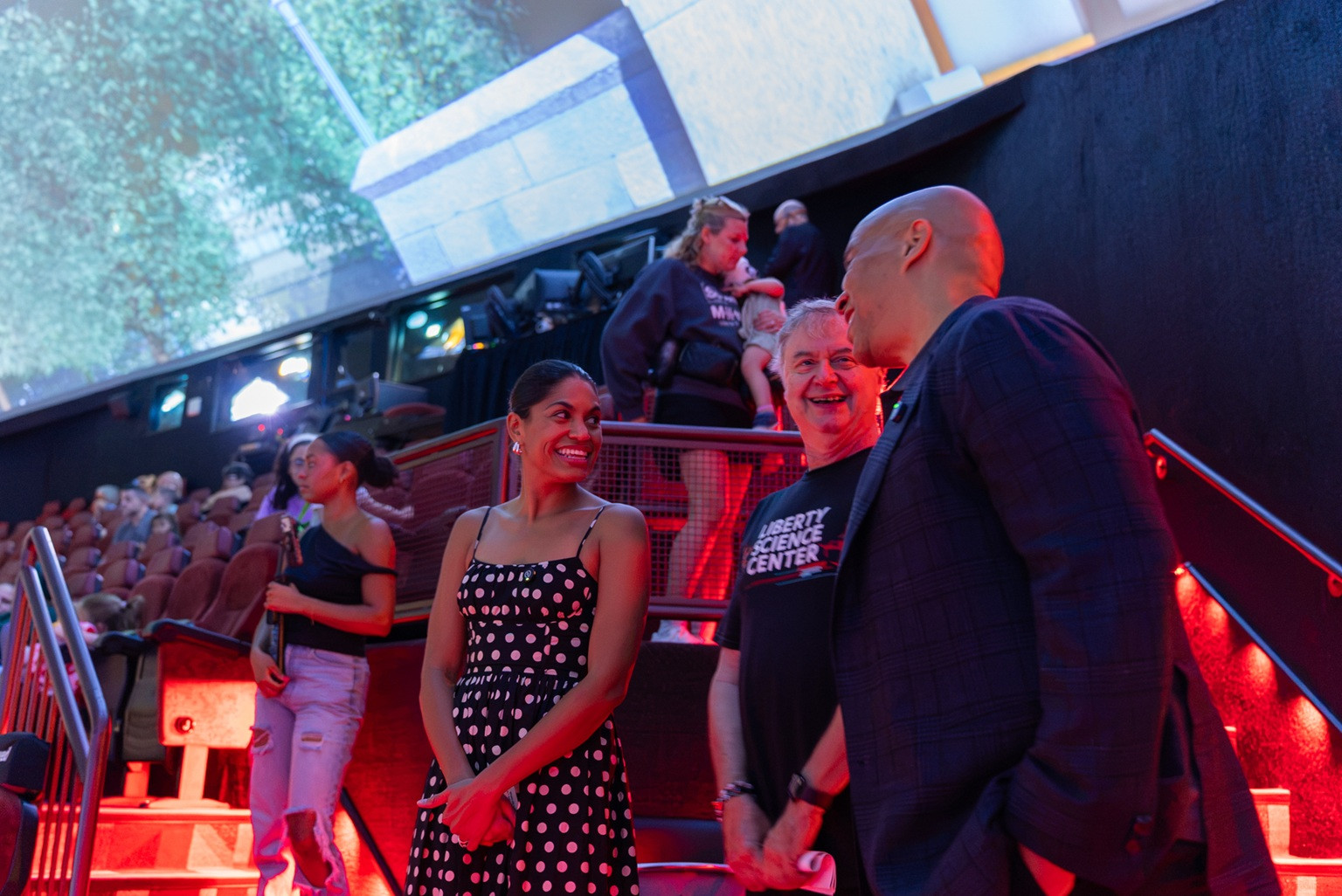
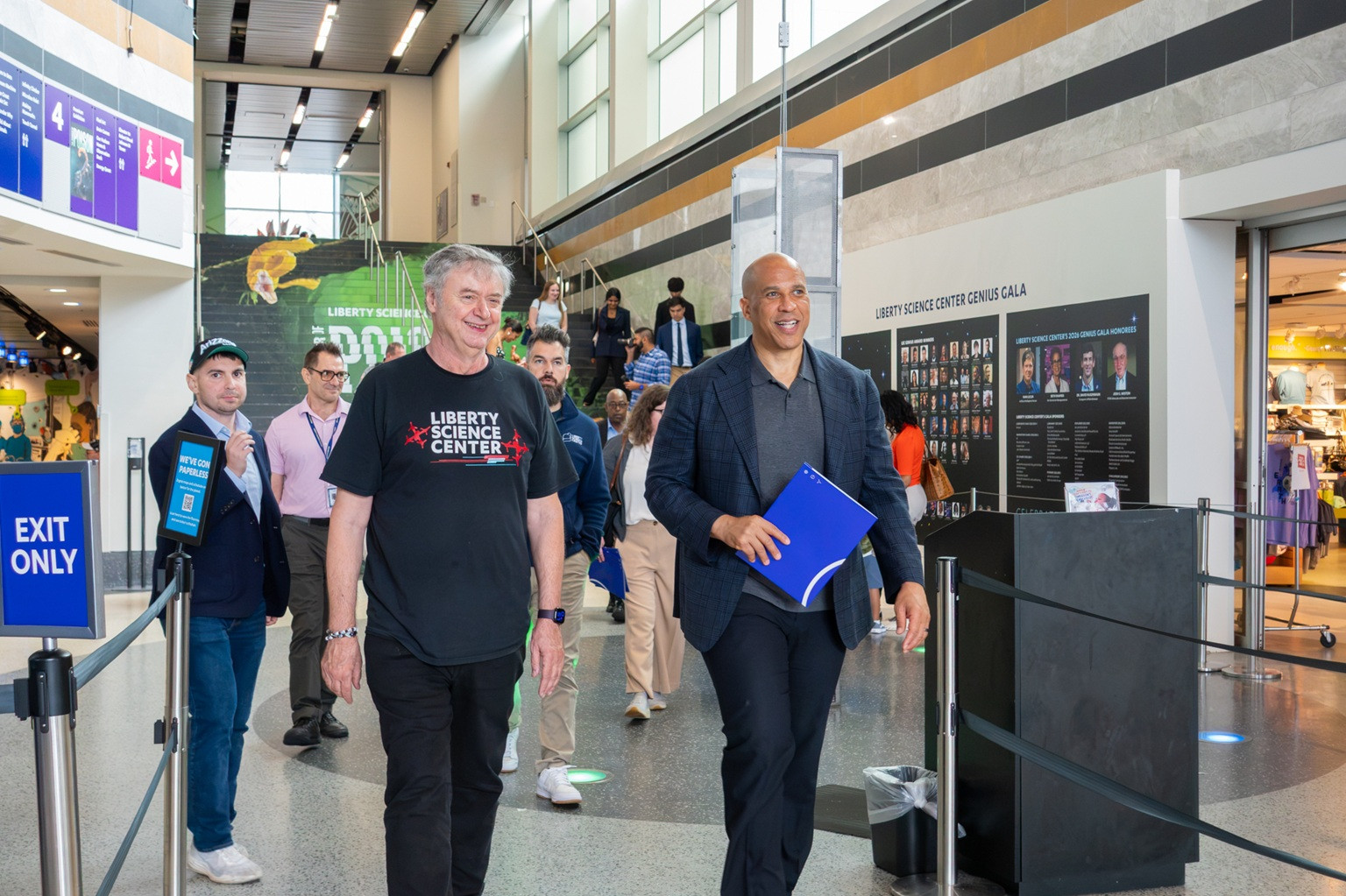
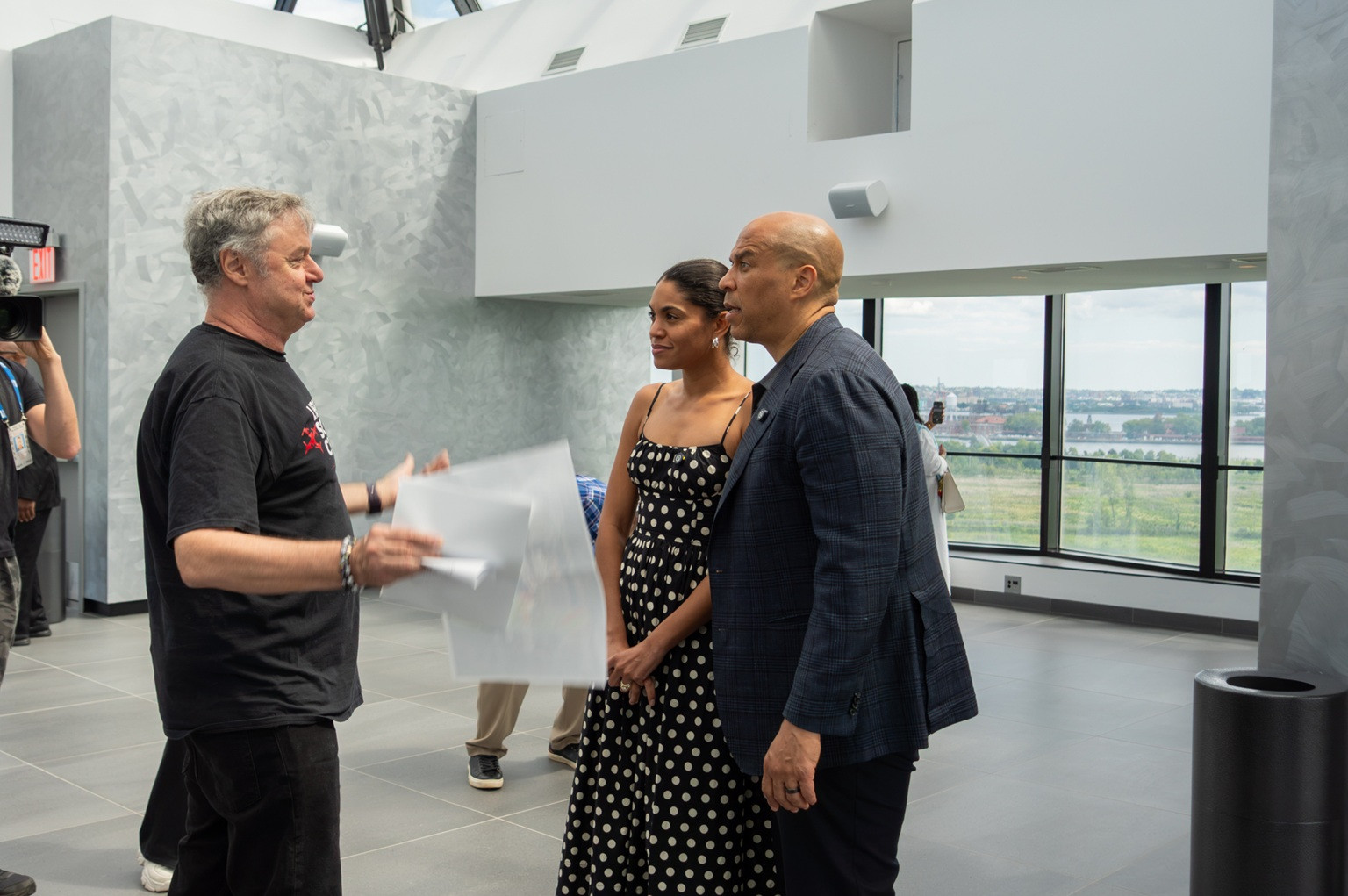
U.S. Senator Cory Booker teamed up with the Liberty Science Center (LSC) to launch an innovative statewide STEM education project backed by a $559,000 federal funding grant.
The funding provides the financial backbone for a new “Portable Planetarium” initiative, allowing the Jersey City-based institution to deploy immersive astronomy and Earth sciences programming directly to children across New Jersey’s under-served communities.
Home to the largest planetarium in the Western Hemisphere, the Liberty Science Center will utilize the grant to outfit two specially designed vehicles with portable planetarium infrastructure. These mobile units will travel to schools, community centers, and after-school programs across all corners of the state.
The initiative builds upon a successful pilot program launched earlier this year in partnership with the Boys and Girls Club of Hudson County and Jersey City Public Schools, which introduced students to cutting-edge technology, STEM careers, and NASA initiatives like the Artemis II mission and the James Webb Space Telescope.
“This very generous grant to our center for the new portable planetarium programming is a sterling manifestation of his commitment to ensure that countless thousands of children across New Jersey can experience the same wonders of science that he did and continues to have,” LSC President and CEO Paul Hoffman said, highlighting Senator Booker’s lifelong passion for space exploration and robust support for STEM education and research.
The grant enables LSC to expand its educational capabilities in several critical ways:
- Advanced Data Visualization: Incorporating programs like “Science on a Sphere” to display real-world datasets from NASA and NOAA, allowing students to visualize weather patterns, hurricane tracks, global earthquakes, and tectonic plate shifts.
- Interactive Software: Utilizing open-source visualization tools like OpenSpace, which empowers students to design and build their own planetary shows.
- Specialized Workshops & Staffing: Funding the recruitment and training of new specialized planetarium educators to design astronomy and Earth science modules focusing on lunar phases, ocean temperatures, and storm tracking.


